Outreach Tools: 10 Best Picks for Earned Media (2026)
Every AI visibility audit ends in the same recommendation: you need more third-party mentions. Get written about on the sites the models already trust. Then the audit stops, because earning those mentions takes outreach, and outreach tools are the least glamorous line in any marketing budget.
This is the tooling for that job. Ten outreach tools and earned media platforms, compared on entry price, how much of the work each one actually does, and which team each suits.
How we ranked them. Not by feature count. By how much of the outreach workflow the tool completes without a person, because the constraint for most B2B SaaS teams is not software, it is nobody having four hours a week to prospect and follow up. A tool that finds, writes and sends ranks above a tool that stores contacts, even where the second is cheaper.
One thing we checked that most lists do not. Whether the tools still exist. Postaga appears on most 2026 roundups and its site has been unreachable all year, so it is not here.
On pricing. We list what each vendor publishes, and say so where nothing is, the same standard we hold AI visibility tools to.
What to look for
How much of the work it does. Outreach has four steps: finding relevant sites, finding the right contact, writing something worth replying to, and following up. Most tools do one or two and call it automation. Price per step, not per seat.
Relevance over authority scores. Several tools and most agencies price placements in DR bands. Domain Rating describes a domain’s link graph, not whether its readers are your buyers. A DR 25 page read by your exact ICP beats a DR 70 page nobody opens.
Deliverability, not just sending. Cold outreach dies in spam folders. Check whether warmup and inbox provisioning are included or sold separately, because a cheap tool plus a separate warmup subscription is not cheap.
Published pricing. Half this category quotes on a call, particularly on the PR side. That is a signal about who the buyer is assumed to be.
Whether you need PR or link building at all. They are different jobs. Journalist databases serve press coverage. Blogger outreach tools serve links and mentions in niche publications, which is what actually gets you cited in AI answers. Our study of what AI assistants actually cite found third-party sources carrying most of the load, and Reddit, LinkedIn and YouTube doing more of it than most teams measure.
Outreach and earned media tools compared
| Tool | Published entry price | Category | Best for |
|---|---|---|---|
| 1. MentionAgent | $99/mo flat | AI outreach agent | Founders with no outreach function |
| 2. Pitchbox | $210/mo annual, $300 monthly | Outreach platform | Agencies running parallel campaigns |
| 3. Respona | $100 to $500 per placement | Managed placements | Teams buying links, not running campaigns |
| 4. BuzzStream | From $49/mo | Outreach CRM | Relationship-first outreach |
| 5. Lemlist | $55/mo annual, unlimited users | Multichannel outreach | Teams already running cold email |
| 6. Hunter.io | Free tier, from $34/mo | Email finding | The utility layer under everything |
| 7. Prowly | $369/mo, $258 annual | PR platform | SMB PR teams wanting a published price |
| 8. Muck Rack | Not published | PR platform | Established PR functions |
| 9. Qwoted | Free, Pro $149/mo | Reactive PR | Answering journalist requests |
| 10. BuzzSumo | From $199/mo | Discovery | Finding who to pitch |
Prices as published by each vendor at the time of writing. Confirm before budgeting.
1. MentionAgent
MentionAgent is the only tool here that completes all four steps without you. It finds blog posts relevant to your product, qualifies the domain, looks up the author’s verified email, writes a pitch tied to that specific post, and follows up until someone replies. Approval happens in Telegram rather than a dashboard, which sounds like a gimmick and is actually the design decision that matters: there is no campaign to build and no platform to learn. The email server and warmup are included rather than sold separately.
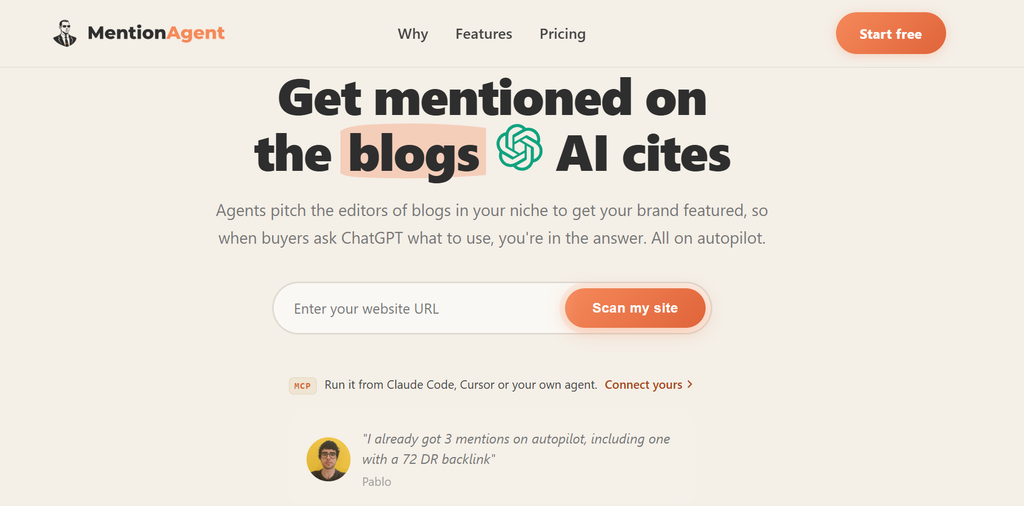
Price: $99/mo Starter (1 site, 1 inbox, up to 40 emails a day). Growth $179, Scale $329, Agency $629. Free start with 50 credits, no card.
Best for: B2B SaaS founders and small teams who need backlinks and have nobody whose job this is. If outreach keeps slipping to next week, this is the category that fixes it.
Skip it if: You want granular control over sequences, segments and templates. The trade for that simplicity is that you approve rather than configure. Their stated requirement is a site with real domain rating, 20 or more published posts, and roughly 500 organic visitors a month.
2. Pitchbox
Pitchbox is the enterprise standard, and the integrations are the reason. Ahrefs, Semrush, Moz and Majestic data sits inside the prospecting workflow, so qualification happens without exporting anything. Campaign templates cover blogger outreach, broken link building, resource pages and product reviews.
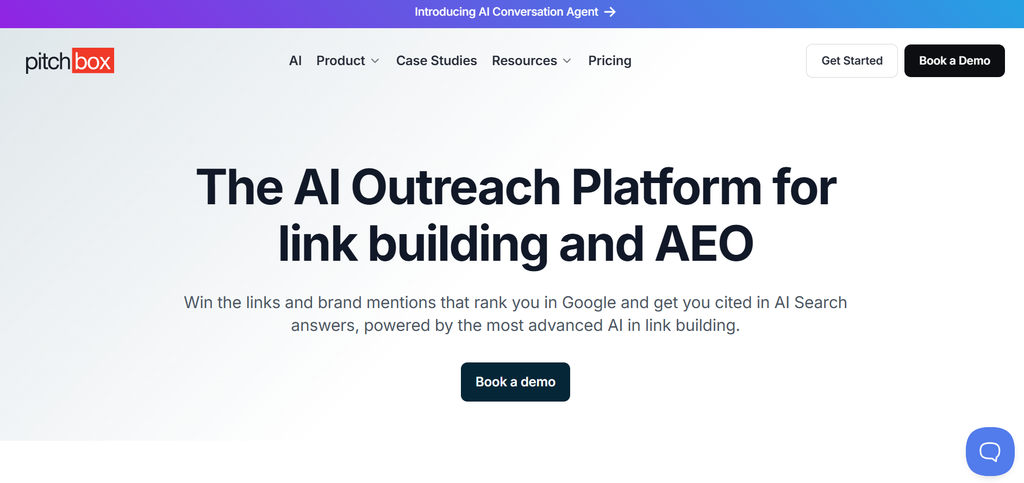
Price: Pro $210/mo billed annually, $300 monthly (2 users, 2 inboxes, 2,000 emails). Advanced $420, Scale $825. No free plan.
Best for: Agencies and in-house teams running several campaigns at once, where automated sequencing and reply handling save real hours.
Skip it if: You are one person running one campaign a month. The learning curve is steep and the $210 floor assumes volume you may not have.
3. Respona
Respona is no longer software you run. It now sells placements: you pick a publisher tier, Respona does the outreach, and you pay per link that goes live. Worth knowing before you compare it to anything else on this list, because most roundups still describe the old self-serve product.
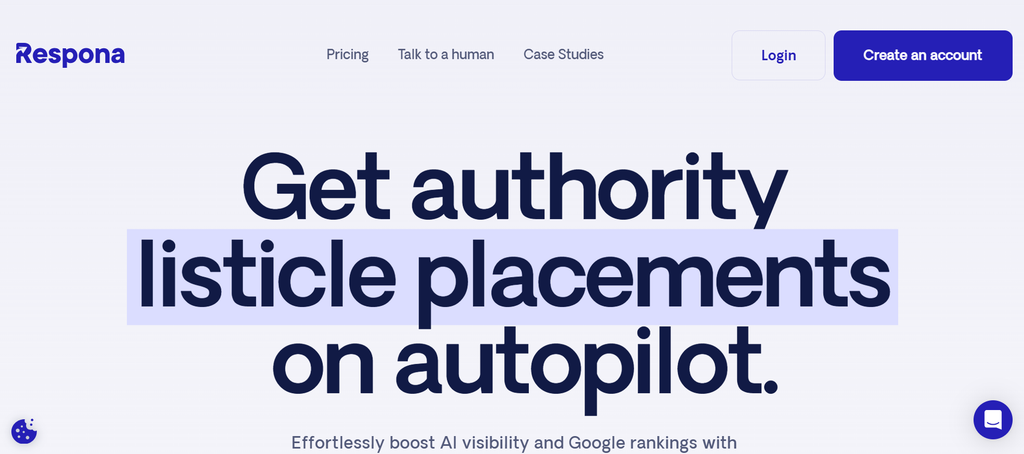
Price: Per placement, by publisher tier. Starter $100 (DR 20+), Standard $160 (DR 30+), Authority $240 (DR 40+), Power $400 (DR 50+), Elite $500 (DR 60+). Volume discounts scale with monthly spend.
Best for: Teams who would rather buy links than run campaigns, and who have budget but no outreach hours.
Skip it if: You want a tool. This is a service with a dashboard. Also note the tiers are priced on Domain Rating and traffic bands, which is the pricing model we flag in the criteria above.
4. BuzzStream
BuzzStream is the outreach CRM rather than the outreach automator. Every contact carries its full history of emails, replies and notes, shared across the team. If outreach at your company is a relationship you maintain rather than a campaign you run, this is the right shape.
Price: Starter $49/mo (1 user, 500 contacts). Growth $174, Professional $424, Custom from $999. Scales by contacts and seats.
Best for: Solo operators and small agencies who want records and relationships rather than volume.
Skip it if: You want the tool to do the work. BuzzStream organises outreach beautifully and still expects you to write and send it.
5. Lemlist
Lemlist is a cold email platform rather than a link building one, which is exactly why it earns a place: if your team already runs outbound, blogger outreach is another sequence rather than another subscription. AI personalisation, multichannel sequences across email and LinkedIn, and warmup included on every paid plan.
Price: Email $55/mo billed annually, and unusually that tier carries unlimited users with 50,000 emails a month. Multichannel is $87/mo per user. Monthly billing is higher. The free plan is a Chrome extension, not a sending tool.
Best for: Teams with an existing outbound motion who want outreach in the same place as sales sequences.
Skip it if: Outreach is the only thing you will use it for. It does no prospecting for link targets, so you still need a way to build the list, and the multichannel tier goes back to per-user pricing.
6. Hunter.io
Hunter is the utility layer most outreach stacks sit on: find an email, verify it, send a basic campaign. The free tier is genuinely usable for low-volume prospecting, which is rare in this category.
Price: Free (50 credits a month, 1 inbox). Starter $34/mo billed yearly, Growth $104, Scale $209, Enterprise custom.
Best for: Anyone who needs contact data rather than a platform, or who wants to test whether outreach works before paying for software.
Skip it if: You need prospecting. Hunter finds the person once you know the site. It does not tell you which sites to approach.
7. Prowly
Prowly, now part of Semrush, is the PR platform that publishes its pricing, which in this corner of the market is worth noting on its own. Media database, press release distribution, coverage monitoring and pitching in one place.
Price: $369/mo, or $258/mo billed annually. Pro at $589/mo, or $416/mo annually.
Best for: Small and mid-sized PR teams who want a full suite without an enterprise contract or a sales call.
Skip it if: Your target coverage is niche blogs rather than press. A journalist database is the wrong tool for link building.
8. Muck Rack
Muck Rack is the serious media relations platform. Journalists maintain their own profiles, which is the accuracy argument, and monitoring spans hundreds of thousands of sources.
Price: Not published. Three tiers, Starter, Standard and Premier, each behind a “contact us” button. Reported ranges start around $5,000 a year and run to $15,000 for mid-market teams, on annual contracts.
Best for: Established PR functions where press coverage is a primary channel and the budget already exists.
Skip it if: You are a B2B SaaS team whose goal is backlinks and AI citations. This is a press tool, priced like one, and a twelve-month commitment.
9. Qwoted
Qwoted inverts the model. Journalists post what they need, you answer. No pitching cold, no database, and the basic plan is free.
Price: Basic is free, capped at 2 pitches a month with a two-hour delay on new requests. Pro is $149/mo for 35 pitches and no delay. Teams is custom.
Best for: Founders and subject-matter experts who can write a good answer quickly. The single cheapest route to real coverage.
Skip it if: You need placements on specific target sites. You take what comes, on someone else’s timetable.
10. BuzzSumo
BuzzSumo answers the question that comes before outreach: who is writing about this, and which of their pieces performed. Content discovery, journalist profiles and brand alerts.
Price: From $199/mo (Content Creation, 1 seat). PR & Comms $299/mo, Suite $499/mo, Enterprise $999/mo. 20% off annual, no free plan, 30-day trial.
Best for: Building the target list, and monitoring the mentions you earn afterwards. Useful alongside G2 and Capterra, which carry more weight in AI answers than most vendors expect.
Skip it if: You already know who to pitch. This is research, not outreach, and it does not send anything.
How to choose
Match the tool to which part of the job is actually missing.
- Nobody owns outreach: MentionAgent. The whole point is that no one has to run it.
- Several campaigns at once: Pitchbox, or Respona if you would rather buy placements than run campaigns.
- Relationships over volume: BuzzStream.
- Testing whether outreach works at all: Hunter’s free tier, or Qwoted.
- Already running cold email: Lemlist, so outreach lives beside your sales sequences.
- Press coverage, not links: Prowly if you want a published price, Muck Rack if the budget is there.
- Do not know who to pitch yet: BuzzSumo first.
Two mistakes worth avoiding. Buying a PR platform when you need links, because journalist databases do not cover the niche blogs that carry citations. And buying volume tooling before you have anything worth pitching, since outreach amplifies content and cannot substitute for it. If the pages themselves are the gap, start with topical authority and clusters rather than keyword lists, not with software.
Rather answer four questions than read ten entries? There is an interactive tool finder at the end of this post. About twenty seconds, and it returns up to three matches with the reason for each.
FAQ
Do outreach tools actually work for B2B SaaS? Yes, with a caveat. They work when you have something worth linking to. Original research, a genuinely useful tool, case studies or data nobody else has. Tools scale pitching; they do not make a thin post pitchable, and traffic alone is not the goal, as HubSpot demonstrated at scale.
PR tool or outreach tool? Outreach tool, for most B2B SaaS. Press coverage is slower and harder to attribute. Niche blog mentions are what feed both backlinks and AI citations, which is the practical half of generative engine optimisation.
How many emails before a placement? Varies enormously by list quality. Relevance beats volume, which is the argument for spending effort on the target list rather than on sending capacity.
Can AI write the pitches? It can, and the good tools do. What it cannot do is give you a reason for the writer to care, which comes from the asset you are pitching. Our brief generator is a starting point if that asset does not exist yet.
Where does outreach sit against everything else in AI visibility? It is the off-site half. On-site work covers structure, llms.txt and citable formatting, and the AI visibility checklist scores both halves. Outreach moves the third-party half.
Outreach is the half of AI visibility nobody sells you, because it is slow and it is manual. Tooling makes it survivable.
Need the asset worth pitching before you pitch anything? See how we write SEO content and how we approach AI visibility, look at our work, check pricing, or book a 30-minute call.
Think B2B is boring?
That's coz you are not subscribed to ours newsletter. We share a 100 bad days (of B2B marketing) made a 100 good stories. A 100 good stories make YOU interesting at parties.
Almost there. Check your inbox and click the confirmation link.

Jay is the co-founder of LymLyt and an AI partnership consultant helping B2B SaaS companies grow through content strategy, SEO, and AI integration. He writes about content marketing, what makes B2B content convert, and how SaaS teams can build content systems that drive real pipeline.