10 Best AI Visibility Tracking Tools (2026)
Google Search Console has never once told you what ChatGPT said about your company. That is the exact gap AI visibility tracking tools exist to close, and in 2026 it is no longer optional to leave that gap unmonitored.
ChatGPT crossed roughly 900 million weekly users by February 2026. A large share of Google searches now end without a single click, as AI Overviews answer the question directly on the results page. When the answer lives inside the AI conversation instead of on a web page, a brand can dominate page one and still be completely invisible to the buyer asking the question. Our guide to AI visibility for B2B SaaS covers why that gap opened up. This guide covers the tools that actually measure it.
We compared 10 AI visibility tracking tools on four things that matter for B2B teams: how many AI engines they actually cover, whether they track citation URLs or just mention counts, how they price at real usage volume, and whether the tool stops at reporting or connects to an actual fix.
What to look for in an AI visibility tracking tool
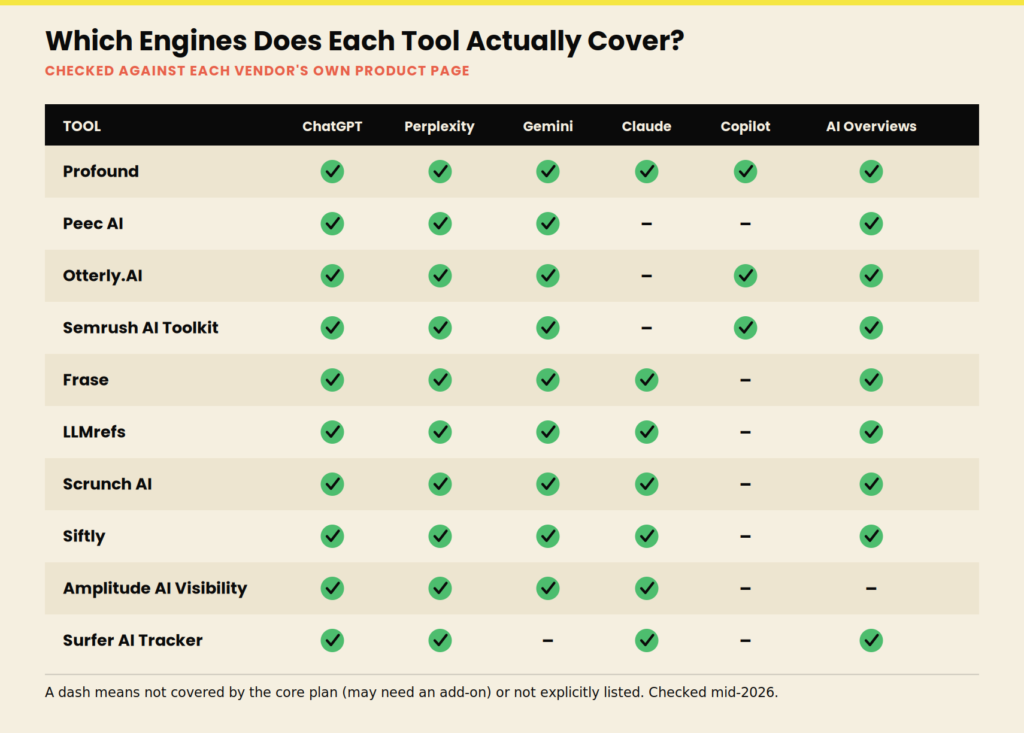
Engine coverage, not just ChatGPT. Buyers split their research across ChatGPT, Perplexity, Gemini, Claude, Google AI Overviews, and increasingly Copilot. A tool that only tracks one engine is measuring a fraction of the actual picture.
Citation URLs, not just mention text. Knowing your brand got mentioned is a start. Knowing which source URL got cited instead of yours is what actually tells you where to focus content and digital PR effort. Several tools on the market only capture answer text, not the underlying sources.
Accuracy over marketed coverage. Independent testing has found real gaps between a vendor’s claimed capture rate and what a manual, hand-counted check actually finds. Prompt set size and refresh frequency matter more than the number of logos on the homepage.
A path from data to fix. A dashboard that shows you are losing ground without showing why is half a tool. The strongest platforms tie visibility data back to a content or SEO content writing workflow instead of leaving the fix as homework.
AI visibility tracking tools compared
| Tool | Category | Best for | Starting price |
|---|---|---|---|
| Profound | Enterprise, broadest engine coverage | Large orgs needing 10+ engine reporting | Custom |
| Peec AI | Daily tracking with Citation Gap Analysis | Mid-market teams that want clear next actions | Custom |
| Otterly.AI | Budget-friendly entry point | Small teams testing AI visibility for the first time | From $29/month |
| Semrush AI Toolkit | Bundled with an existing SEO platform | Teams already standardized on Semrush | Included in Semrush plans |
| Frase | Tracking plus content workflow in one | Teams that want monitoring and the fix in one tool | Custom |
| LLMrefs | SEO-style rank tracking for AI engines | SEO teams that want AI visibility to feel like classic rank tracking | Custom |
| Scrunch AI | Narrative control and misinformation fixes | B2B brands worried about inaccurate AI descriptions | From $300/month |
| Siftly | Multi-sampled tracking with hallucination detection | Teams that want statistically reliable mention rates, not one snapshot | Custom |
| Amplitude AI Visibility | AI mentions tied to product analytics | Teams that want AI-referred traffic connected to conversions | Custom |
| Surfer AI Tracker | Bundled with an existing content tool | Teams already using Surfer for content optimization | Included in Surfer plans |
The 10 best AI visibility tracking tools
1. Profound
Profound tracks the widest set of answer engines of any tool on this list: ChatGPT, Perplexity, Claude, Microsoft Copilot, Google AI Overviews, Google AI Mode, Gemini, Grok, Amazon Rufus, and Meta AI. That breadth is the entire pitch. If your buyers might be asking any AI surface about your category, Profound is built to catch it rather than leaving surfaces unmonitored.
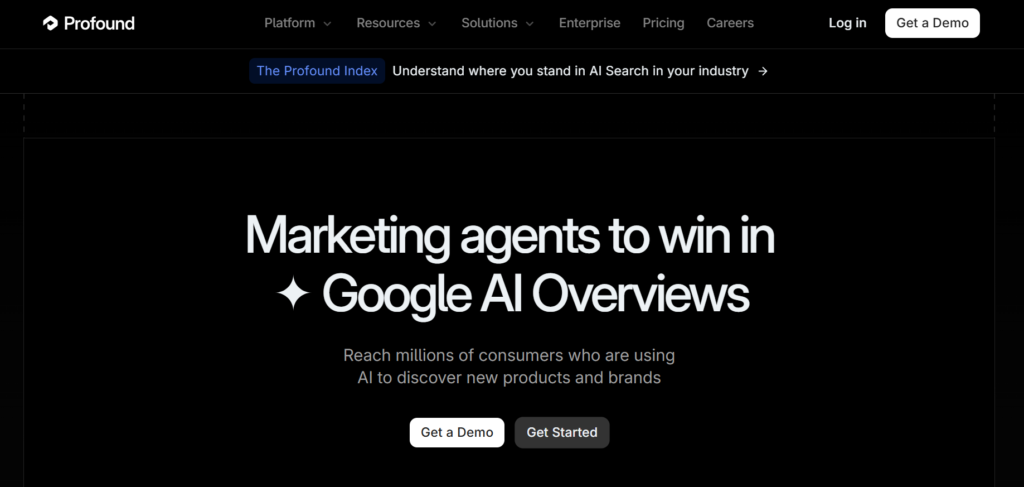
The trade is complexity and cost. Profound is built for larger organizations with multiple stakeholders reviewing AI search performance, not a solo marketer checking in once a week.
Price: Custom, enterprise-scoped.
Best for: Large organizations that need broad, exec-ready reporting across every major answer engine, not just the two or three most people default to.
Skip it if: You are a small team. The breadth of coverage is overkill, and the pricing reflects an enterprise buyer, not a lean startup.
2. Peec AI
Peec AI runs daily tracking across ChatGPT, Google AI Overviews, AI Mode, and Perplexity, and its standout feature is Citation Gap Analysis: it surfaces exactly which third-party sources AI engines trust in your category, so your team knows where to focus digital PR and content effort instead of guessing.
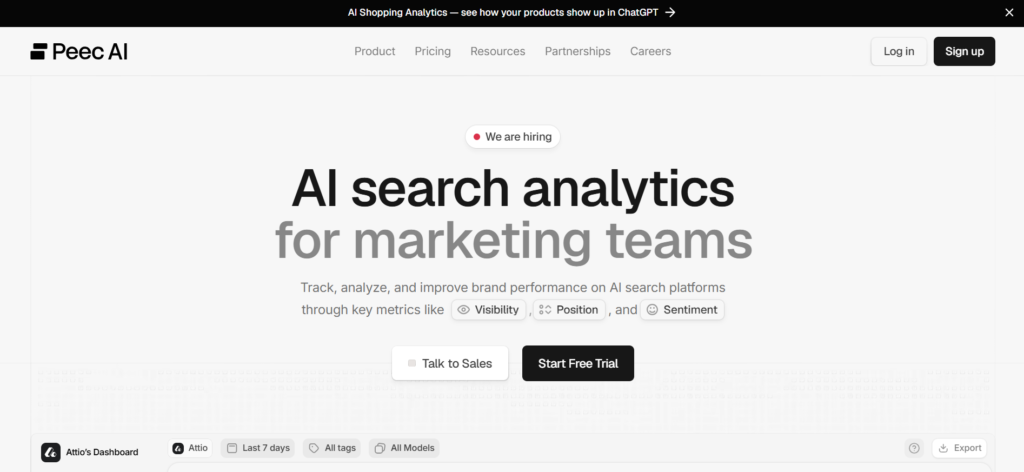
That prioritized-action layer is what separates Peec from a pure monitoring dashboard. It tells you not just that you are losing ground, but to whom, and on which source, the same source-level thinking covered in our guide to what GEO actually is.
Price: Custom, mid-market tiers.
Best for: SaaS and agency teams that want daily visibility tracking with clear, prioritized next steps rather than a raw data dump.
Skip it if: You need coverage of niche or emerging AI surfaces beyond the four core engines Peec focuses on.
3. Otterly.AI
Otterly.AI is the accessible entry point into this category, used by more than 20,000 marketing professionals, and recognized by G2, OMR, and Gartner. It tracks brand mentions across six AI platforms, including ChatGPT, Perplexity, Gemini, and Copilot, and compares your visibility against named competitors over time.
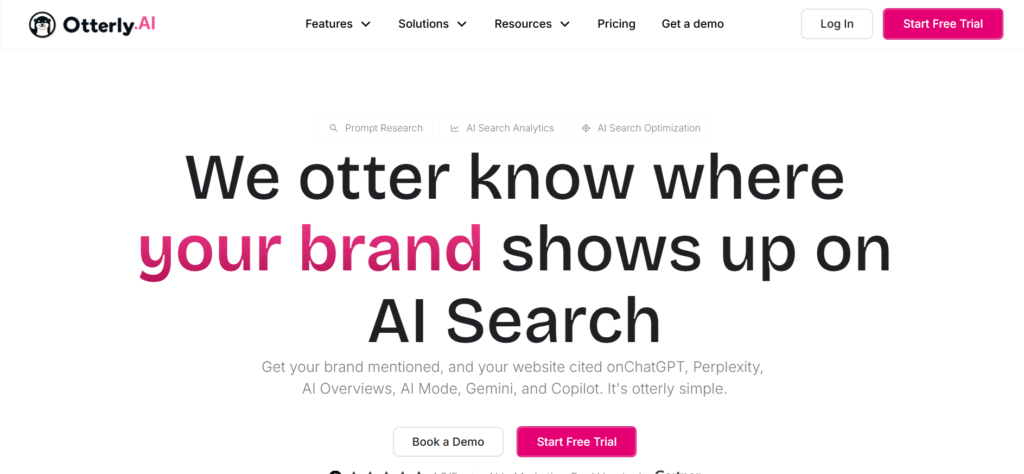
At its lowest tier, Otterly is monitoring-only, tracking a limited prompt set without the deeper optimization recommendations found on pricier platforms. A mention without a fix is the same trap covered in why B2B SaaS content isn’t converting: visibility and outcomes are not automatically the same thing.
Price: From $29/month (15 prompts, monitoring-only tier).
Best for: Small teams and solo marketers who want to start tracking AI visibility without committing to an enterprise contract first.
Skip it if: You need prompt-level optimization guidance baked in, not just monitoring. The entry tier is deliberately lean.
4. Semrush AI Toolkit
Semrush folded AI visibility tracking directly into its existing platform rather than launching it as a separate product, which matters for any team that already runs keyword research, site audits, and rank tracking through Semrush.
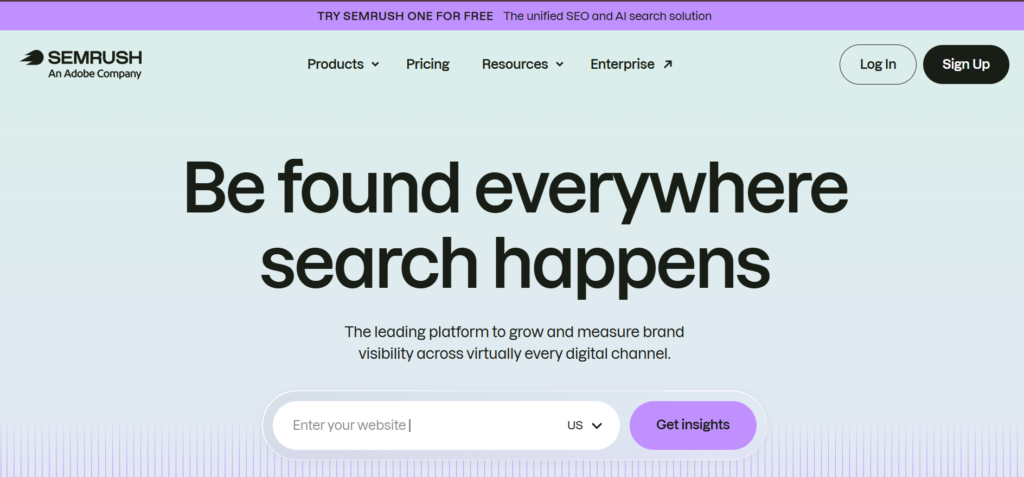
The advantage is consolidation: one login, one invoice, one place your SEO and AI visibility data live side by side. The trade-off is that it is a feature inside a broader platform, not a purpose-built specialist tool, so teams chasing the deepest AI-specific analysis may find dedicated platforms go further.
Price: Included in existing Semrush subscription tiers.
Best for: Teams already standardized on Semrush that want AI visibility data without adding another vendor to the stack.
Skip it if: You are not already a Semrush customer and don’t need the rest of the platform. Paying for the whole suite just for AI tracking is the wrong trade.
5. Frase
Frase pairs daily AI-engine tracking across ChatGPT, Perplexity, Claude, and Gemini with the actual research, writing, optimization, and publishing workflow needed to close a visibility gap once you find one. Most tools on this list hand you a dashboard and leave the fixing to you. Frase is built so the finding and the fix live in the same place.
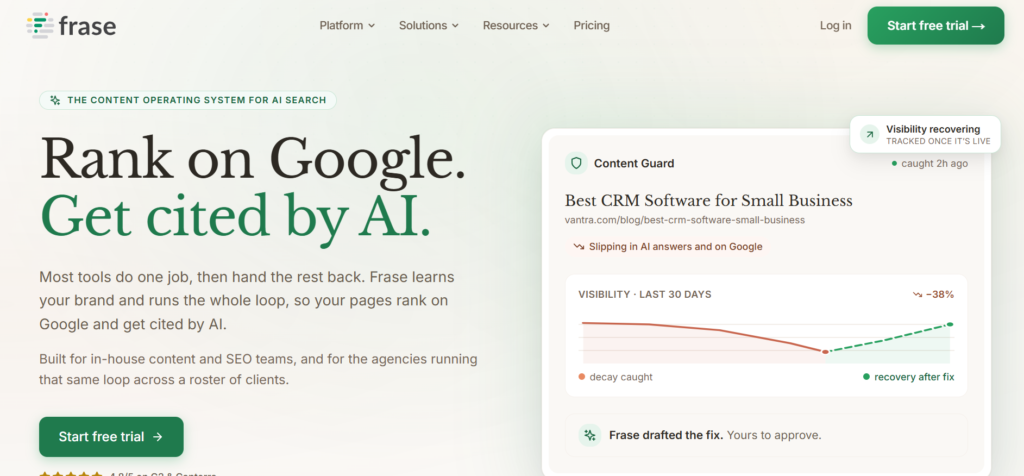
That workflow integration is the differentiator, and it is also the limitation: teams that already have a separate, established content production process may find the bundled workflow redundant rather than additive.
Price: Custom.
Best for: Teams that want AI visibility monitoring and the content workflow that fixes it in one subscription instead of stitching two tools together.
Skip it if: Your content production already runs through an established tool or agency. You may be paying for a workflow you won’t use.
6. LLMrefs
LLMrefs is built for teams that want AI visibility to look and feel like classic SEO rank tracking. You plug in an existing keyword list, and LLMrefs runs those terms as prompts across ChatGPT, Perplexity, Google AI Overviews and Mode, Gemini, and Claude, then reports cross-engine rankings and share of voice.
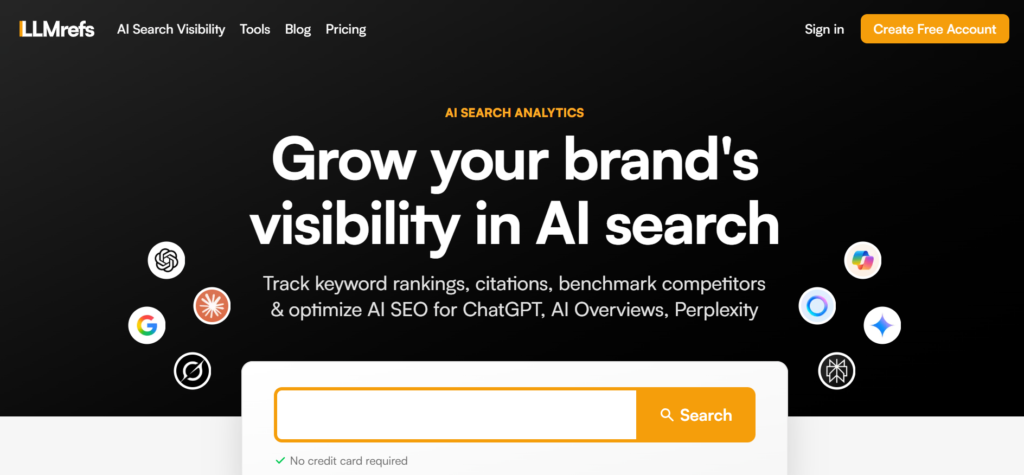
That familiarity is the appeal for SEO-led teams that don’t want to learn an entirely new mental model to understand AI visibility. It maps cleanly onto reporting structures teams already use for B2B SaaS SEO strategy, and pairs naturally with whichever keyword research tools already feed that keyword list.
Price: Custom.
Best for: SEO-driven, multi-market teams that want AI visibility reporting to plug directly into existing keyword-based workflows.
Skip it if: Your buyer questions don’t map cleanly to a keyword list. LLMrefs works best when there is an existing SEO keyword structure to build on.
7. Scrunch AI
Scrunch AI is built around a specific and underserved problem: AI engines don’t just fail to mention brands, they sometimes describe them inaccurately. Scrunch focuses on narrative control, tracking not just whether you’re mentioned but what is actually being said, and flagging misinformation in AI answers for correction.
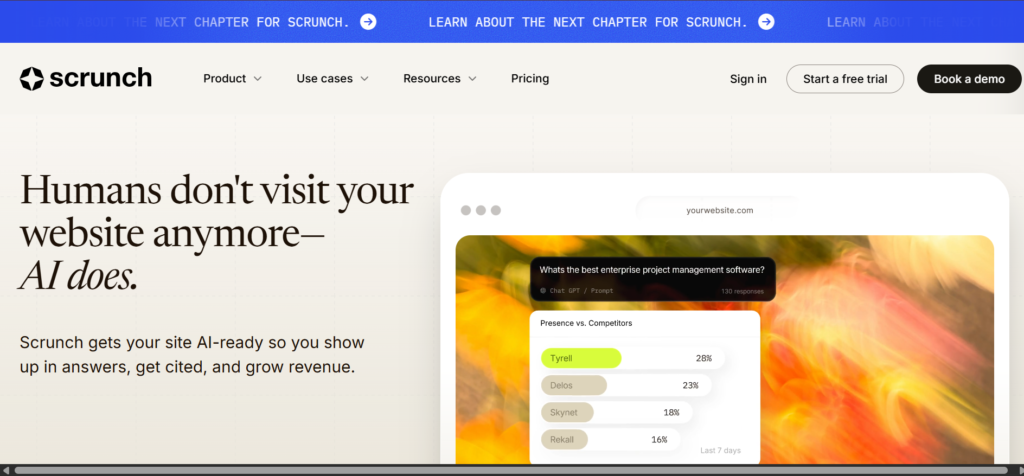
For B2B brands with technical or easily misrepresented products, that accuracy layer can matter more than raw mention volume, especially when your ICP doesn’t read your blog closely enough to correct a wrong impression on their own.
Price: Custom.
Best for: B2B and SaaS brands more concerned with correcting inaccurate AI descriptions than simply increasing mention frequency.
Skip it if: Your primary goal is broad visibility growth rather than narrative accuracy. Other tools on this list are built more directly around growth metrics.
8. Siftly
Siftly is built around a specific methodological gap in this category: AI answers are stochastic, the same query produces a different response on different runs, so a single snapshot is noisy data dressed up as a metric. Siftly samples each prompt multiple times a day across ChatGPT, Gemini and Google AI Overviews, Perplexity, and Claude, then aggregates the results into a genuine mention rate rather than a one-shot check.
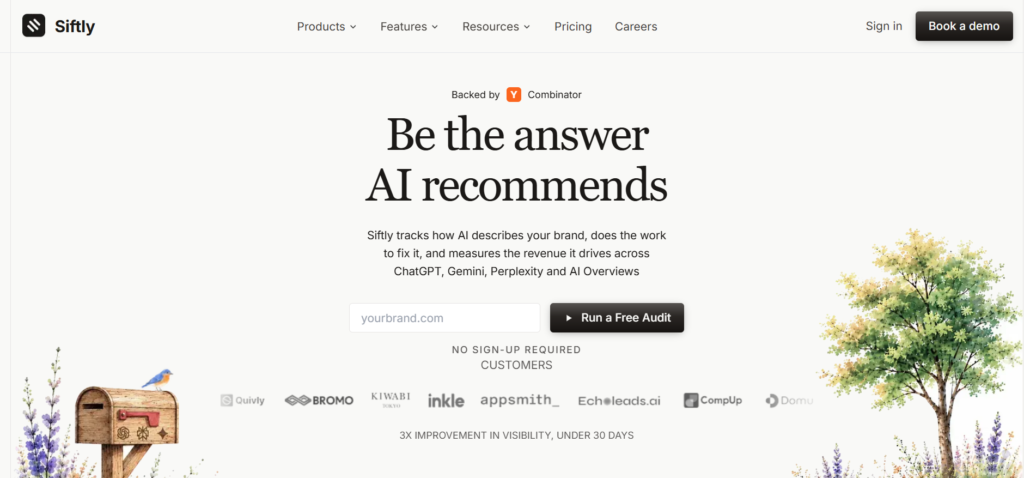
That sampling approach also produces a metric most tools in this category skip entirely: hallucination rate. Siftly flags when an AI engine describes your brand inaccurately, not just when it fails to mention you, which matters as much as the why B2B SaaS content isn’t converting problem: being visible and being described correctly are not the same thing.
Price: Custom.
Best for: Teams that want statistically reliable AI visibility data, sampled repeatedly rather than checked once, plus visibility into brand hallucinations specifically.
Skip it if: You need the broadest possible engine list. Siftly covers four core engines well rather than ten engines shallowly.
9. Amplitude AI Visibility
Amplitude takes a different angle from most tools on this list: instead of stopping at the mention, it connects AI visibility data to actual product and web analytics. You see not just that ChatGPT mentioned your company, but whether the resulting visitors activated, which features they explored, and whether they converted.
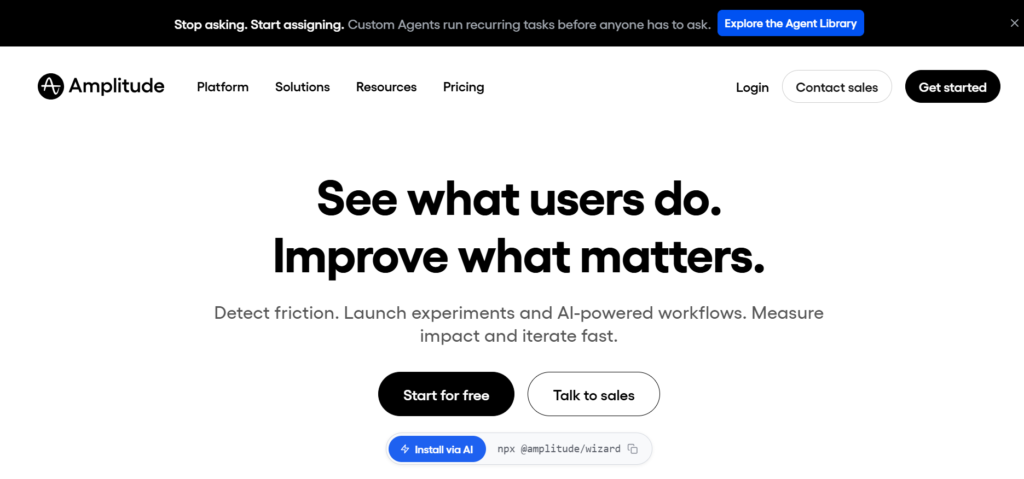
That behavioral connection is genuinely rare in this category. Most AI visibility tools end at the citation. Amplitude starts there and tracks what happens next.
Price: Custom.
Best for: Teams that already use Amplitude’s product or web analytics and want AI-referred traffic connected to downstream behavior, not just counted.
Skip it if: You are not already in the Amplitude ecosystem. The behavioral connection is the whole value proposition, and it depends on that existing integration.
10. Surfer AI Tracker
Surfer added AI mention and citation tracking across AI Overviews, ChatGPT, Perplexity, and more directly into its existing content optimization platform, giving teams already using Surfer for on-page SEO a bundled way to monitor AI visibility without a separate subscription.
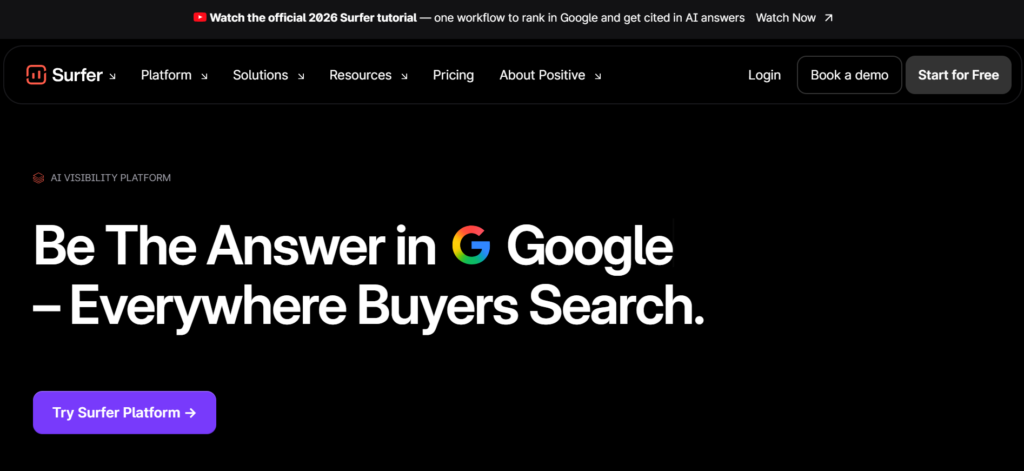
Like Semrush’s approach, the strength here is consolidation rather than category-leading depth. Teams that need the most granular AI-specific reporting may eventually outgrow a bundled feature.
Price: Included in existing Surfer plans.
Best for: Teams already using Surfer SEO for content optimization that want AI visibility tracking without adding another vendor.
Skip it if: You don’t already use Surfer and don’t need its broader content optimization features. A dedicated tool will go deeper on AI tracking alone.
How to choose
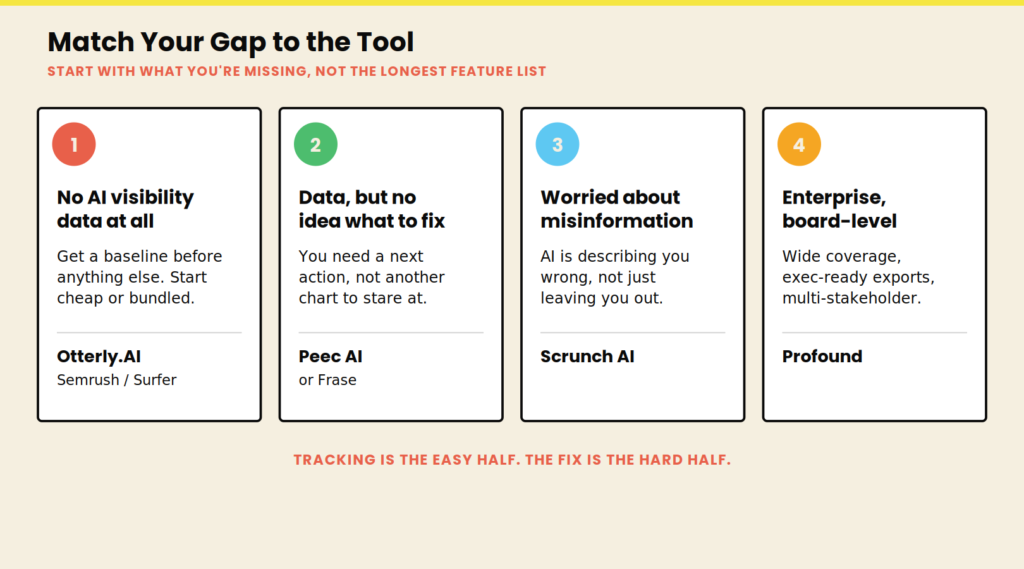
Match the tool to what you’re actually missing, not to the longest engine list.
- No AI visibility data yet: Otterly.AI, or whichever tool bundles into a platform you already pay for.
- Data, but no next step: Peec AI or Frase, both built to turn a gap into an action.
- Worried about misinformation, not just absence: Scrunch AI.
- Enterprise-grade reporting: Profound for the widest coverage, Siftly if you want statistically sampled data over a single daily snapshot.
Tracking is only half the job
A dashboard that shows you’re losing ground only helps if it feeds back into real work: a content calendar and the topical authority building that earns citations in the first place. Our AI visibility guide covers that half in depth. Prefer to hand it off? Our best AI SEO agencies guide covers who does both.
Want a straight read on where your brand stands across ChatGPT, Perplexity, and Gemini?

Jay is the co-founder of LymLyt and an AI partnership consultant helping B2B SaaS companies grow through content strategy, SEO, and AI integration. He writes about content marketing, what makes B2B content convert, and how SaaS teams can build content systems that drive real pipeline.