SaaS Content Marketing Metrics That Actually Matter in 2026
SaaS content marketing metrics often look impressive on a quarterly report: rising pageviews, keyword rankings, social shares. But when the CFO asks how content drives revenue, most teams can’t give a confident answer. That gap between vanity and value has only widened as AI makes it easier to inflate surface-level numbers without moving pipeline.
The fix isn’t abandoning numbers, it’s tracking the ones that actually connect content to leads, pipeline, and revenue. This guide covers six metrics that do that, along with the deeper resources behind each one: the SaaS content distribution playbook, the SaaS content funnel, and the mistakes that quietly kill SaaS content marketing growth.
The Problem With Vanity Metrics
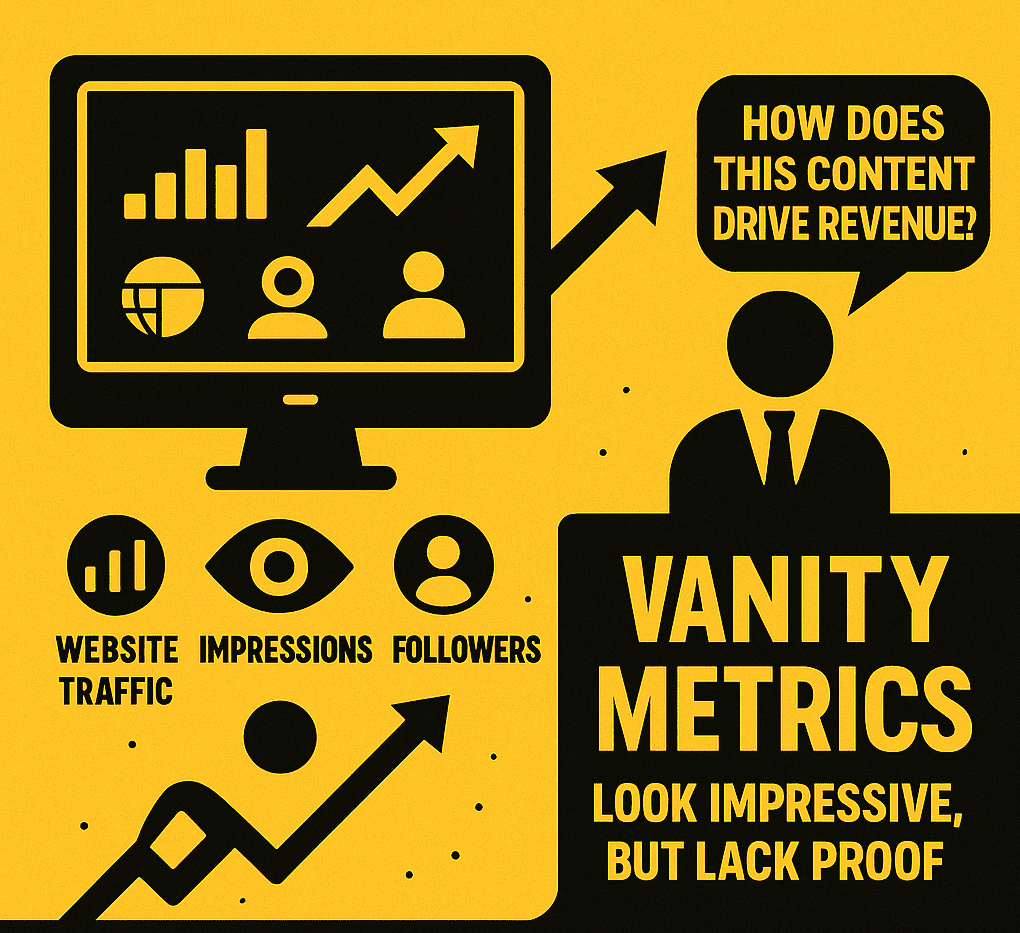
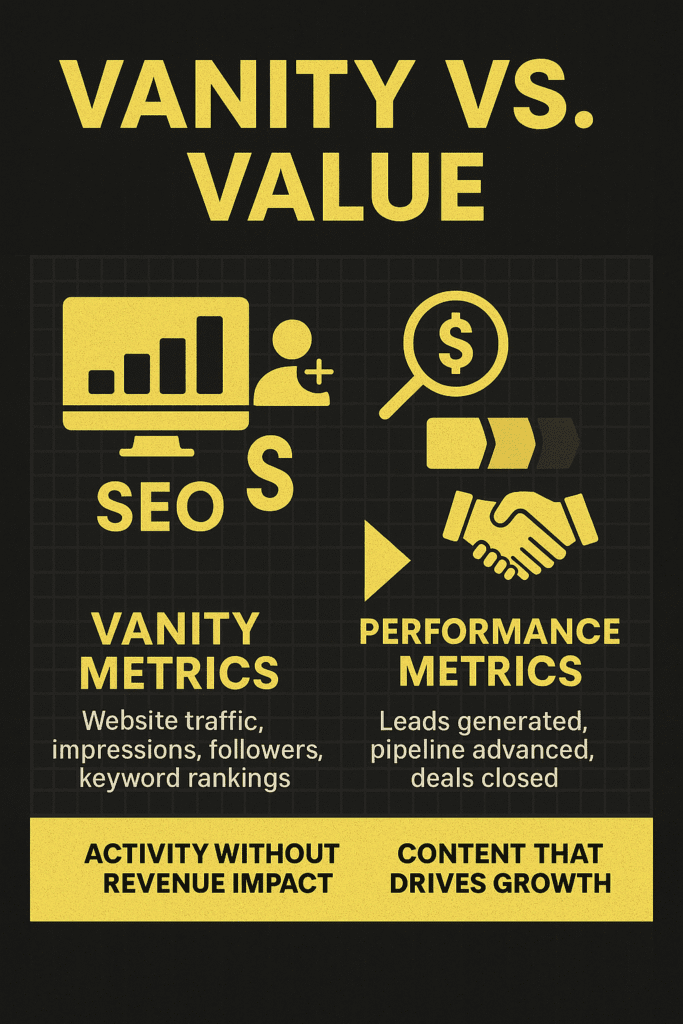
Vanity metrics are seductive. They look impressive in reports, they give teams something to celebrate, and they create a false sense of progress. A dashboard filled with rising pageviews, keyword rankings, likes, and shares can feel like proof that marketing is working. The catch: these numbers rarely correlate with sales, pipeline growth, or actual business impact.
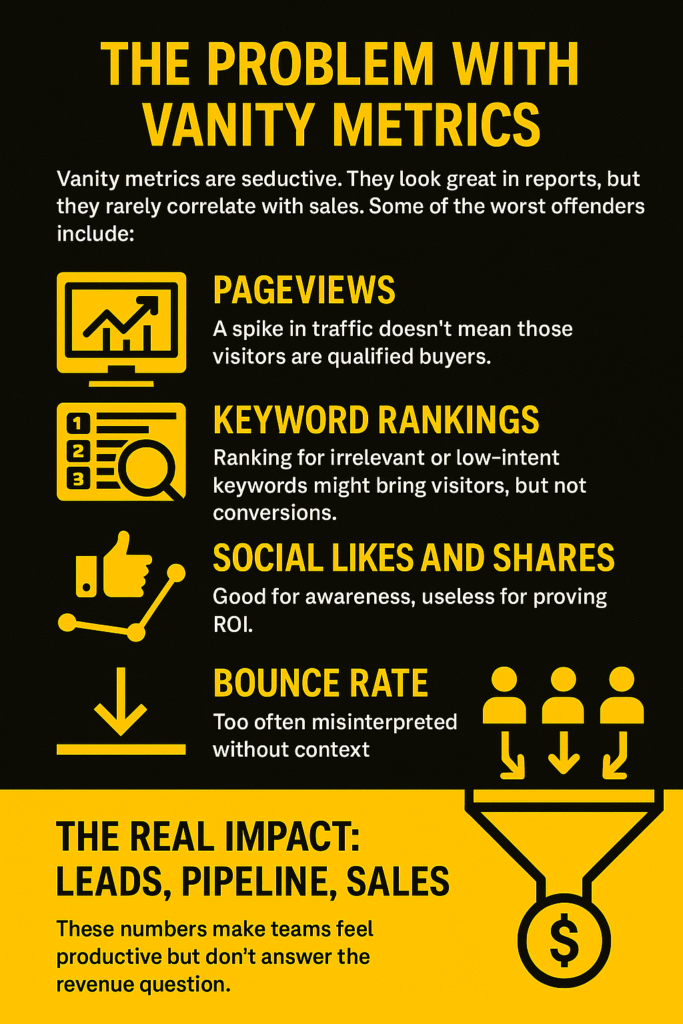
Some of the worst offenders include:
- Pageviews. Traffic isn’t the same as qualified buyers. Thousands of readers mean nothing if they’re not your ICP.
- Keyword rankings. Ranking for irrelevant or low-intent terms looks like a win but won’t deliver conversions.
- Social likes and shares. They build awareness, not ROI. A viral post that doesn’t touch pipeline is meaningless.
- Bounce rate. Easy to misread. A high bounce rate can mean readers got exactly what they needed and left satisfied.
The real problem isn’t the metrics, it’s how they get used. Teams treat them as proof of growth when they’re really just signals of activity. That’s the most common SaaS content mistake: confusing activity with impact.
One SaaS startup we worked with was proud of hitting 50,000 monthly blog visitors. But when we mapped that traffic to the funnel, less than 2% converted to free trials, and fewer still became paying customers. The blog was busy, not productive.
That gap between looking successful and being successful is what frustrates executives. Vanity metrics feel like progress but never answer the one question that matters: how does this content drive revenue?
The takeaway: vanity metrics work fine as directional signals, but they should never anchor your strategy or reporting. Shift the focus to what reflects real business impact: leads generated, opportunities created, deals closed, revenue influenced.
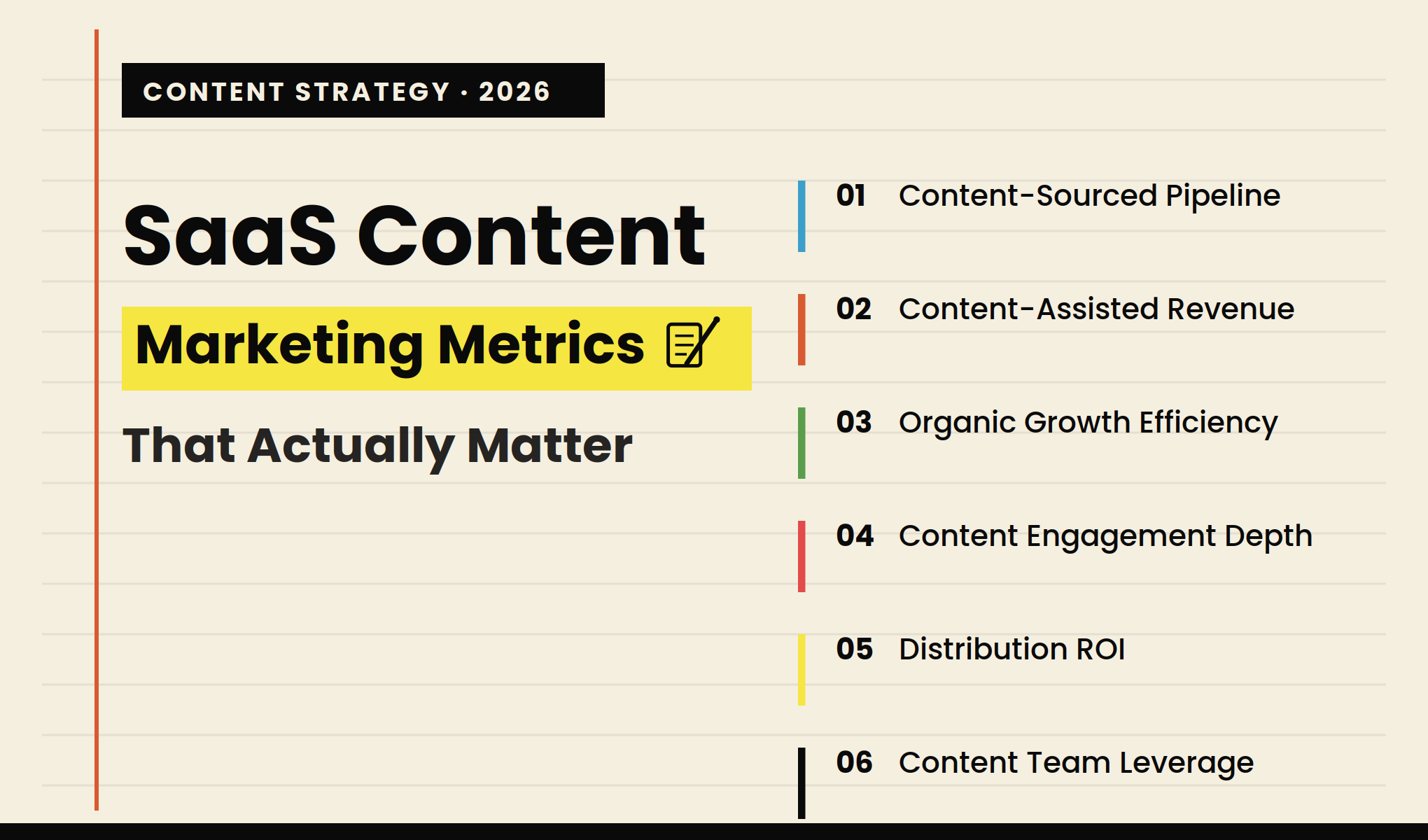
The six SaaS content marketing metrics that actually matter
Here are the six metrics that cut through vanity and prove true business value.
1. Content-Sourced Pipeline
How much pipeline came directly from content, not just traffic or engagement? Content-sourced pipeline counts leads where content was the first touch: a CTO who found your blog and later booked a demo, a VP who downloaded a report and became an MQL.
Track: first-touch attribution in your CRM, pipeline value by content type, and conversion rates by funnel stage.
Why it matters: it proves content drives revenue, not just sessions, and keeps content aligned with sales instead of running as a side project.
How: tag leads by first-touch source in HubSpot or Salesforce, and map content to funnel stages so BOFU assets drive demos while TOFU content opens doors. Mapping this against your SaaS content funnel shows exactly which formats generate pipeline versus vanity traffic.
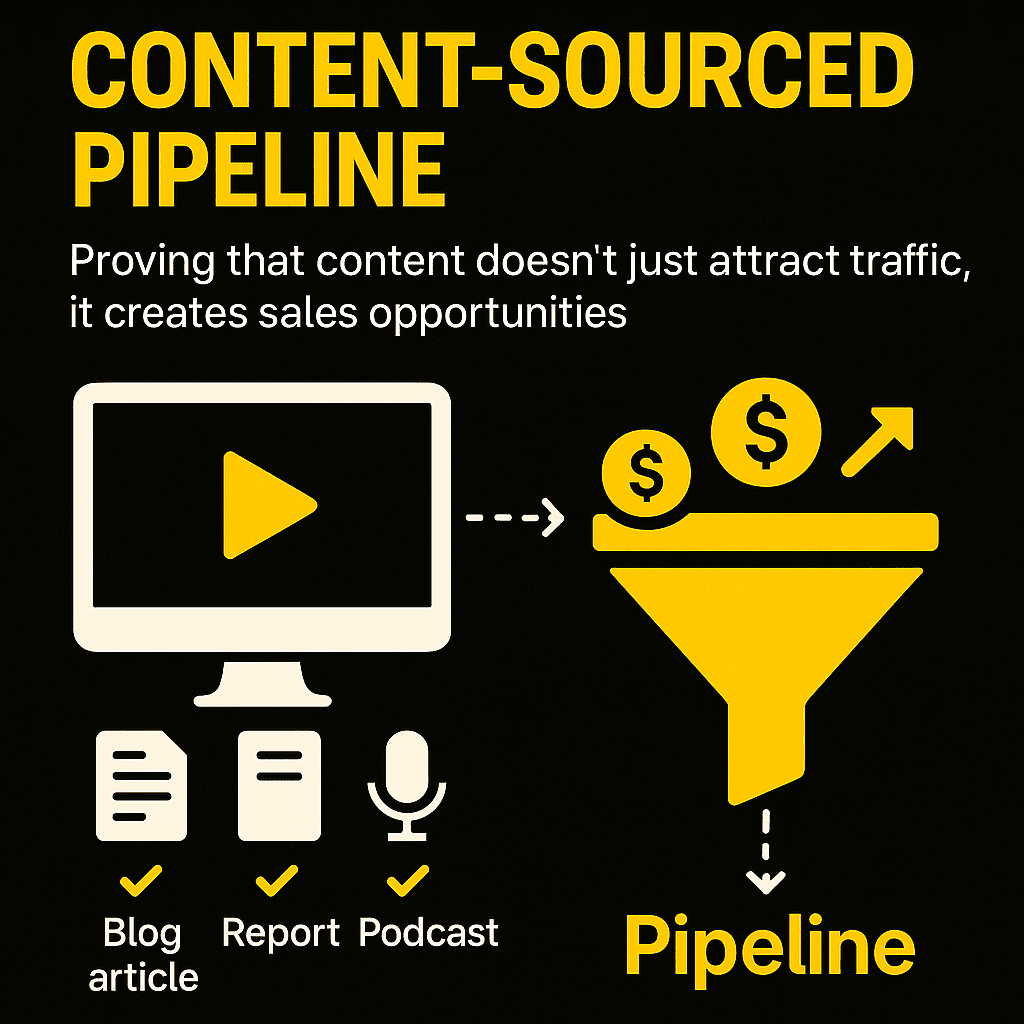
This is where mapping your SaaS Content Funnel pays off. It shows which types of content are designed to generate pipeline instead of just clicks.
2. Content-Assisted Revenue
Not all content sources the first lead. Some content, like a competitor comparison page or a case study shared during procurement, works behind the scenes to close deals already in motion.
Track: multi-touch content influence, assist rate, revenue influenced, and deal acceleration.
Why it matters: SaaS deals involve 6 to 10 stakeholders, and content gives each one the proof they need without more sales calls.
How: configure multi-touch attribution in your CRM, and ask sales directly which assets actually overcome objections. This is also the deciding metric in content marketing versus product-led growth, since PLG gets the user in but content often convinces the buying committee.
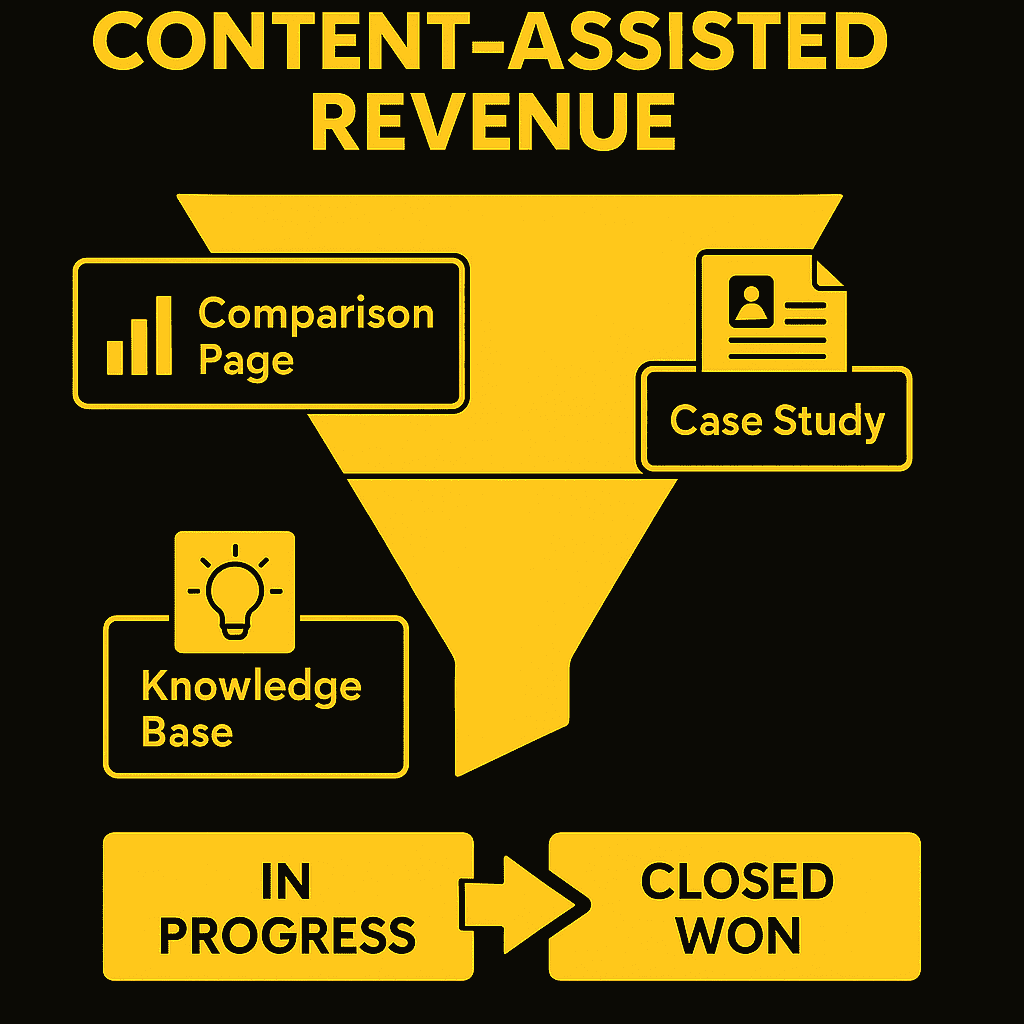
👉 This metric is especially critical in deciding between Content Marketing vs. Product-Led Growth. Even if PLG brings the user in, content may be what convinces the buying committee.
3. Organic Growth Efficiency
Search has split into two systems: Google rankings and AI-generated answers. Efficiency means fewer, stronger assets that show up in both, not more content chasing keyword volume.
Track: citations in AI answers, pipeline value per post, and opportunities created per asset.
Why it matters: one report generating $200k in pipeline beats 30 posts that never convert.
How: use AI visibility tracking tools alongside Semrush or Ahrefs, and calculate cost-to-pipeline ratio per asset. Our guide to SEO versus AI covers the shift driving this in more depth.
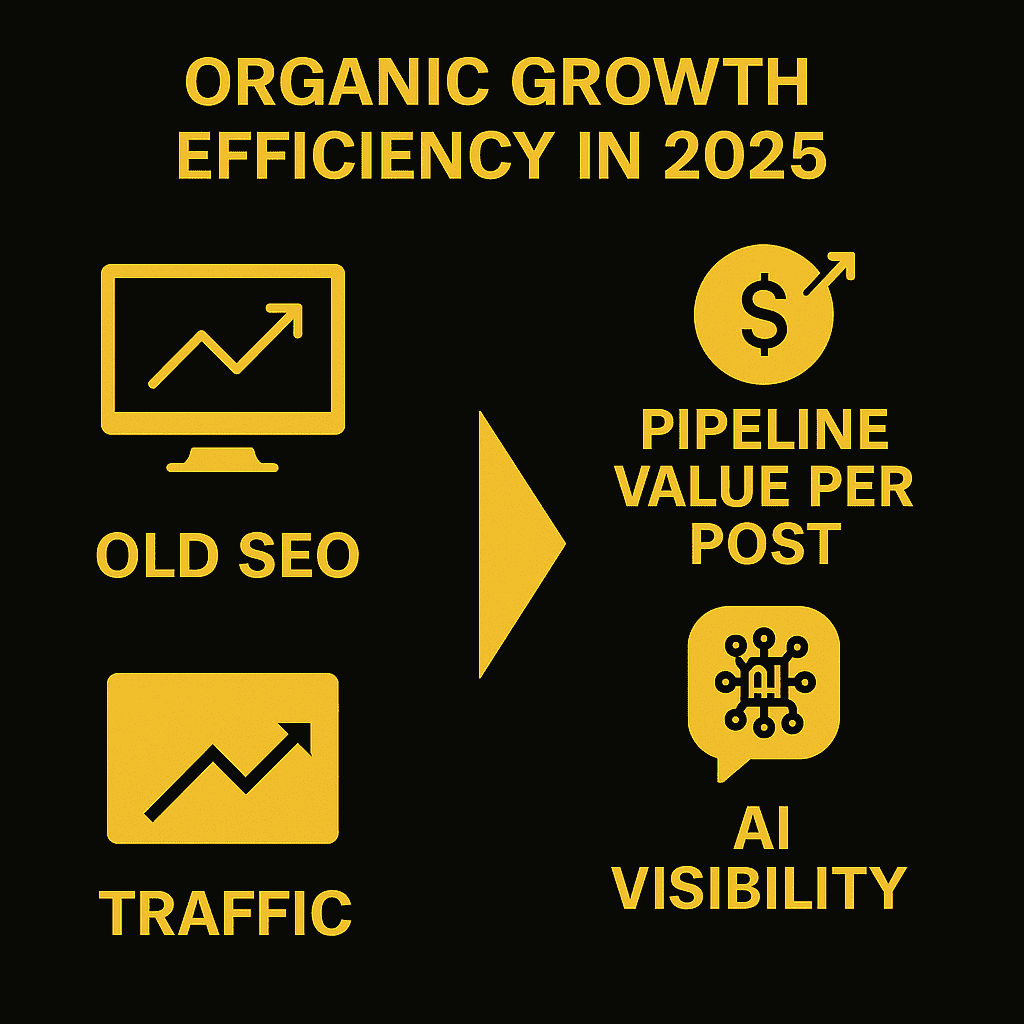
👉 To dig deeper into this trend, read SEO vs AI: The New Future of Search Optimization.
4. Content Engagement Depth
Bounce rate and time on page miss whether content actually mattered. Depth, not surface clicks, is what predicts buying intent.
Track: scroll depth, CTA engagement, returning visitors, and multi-page sessions across topic clusters.
Why it matters: readers who engage with three or more related articles convert to trials at four times the rate of one-and-done visitors.
How: use GA4, Hotjar, or ContentSquare to track scroll and CTA behavior, and compare conversion rates between multi-article readers and single-page visitors.

5. Distribution ROI
Content without distribution doesn’t work, no matter how good it is. One report turned into LinkedIn carousels, a webinar, and YouTube shorts can outperform the original post many times over.
Track: pipeline per channel, repurposing ROI, and engagement by format.
Why it matters: distribution is leverage. The same content budget produces far more pipeline when it reaches multiple channels instead of sitting on one blog.
How: UTM-tag every channel, set up multi-touch attribution, and calculate ROI per channel separately. Our full SaaS content distribution playbook breaks down the channel-by-channel framework.
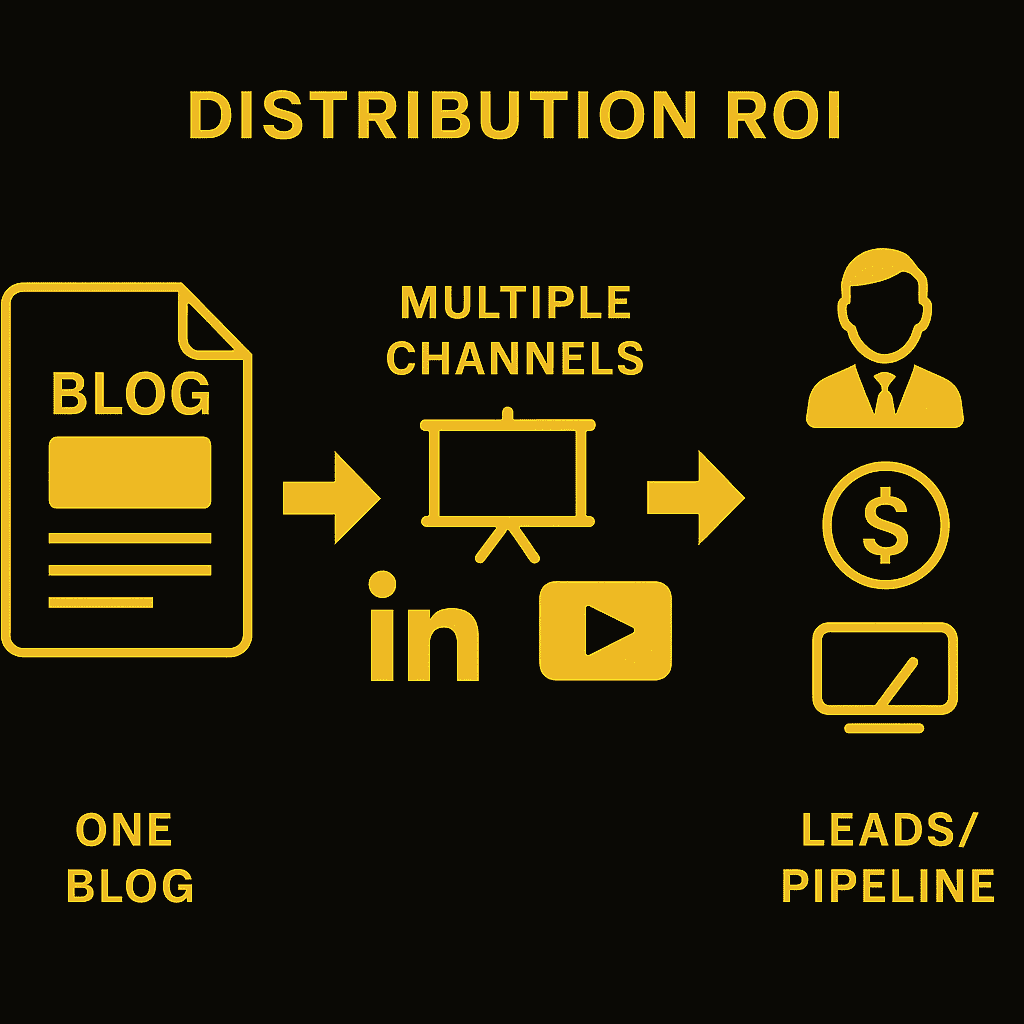
👉 For a full framework, see our SaaS Content Distribution Playbook.
6. Content Team Leverage
The real question isn’t how much content you publish, it’s how much ARR each marketer drives.
Track: ARR per marketer, output-to-impact ratio, and efficiency gains as processes improve.
Why it matters: a founder writing solo caps growth at their own bandwidth. One content manager with a real system can build a SaaS content engine that drives $750k in ARR with the same headcount.
How: attribute revenue to content touchpoints in your CRM, and track ARR per marketer over time, not just output volume. This is the core argument behind why founders shouldn’t write their own blog posts: the job is building the system, not writing every post.
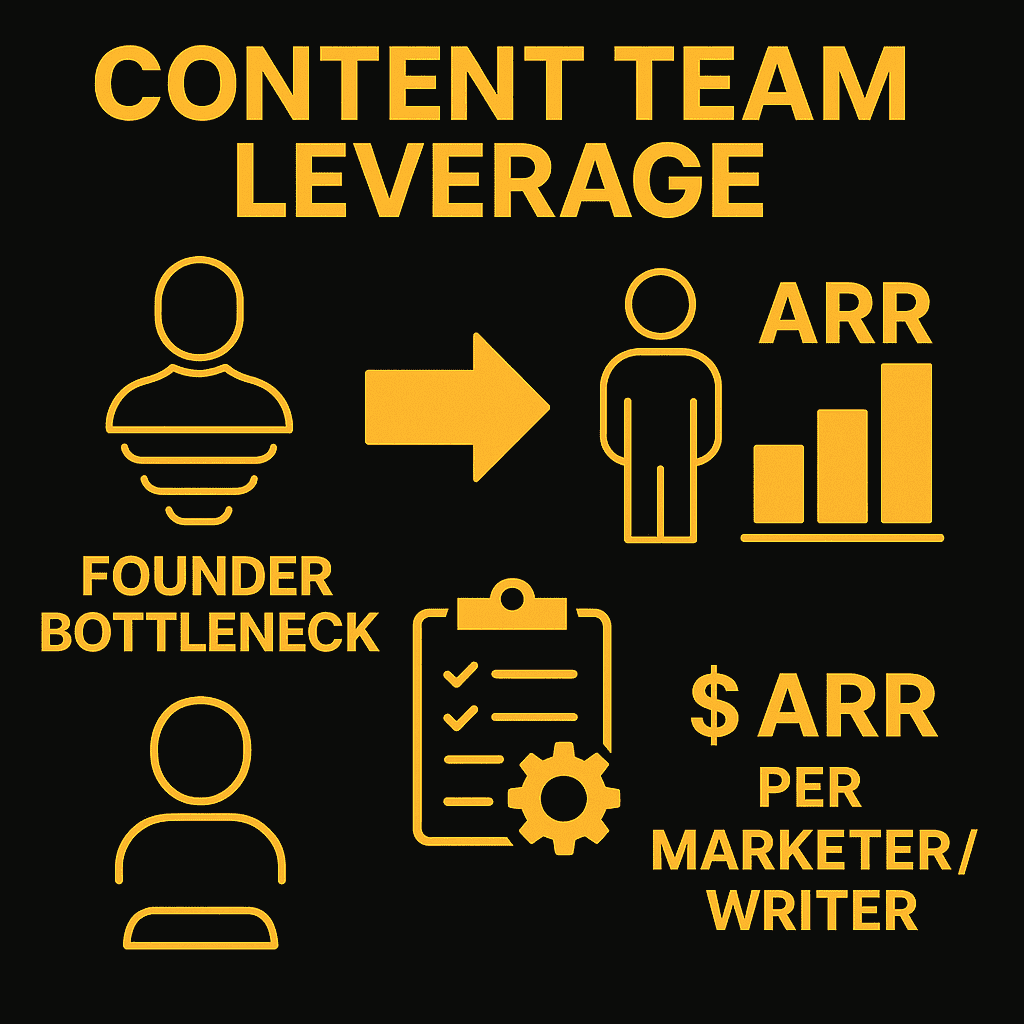
👉 As we argued in Why Founders Shouldn’t Write Their Own Blog Posts, your role as a founder is not to write everything, but to enable a system that consistently produces high-impact content.
Measure team leverage by tying ARR growth to team size. A lean team producing measurable results is a growth engine. A bloated team producing vanity metrics is a cost center.
Pulling It All Together
TThe metrics that matter in 2026 are not surface-level. They are outcome-driven.
- Content-sourced pipeline
- Content-assisted revenue
- Organic growth efficiency
- Content engagement depth
- Distribution ROI
- Content team leverage
If you need a starting point for connecting all six into one system, our complete guide to content marketing for SaaS startups covers how to link creation, distribution, and measurement into a single growth engine.
Conclusion
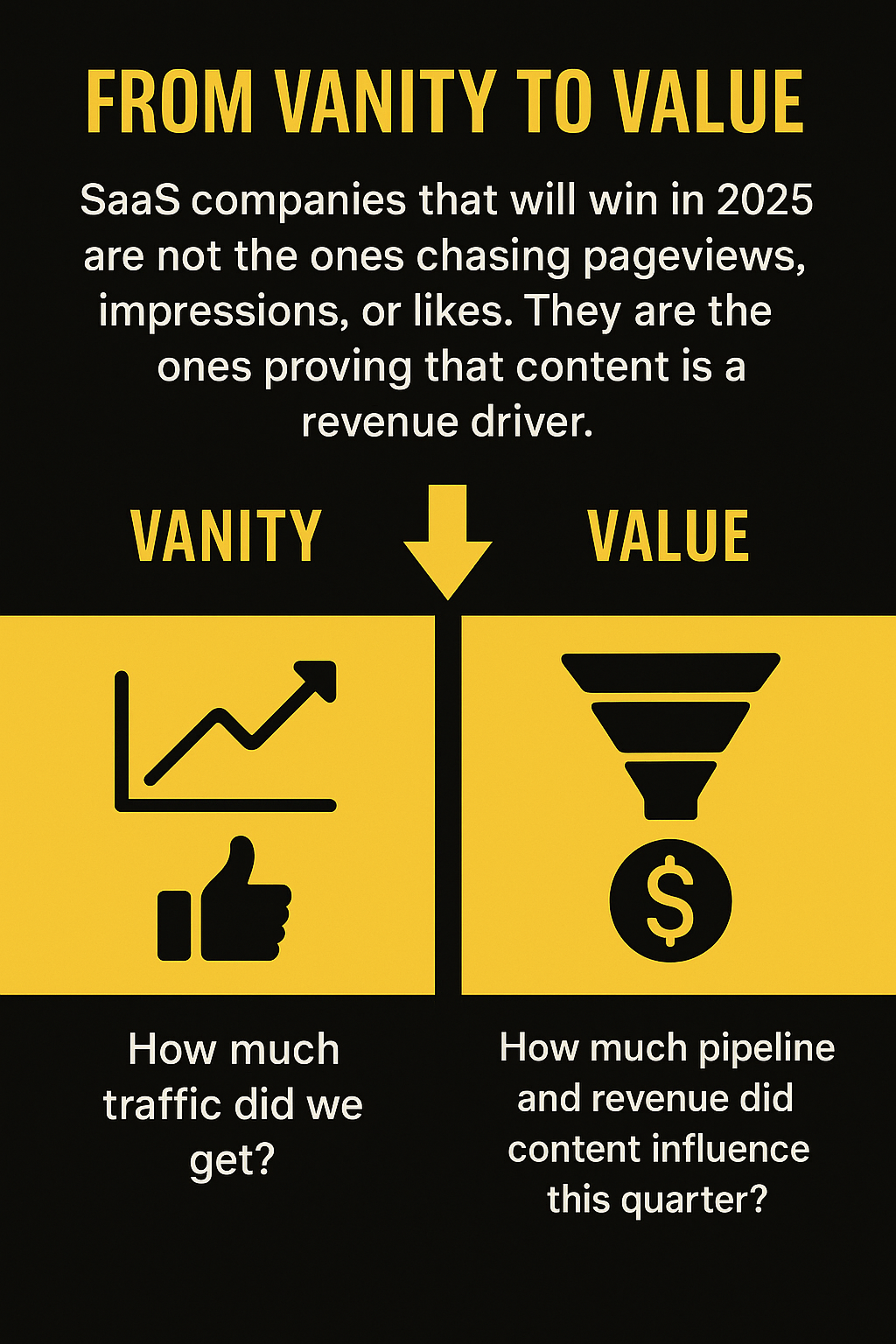
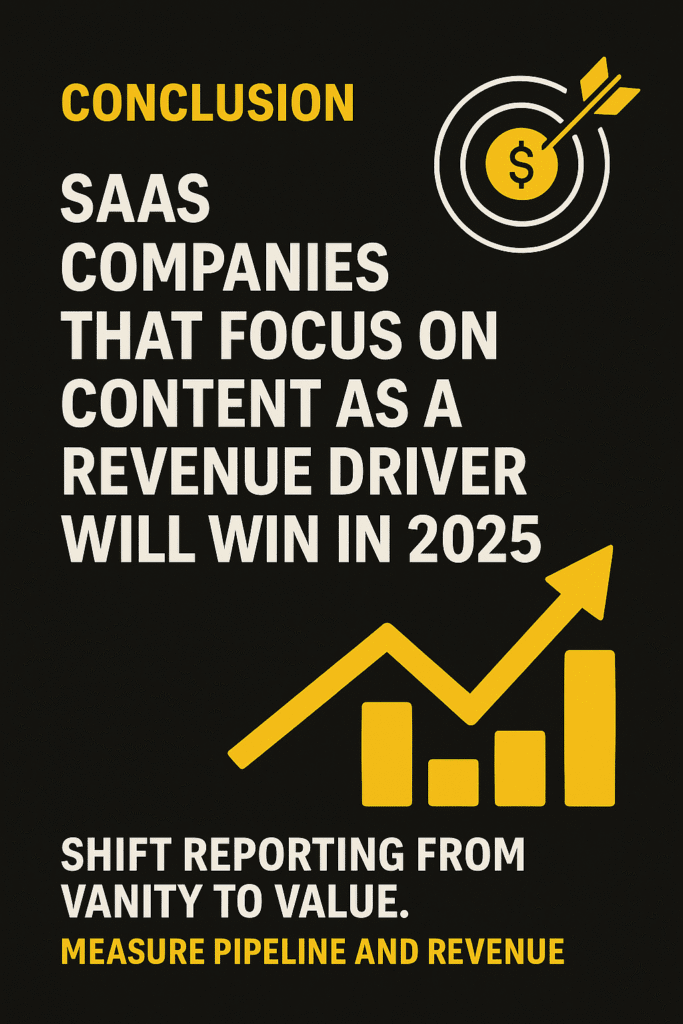
SaaS companies that win in 2026 are not the ones obsessing over pageviews, impressions, or likes. Those numbers look exciting on a dashboard, but they don’t keep the lights on. The real winners are the teams who can prove that content is a revenue driver.
That requires a mindset shift, from vanity to value. Instead of asking how much traffic you got this month, ask how much pipeline and revenue your content created or influenced this quarter.
When you start measuring what actually matters, everything changes. You earn the trust of your executives, because they see marketing tied directly to business outcomes, not just activity. You gain the confidence of your sales team, because content is actively helping them win deals instead of sitting idle on the blog. You build the momentum of a real growth engine, where every piece of content has a clear role in generating leads, advancing opportunities, and closing revenue.
That’s the difference between content that fills space and content that fuels growth. It’s not about producing more. It’s about proving more.
Want a partner in making that shift? Book 30 minutes with us and we’ll walk through what your content is actually doing for pipeline right now, and what it would take to prove it.

Jay is the co-founder of LymLyt and an AI partnership consultant helping B2B SaaS companies grow through content strategy, SEO, and AI integration. He writes about content marketing, what makes B2B content convert, and how SaaS teams can build content systems that drive real pipeline.