
The Complete Guide to Content Marketing for SaaS Startups
Startups treat content marketing as a traffic strategy. They find keywords, write posts, publish twice a week, and wait for leads. Six months later the traffic is flat. The team is exhausted. Someone in leadership is asking why the blog is not generating pipeline.
The problem is not the content. It is the absence of a strategy behind it.
Content marketing for SaaS startups is not about volume. It is about building a system that educates buyers, earns their trust, and moves them toward a decision. At every stage of the journey. In the right format. With the right argument.
This guide is for SaaS founders and marketing leads who want to build that system. Not a list of tactics. A framework you can actually execute.
Why Content Marketing for SaaS Startups Is Different
SaaS is not like selling a physical product. Your buyers cannot hold it, try it for five minutes in a store, or return it if it does not work. They are being asked to change how their team operates. Potentially move data between systems. Convince multiple stakeholders to sign off on a recurring expense.
That buying process takes time. It involves research, comparison, internal debate, and a lot of reading before anyone books a demo.
Content fills that gap. The SaaS companies winning on organic are the ones whose content shows up at every stage of that research. Answering questions buyers are asking before they even know they are in market.
Content also compounds. A blog post published today keeps working for months. A paid ad stops the moment you stop paying. Over time, content becomes the cheapest and most durable acquisition channel you have. This is what building a real SaaS content engine looks like in practice. Not a content calendar. A system that compounds.
Start Here: Know Exactly Who You Are Writing For
Before you write a single word, you need to know who reads it.
Not “B2B SaaS marketers.” Not “growth-stage founders.” One specific person. Their job title. Their frustrations. What they read. What keeps them awake at night. What a win looks like for them on a Tuesday afternoon.
Your ICP is probably not reading your blog right now. There is a specific reason for that. Most SaaS blogs write for a demographic instead of a person. The result is content that applies to anyone, which means it resonates with no one.
The fix is not a more detailed persona document. It is writing every post as if you know exactly who is going to read it. What are they trying to figure out? What do they already know? What objection do they need answered before they will take the next step?
When you get this right, the content stops feeling like marketing. It starts feeling like the most useful thing they read this week.
According to ProfitWell research, SaaS companies that invest heavily in content marketing experience 30% higher growth rates and 5-10% better retention rates. This translates to significant revenue impact, with content marketing leaders reporting 7.8x higher year-over-year growth than content marketing laggards.
“Content isn’t just another marketing tactic for SaaS companies—it’s the foundation of the entire customer journey from awareness to advocacy. The most successful SaaS businesses are those that view content as a product itself, investing in its quality and measuring its impact rigorously.”
— Sarah Ware, CEO of Markerly
Also read: Top SaaS Content Marketing Mistakes That Kill Growth
Key Content Marketing Metrics for SaaS
| Metric | Description | Benchmark (Industry Average) |
|---|---|---|
| CAC (Customer Acquisition Cost) | Total marketing expenses ÷ number of new customers | $205-$500 for SMB SaaS, $8,000-$12,000 for enterprise SaaS |
| LTV:CAC Ratio | Customer lifetime value ÷ customer acquisition cost | 3:1 or higher indicates good efficiency |
| MQL to SQL Conversion | % of marketing qualified leads that become sales qualified | 13% average across B2B SaaS |
| Content Engagement Rate | Average time on page, scroll depth, or interaction rate | 2-4 minutes for blog content |
| Organic Traffic Growth | Year-over-year growth in non-paid search traffic | 20-30% YoY for established content programs |
| Free Trial Conversion Rate | % of free trial users who become paying customers | 14-25% depending on product complexity |
Source: OpenView Partners’ 2024 SaaS Benchmarks Report
Build Your Content Marketing Strategy Around Clusters, Not Keywords
The most common content strategy mistake in SaaS is treating posts as individual assets. Write a post, publish it, move to the next keyword. The result is 40 posts with no relationship to each other that tell Google nothing about your expertise.
Topic clusters outperform keyword lists every time. The reason is topical authority. Google’s way of recognising that your site comprehensively covers a subject, not just individual keywords.
The cluster model works like this:
Pick 3 to 5 core topic areas. They should map directly to what your product solves and what your buyers search for. For a content marketing agency that might be content strategy, SEO, landing pages, distribution, and metrics.
Build a pillar post for each topic. A comprehensive piece that covers the topic at a high level and links out to every supporting post in the cluster.
Build supporting posts. These go deep on specific subtopics the pillar introduces but does not fully cover. Each one links back to the pillar and to other relevant posts in the cluster.
Connect everything with internal links. This is what makes the cluster work. Links between posts pass authority and tell Google that these pages belong together. This is also why most B2B blogs fail to build any ranking momentum despite publishing consistently. They never connect the dots.
Before you build clusters, know what your buyers are actually searching for. The best keyword research tools show you not just volume but intent. That is what determines whether a ranking brings in the right audience.
HubSpot’s research indicates that using personas makes websites 2-5 times more effective and easier to use by targeted users. For SaaS companies specifically, Gartner reports that purchase decisions involve an average of 6-10 decision-makers, each requiring different content types.
“The biggest mistake I see SaaS companies make is creating content for a generic ‘user’ rather than addressing the specific concerns of each stakeholder in the buying process. Technical evaluators, end users, and financial decision-makers all need different questions answered before they can advocate for your solution.”
— Rand Fishkin, Co-founder of SparkToro and Moz
Competitive Content Analysis
Analyze how competitors are approaching content:
| Competitor | Content Types | Publishing Frequency | Key Topics | Distribution Channels | Strengths |
|---|---|---|---|---|---|
| Competitor A | Blog posts, webinars, case studies | 3x weekly | Integration, automation, analytics | Email, LinkedIn, YouTube | Technical depth, visual quality |
| Competitor B | Podcasts, templates, infographics | 2x weekly | Security, compliance, onboarding | Twitter, industry forums | Community engagement |
| Competitor C | White papers, video tutorials, knowledge base | 1x weekly + product updates | API, customization, industry solutions | Direct email, partner channels | Comprehensive documentation |
This analysis reveals opportunities for differentiation and audience capture.
Content Marketing for SaaS Startups Across the Full Funnel
A content strategy that only covers one funnel stage leaves money on the table. Here is what each stage needs and why.
Top-of-Funnel (Awareness Stage)
TOFU content is for people who have a problem but have not decided what kind of solution they need. They are searching for information, not vendors.
The goal is to be the most useful resource they find. Not to sell. Not even to mention your product yet.
What works:
- Blog posts that answer specific questions your ICP is searching for
- Guides that explain a concept or a framework in depth
- SEO-optimised content targeting informational keywords
Every business needs a blog. But the blog only works if it is written for a specific reader with a specific problem. Generic TOFU content attracts generic traffic that converts nobody.
The biggest TOFU mistake is publishing content that sounds like everyone else. If your post on “content marketing for SaaS startups” could have been written by any of your 10 closest competitors, it is not giving Google or your readers a reason to choose you.
Understanding the difference between SEO writing and content writing is what separates TOFU content that ranks from TOFU content that just exists. The SEO writing tips that actually rank start with intent, not keyword density.
According to the 2024 Edelman-LinkedIn B2B Thought Leadership Impact Study, 48% of decision-makers spend more than one hour per week consuming thought leadership content, and 65% said it has increased their respect for an organization.
Middle-of-Funnel (Consideration Stage)
MOFU content is for people who know they have a problem and are now evaluating types of solutions. They are comparing approaches, reading case studies, and forming opinions about which vendors understand them.
What works:
- Comparison posts (your approach vs alternatives)
- Frameworks and methodologies that reflect your point of view
- Content that addresses specific objections or concerns
Competitor comparison pages are the most underrated and underused asset at this stage. A well-built comparison page speaks directly to a buyer who is already evaluating and gives them a reason to choose you that goes beyond feature lists.
Research from Demand Gen Report shows that 78% of B2B buyers use case studies when researching purchases, making them the most influential content type for middle-funnel evaluation.
“The mistake many SaaS startups make is rushing to promote their features before establishing why those features matter. Your middle-funnel content should connect your unique capabilities to specific outcomes your prospects care about, using real customer examples whenever possible.”
— April Dunford, Positioning Expert and Author of “Obviously Awesome”
Bottom-of-Funnel (Decision Stage)
BOFU content is for people who are close to buying. They know they need a solution. They have a shortlist. They are looking for reasons to commit or reasons to walk away.
What works:
- Case studies with specific, named results
- ROI calculators and concrete proof of impact
- Implementation guides that reduce perceived risk
- Pricing pages that answer objections before they are raised
Mapping BOFU content to actual demos and pipeline is the step most content teams skip. They publish TOFU content, generate traffic, and then have no conversion path for visitors who are ready to buy. Every piece of BOFU content should have a clear, specific next step.
According to Totango’s 2023 SaaS Metrics Report, companies offering interactive bottom-funnel content like assessment tools and calculators see 40% higher conversion rates than those using static content alone.
Also read: SaaS Content Funnel: How to Map BOFU to Demos
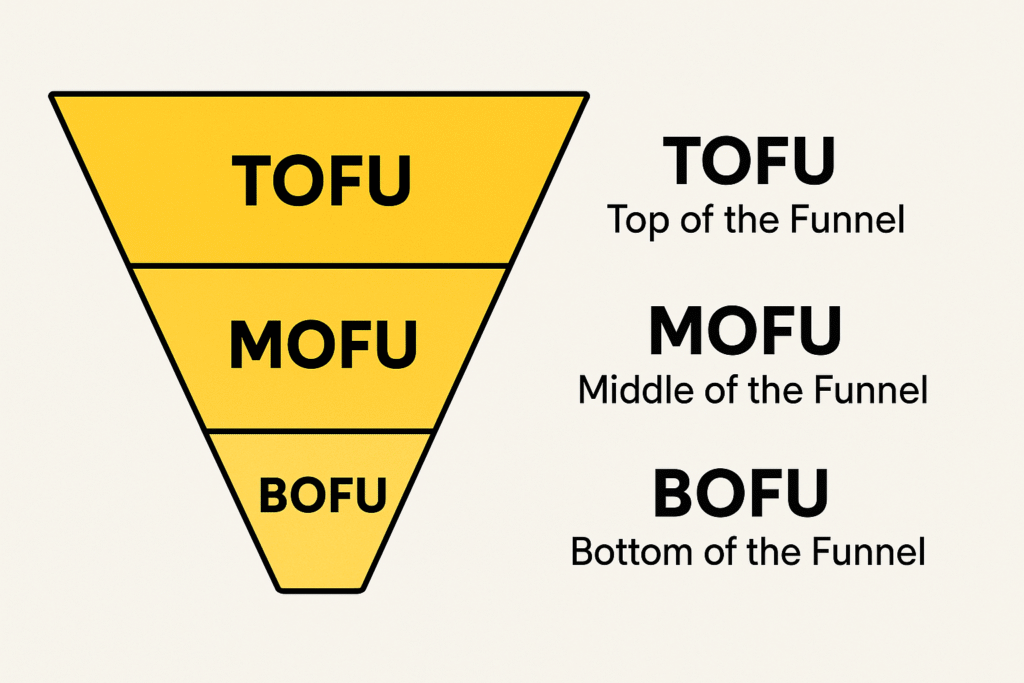
| Funnel Stage | Content Type | Format | Distribution Channel | Measurement |
|---|---|---|---|---|
| Top of Funnel | “10 Challenges of Customer Data Management” | Blog post | Organic search, social | Traffic, time on page |
| Middle of Funnel | “Building vs. Buying a Customer Data Platform” | Comparison guide | Email nurture, retargeting | Downloads, follow-up actions |
| Bottom of Funnel | “ROI Calculator: Measuring the Impact of Our Platform” | Interactive tool | Direct outreach, demo follow-up | Completed calculations, sales meetings |
The Content Types That Actually Work for SaaS Startups
Not all content formats are equal. Here is what performs and why.
Blog posts are the foundation. Long-form, well-structured, genuinely useful. Not 500-word summaries that answer the headline and nothing else.
Case studies are the most underused format in SaaS. A case study with a specific customer, a specific problem, and specific results is more persuasive than any amount of feature copy. Most SaaS companies either do not have case studies or have ones so vague they could apply to anyone.
Comparison pages sit at the intersection of SEO and conversion. Someone searching “[Your Competitor] vs [Your Product]” is close to a decision. If you are not ranking for those queries, your competitor is.
Newsletters turn one-time visitors into repeat readers. A well-built B2B newsletter is one of the highest-leverage distribution channels available. It builds a direct relationship with your audience that does not depend on an algorithm.
Landing pages are often an afterthought in content strategies. They should not be. A high-converting landing page for a specific use case, industry, or integration can capture bottom-of-funnel intent that a blog post cannot.
Write a Brief Before Every Single Post
The most common reason content comes back wrong is a brief that transferred keywords but not decisions.
A proper content brief includes the reader, the argument, the funnel stage, the CTA, and the internal links before the writer types a word. Without it, writers make assumptions. Assumptions lead to revisions. Revisions lead to content that is technically correct and completely forgettable.
The brief is not a word count and a keyword. It is the document that transfers context from the person who knows the goal to the person who has to execute it.
Distribution Channels for SaaS Content
Publishing is not distributing. This is the mistake that kills more content programs than any other.
A post goes live. Someone tweets it. It goes into the newsletter. Three weeks later nobody remembers it and the team has moved on to the next one.
A real SaaS content distribution playbook treats every piece of content as an asset that needs active promotion across multiple channels. LinkedIn, email, communities, internal sales enablement: all of it is distribution. All of it matters.
The compounding effect of content only kicks in when distribution is consistent. A post that ranks on page one gets traffic forever. A post that ranks on page three gets nothing. Distribution is what accelerates the path from page three to page one.
Let’s check out what these channels are and their strategies:
Organic Search and SEO
For SaaS companies, search remains the most sustainable long-term channel. According to BrightEdge research, SEO drives 53% of website traffic across industries, with an even higher percentage for B2B SaaS.
Key strategies:
- Conduct comprehensive keyword research focused on both product and pain point terms
- Optimize for featured snippets and SERP features
- Create linkable assets like original research, tools, and comprehensive guides
- Build topical authority through clustered content strategies
Email Marketing
Email continues to be a high-ROI channel for SaaS content distribution:
- Segment lists based on funnel stage, persona, and behavior
- Create automated nurture sequences triggered by specific actions
- Use progressive profiling to gather more information over time
- Employ engagement-based lead scoring
Campaign Monitor data shows that segmented email campaigns drive a 760% increase in revenue compared to one-size-fits-all campaigns.
Social Media and Community Building
B2B SaaS companies find varying success across social platforms:
- LinkedIn: 80% of B2B social media leads come from LinkedIn (Foundation Inc.)
- Twitter: Effective for customer service and industry conversations
- Reddit and specialized forums: Valuable for developer-focused SaaS
- Private communities: Increasingly important for nurturing prospects and customers
Content Partnerships and Syndication
Amplify reach through strategic partnerships:
- Guest posting on industry publications
- Co-created content with complementary vendors
- Sponsored content in industry newsletters
- Podcast appearances and interviews
According to the Content Marketing Institute, 69% of the most successful B2B marketers use content syndication, compared to only 45% of the least successful.
KPIs by Content Type
Different content assets serve different purposes and should be measured accordingly:
- Blog posts: Traffic, engagement metrics, lead magnet downloads
- Gated content: Conversion rate, lead quality, pipeline influence
- Case studies: Views, sales usage, close rate influence
- Webinars: Registration rate, attendance rate, question engagement
- Product content: Feature adoption, onboarding completion, time-to-value
Scaling Your Content Operations
As your SaaS company grows, systematic content operations become essential.
Content Production Workflows
Establish streamlined processes for:
- Content ideation and prioritization
- Brief development and approval
- Creation and subject matter expert review
- Editorial review and quality assurance
- Publication and promotion
- Performance analysis and optimization
According to Kapost research, companies with documented content workflows are 36% more effective at content marketing overall.
Content Technology Stack
| Function | Tool Categories | Popular Solutions for SaaS | Integration Considerations |
|---|---|---|---|
| Planning & Management | Editorial calendars, project management | Airtable, Asana, Trello, CoSchedule | Must integrate with marketing automation |
| Creation & Collaboration | Document editors, design tools | Google Workspace, Canva, Figma | Version control and feedback processes |
| SEO & Research | Keyword research, competitive analysis | Ahrefs, Semrush, Clearscope | Content brief workflow integration |
| Distribution & Promotion | Email, social media, advertising | HubSpot, Klaviyo, Buffer | Customer data platform connections |
| Analytics & Optimization | Performance tracking, testing | Google Analytics, Hotjar, Optimizely | Attribution model alignment |
| Content Personalization | Dynamic content, recommendations | Mutiny, RightMessage, Intellimize | Product usage data integration |
Content Team Structure
As you scale, your team will likely evolve through these stages
- Founding stage: Founder-led content with freelance support
- Growth stage: Dedicated content manager with agency/freelancer network
- Scaling stage: Specialized roles (content strategist, SEO specialist, editors)
- Enterprise stage: Full content team with channel specialists and operations support
According to a ProfitWell analysis, the average Series A SaaS company allocates 30-35% of its marketing budget to content creation and distribution.
Advanced Content Marketing Tactics
Interactive Content and Tools
SaaS companies can leverage their technical capabilities to create interactive content:
- Free tools that solve smaller versions of the problems your product addresses
- Assessments and benchmarking calculators
- Interactive decision trees and solution finders
- Data visualizations and customizable templates
According to Demand Metric, interactive content generates 2x more conversions than passive content, making it particularly valuable for SaaS companies looking to demonstrate value before a purchase.
Product-Led Content
Blur the lines between product experience and content:
- Free product modules that deliver immediate value
- Interactive product tours embedded in educational content
- Documentation that doubles as marketing material
- User-generated content showcasing real implementation
OpenView Partners reports that product-led SaaS companies have 2x higher valuations and 9% better net dollar retention than sales-led organizations.
AI-Enhanced Content Strategy
Leverage artificial intelligence to scale content operations:
- AI-powered content research and topic identification
- Predictive analytics for content performance
- Personalized content recommendations based on user behavior
- Automated content updates and optimization
According to Salesforce research, 84% of marketers now use AI for at least some content tasks, with the highest ROI coming from personalization and content analytics applications.
What to Measure in Your SaaS Content Marketing Strategy
Traffic is the wrong primary metric. It tells you how many people showed up, not whether they were the right people or whether they did anything useful.
The SaaS content marketing metrics that actually matter are tied to pipeline and revenue:
- Content-attributed MQLs and demos
- Trial signups from organic search
- Time-to-close for leads that engaged with content vs those that did not
- Content-influenced pipeline (how many open deals touched at least one piece of content before the first call)
Traffic, impressions, and social shares are leading indicators. Pipeline is the outcome. If your content reporting only covers the leading indicators, you cannot make the case for more investment.
The Most Common SaaS Content Marketing Mistakes
These are the mistakes that explain why most SaaS content programs stall. They are also covered in depth in the top 10 SaaS content marketing mistakes that kill growth.
Publishing without a strategy. Random posts on random topics build no authority. Every post should serve a cluster, target a specific reader at a specific stage, and connect to other content on the site.
Writing for everyone. Content that tries to speak to every possible reader ends up speaking to none of them. Pick your ICP and write for that person specifically.
Ignoring internal links. Every post should link to at least three or four others. Internal links pass authority between pages and tell Google how your content is structured. A site with 40 unlinked posts has almost no topical authority. A site with 40 connected posts starts building it immediately.
Measuring vanity metrics. Pageviews feel good. Pipeline impact is what gets budget approved. Set up measurement before you start publishing, not six months later when someone asks what the blog has achieved.
Publishing and abandoning. A post that ranked on page five six months ago might rank on page one today with a few updates and new internal links. Regular content audits and refreshes are one of the highest-ROI activities in any content program.
The Bottom Line
Content marketing for SaaS startups works when it is built like a business asset. With a clear strategy, specific readers, consistent distribution, and measurement tied to outcomes.
It fails when it is treated as a publishing schedule. When the goal is “post twice a week” rather than “build topical authority in three clusters and move qualified buyers through the funnel.”
The companies winning on organic in 2026 started building their content systems two years ago and did not stop. The second-best time to start is now, but only if you are willing to do it properly.
If you want help building the strategy behind your content, let’s talk.

Rashmita is content marketer with 8 years of experience building and growing SaaS brands. Now she tests various AI tools for marketers and shares her feedback on this blog, LinkedIn, Instagram, and YouTube.