9 Best Pabbly Connect Alternatives in 2026
Anyone researching Pabbly Connect alternatives usually starts from a place of loyalty, not frustration. Pabbly Connect built its whole pitch around one thing: automation at a price Zapier cannot touch. Standard plan runs $16 a month for 12,000 tasks a year, billed annually, and the free plan gives you 100 tasks a month to test it. For a bootstrapped founder tired of watching a Zapier bill climb, that is a genuinely good deal.
But the reasons people go looking for Pabbly Connect alternatives are just as real as the reasons they signed up in the first place. There is no monthly billing on the good plans, so you commit for a year or buy a lifetime deal before you know if the platform fits. There is no real AI layer, every workflow is fixed rules. And support is email-only below the top tier, with response times that can stretch past a day.
None of that makes Pabbly a bad tool. It makes it the wrong tool for a specific set of workflows: anything that needs AI reasoning, anything you want to test month to month, and anything mission-critical enough that a 36-hour support wait is a real problem. This guide covers 9 tools worth considering instead, the same category we mapped out in our AI workflow automation tools guide, what each one does better than Pabbly, and what you give up by switching.
What to check before you switch
Billing flexibility. Pabbly’s cheapest real plans require annual or lifetime commitment. If you want to test a tool for a month before committing, several alternatives below offer that and Pabbly does not.
AI capability. Pabbly runs on fixed, rule-based logic. If your workflows need something to read unstructured text, make a judgment call, or draft a response, you need a tool with real AI steps, not a chatbot bolted onto the marketing page.
App coverage for your specific stack. Pabbly connects to more than 1,000 apps. That sounds like a lot until the one tool you actually need is missing. Check your top 5 tools against any alternative’s app list before committing to anything, the same audit worth running before choosing keyword research tools or any other part of your marketing stack.
Support responsiveness. If an automation breaks and it touches revenue, a 24-to-36-hour email response time is not acceptable. Some of the tools below charge more specifically because the support is faster.
The 9 best Pabbly Connect alternatives
1. Zapier
Zapier is the tool most people compare everything else against, and for good reason. It connects to roughly 9,000 apps, more than anything on this list, and if a tool exists, Zapier almost certainly supports it. The setup is genuinely simple, the documentation is everywhere, and Zapier’s AI layer, split into AI Orchestration, AI Agents, and Chatbots, is more mature than anything Pabbly currently ships.
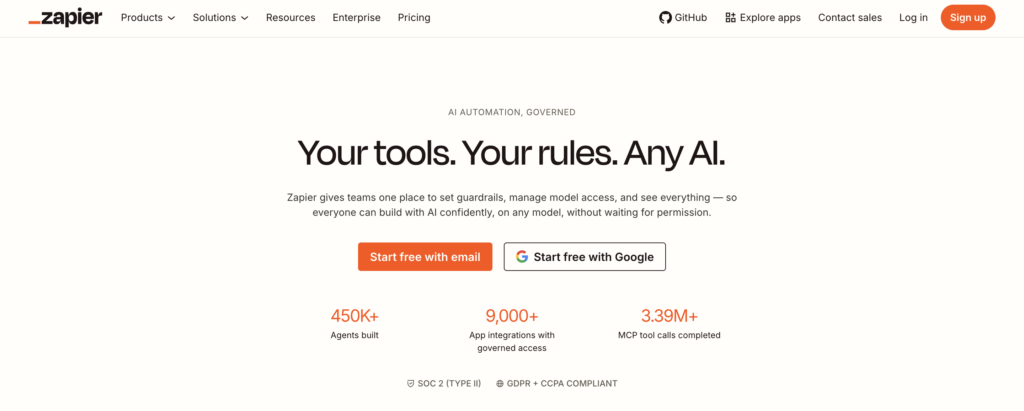
The trade is price. Zapier bills per task, and task costs climb fast at volume. If you are switching away from Pabbly specifically to lower your bill, Zapier is not that tool. Switch to Zapier for the app coverage and the AI layer, not for savings, and if Zapier itself turns out to be the wrong fit, our Zapier alternatives guide covers that side of the comparison in full.
Price: Free (100 tasks), Professional from $19.99/month annual billing (750 tasks), Team around $69/month, Enterprise custom.
Best for: Teams that need the widest possible app coverage and monthly billing flexibility, and are willing to pay more for both.
Skip it if: Cost was your main reason for leaving Pabbly. Zapier will likely cost more at the same task volume.
2. Make
Make is the closest thing to a direct upgrade from Pabbly for teams that outgrow rule-based automation but still want predictable, visual workflows. The canvas-based editor shows the entire scenario as a connected graph, which handles branching logic and multi-path workflows better than Pabbly’s simpler builder. Make also ships real AI capability now: Maia, an AI assistant that helps build scenarios from a plain description, and Make AI Agents for autonomous execution.
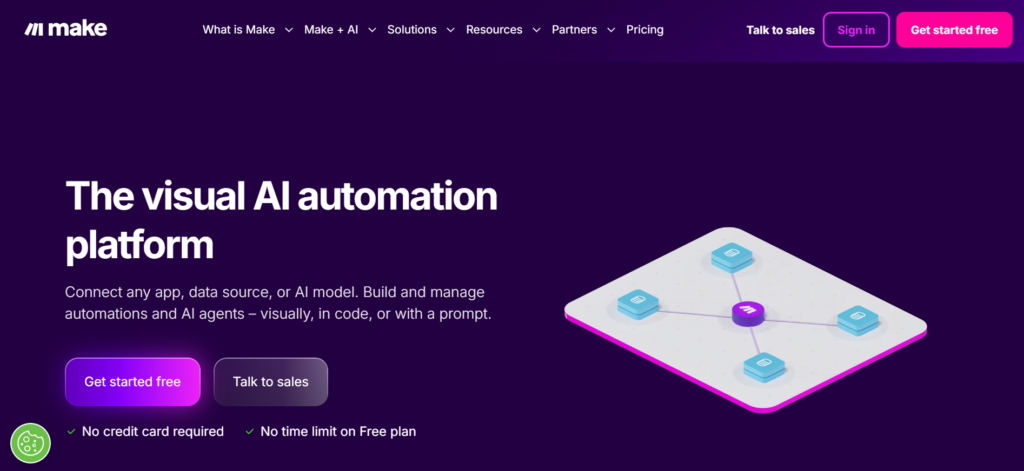
Make’s free plan (1,000 operations a month) is more generous than Pabbly’s, and monthly billing is available, which removes the annual-commitment problem entirely. For the full breakdown of Make itself, including where it beats Zapier and n8n, see our dedicated Make alternatives guide.
Price: Free (1,000 credits/month), Make Plan from $9/month for 5,000 credits/month on annual billing (scales up as credit needs grow), Company (Enterprise) custom.
Best for: Teams that want Pabbly’s visual simplicity plus real AI capability and monthly billing.
Skip it if: You need the absolute lowest cost per task at very high volume. Pabbly’s flat annual pricing still wins there.
3. n8n
n8n is the answer when the real problem is cost at scale or data control, not just monthly billing. It is source-available, so you can self-host on your own server for the price of the server and nothing else, no per-task or per-operation billing at all. The 2.0 release added native LangChain integration, 70-plus AI nodes, and persistent agent memory, which puts n8n well ahead of Pabbly on AI capability.
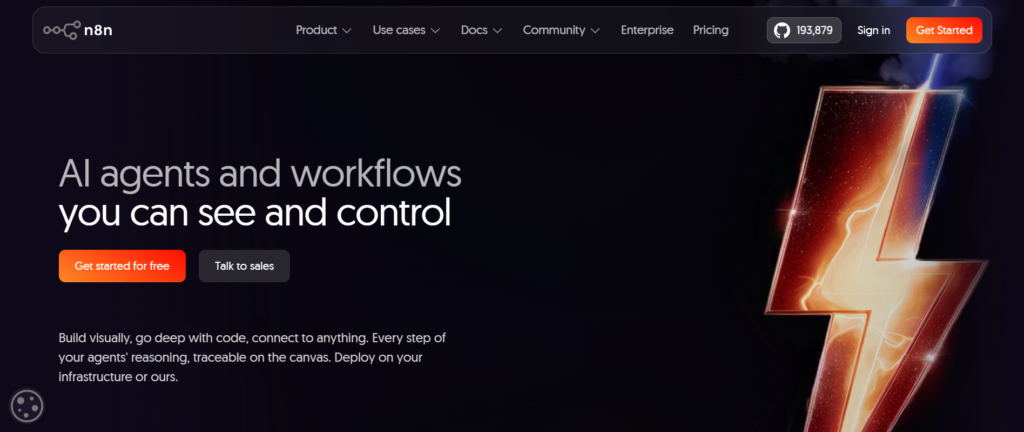
The price is technical effort. Self-hosting means you own the uptime, and the builder assumes comfort with webhooks and JSON. This is not the same audience Pabbly was built for. If n8n itself is the tool you are trying to replace, see our dedicated n8n alternatives guide instead.
Price: Free self-hosted (community edition), Cloud Starter €20/month, Pro €50/month, Business €667/month, Enterprise custom, all billed annually.
Best for: Technical teams that want full data control and are comfortable trading setup effort for zero per-task billing.
Skip it if: Nobody on your team can read an API doc. n8n rewards technical users and punishes everyone else.
4. Activepieces
Activepieces is open source under a permissive license, so you can self-host and modify it freely, but the interface feels closer to Pabbly’s clean, drag-and-drop simplicity than n8n’s developer-first canvas. That combination, flat-rate pricing plus a genuinely approachable builder, makes it the closest thing to “Pabbly, but with real AI steps and no annual lock-in.”
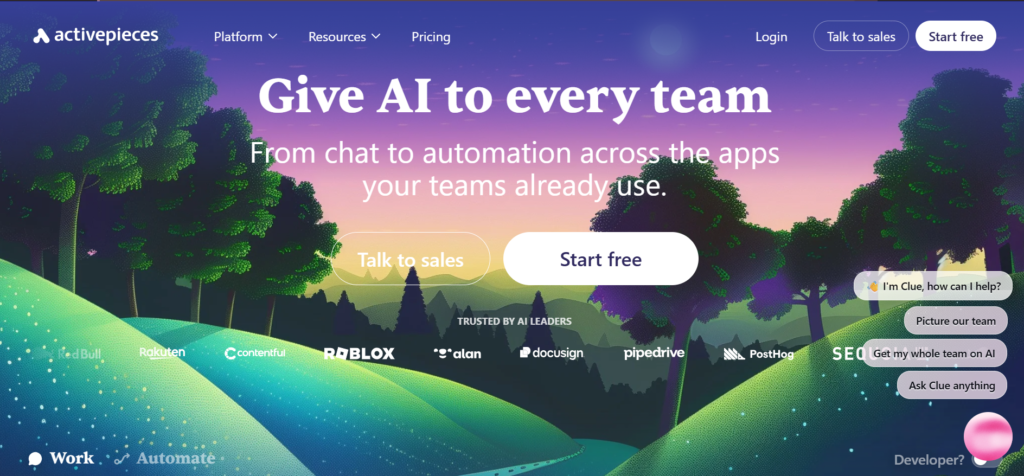
It has grown fast, with 600-plus pre-built pieces and its own hosted cloud version, so self-hosting is optional rather than required. If you are building out a broader automation stack alongside this switch, our marketing automation software roundup covers the adjacent category.
Price: Free, then plans from around $5 per active flow per month; Enterprise custom.
Best for: Teams that liked Pabbly’s simplicity and flat pricing but want monthly billing and AI capability.
Skip it if: You need a specific, less common integration today. The app library is younger and smaller than Zapier’s or Make’s.
5. Integrately
Integrately is the other budget option in this category, and it competes on setup speed rather than pure price. The pitch is one-click automations, a large library of ready-made workflows you activate instead of building from scratch. For common jobs, new lead to CRM, form fill to spreadsheet, that is genuinely fast, and it covers more than 1,100 apps.
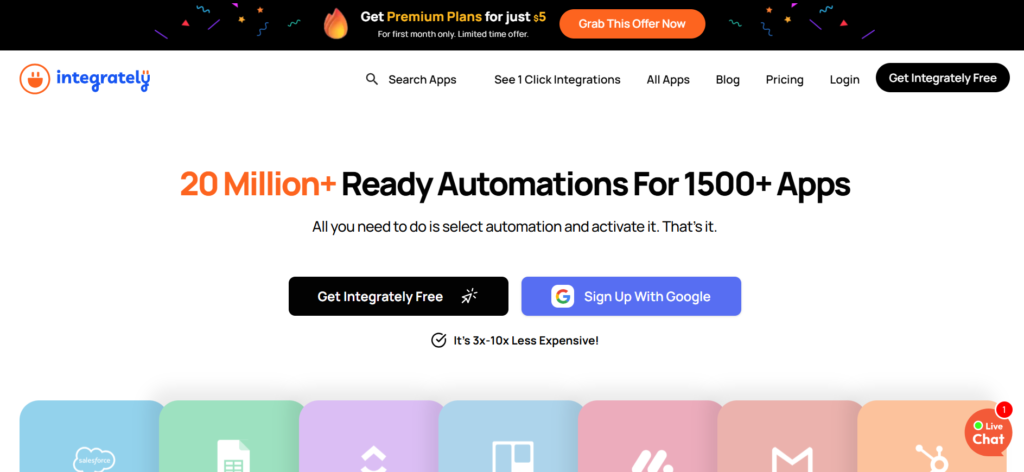
Where it loses to Pabbly is depth. Complex branching, detailed error handling, and advanced conditional logic are both weaker here, and monthly billing costs more than Pabbly’s annual plans at equivalent task volumes. The same speed-over-depth trade-off shows up across the best AI-native email automation tools, worth a look if email is the workflow driving this search.
Price: Free (100 tasks), Starter $19.99/month, Professional $39/month, Growth $99/month, Business $239/month, billed annually.
Best for: Non-technical teams that want the fastest possible setup for standard, common workflows.
Skip it if: Your workflows have real complexity. Integrately is built for simple-to-medium automation and shows its limits past that.
6. Relay.app
Relay.app solves a problem Pabbly does not touch at all: automation that needs a human in the loop. It combines automated steps with approval stages, so a workflow can pause for a person to review a draft, approve a spend, or confirm a decision before continuing. That is a meaningfully different category from Pabbly’s fully automated, rules-only model.
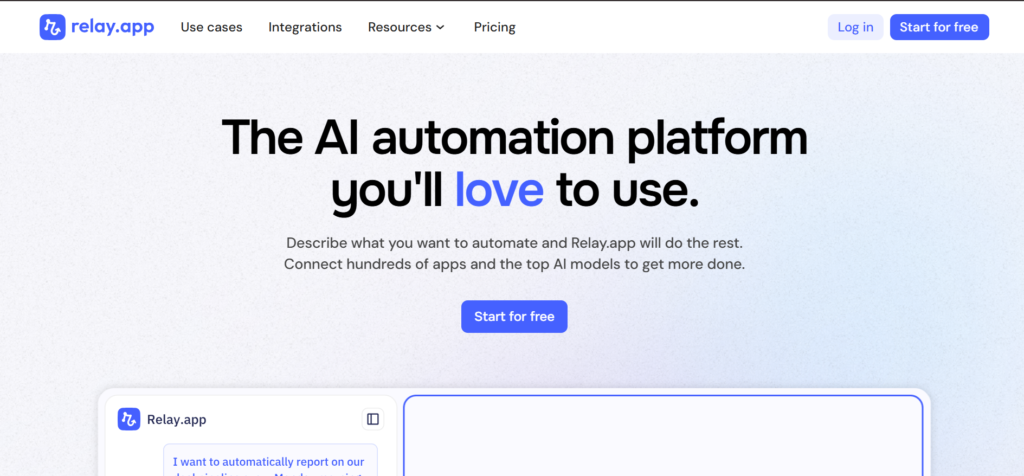
If your workflows are genuinely hands-off, Relay.app’s approval layer adds nothing you need. But for anything customer-facing or high-stakes, that human checkpoint is the entire value proposition.
Price: Free, Professional $19/month, Team $59/month, Enterprise custom.
Best for: Teams that want automation with a built-in review step before anything customer-facing goes out.
Skip it if: You want everything to run without a human touchpoint. Relay.app’s core feature becomes friction if you never need it.
7. Lindy
Lindy is not a Pabbly replacement in the traditional sense. It is an AI agent platform, meaning it does not just move data between apps, it makes judgment calls inside the workflow: drafting replies, researching leads, updating a CRM based on context rather than a fixed rule. If the reason you are leaving Pabbly is that it cannot handle anything that requires actual reasoning, Lindy is built for exactly that gap.
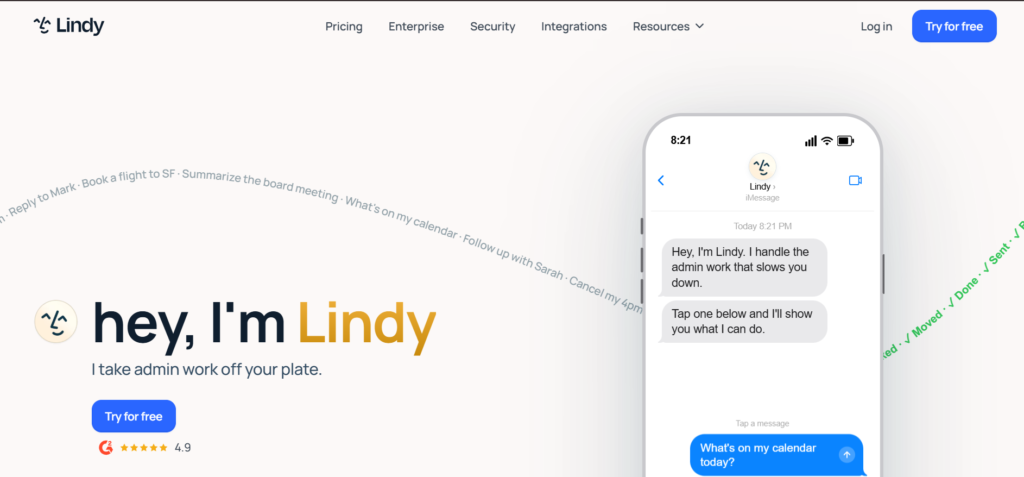
The trade is predictability and cost. AI agents are less deterministic than rule-based automation, and Lindy’s pricing sits well above Pabbly’s. If unpredictability worries you more than cost, our topical authority for B2B SaaS piece covers a similar trade-off between fast, rules-based tactics and slower, compounding systems.
Price: Plus $49.99/month, Pro $99.99/month, Max $199.99/month.
Best for: Teams that have hit workflows Pabbly genuinely cannot handle, ones that require judgment, not just rules.
Skip it if: Your automations are simple and rule-based. Paying for an AI agent platform to do a fixed-rule job is expensive overkill.
8. Microsoft Power Automate
Microsoft Power Automate makes obvious sense if your company already runs on Microsoft 365. The connections to Teams, SharePoint, Outlook, and Azure are deep, admin and security controls are built for larger organizations, and it includes desktop automation for repetitive on-screen tasks that no browser-based tool, Pabbly included, can touch.
Outside the Microsoft ecosystem, the appeal drops fast. Third-party app coverage is thinner than Pabbly’s, and the licensing model takes real effort to work out, the kind of platform lock-in worth mapping before you build a SaaS content engine on top of any single vendor.
Price: Free trial (30 days), Premium $15/user/month, Process $150/bot/month, Hosted Process $215/bot/month, billed annually; some flows included with existing Microsoft 365 licenses.
Best for: Organizations already invested in Microsoft 365 that need automation, including desktop RPA, deeply integrated with that ecosystem.
Skip it if: You are not a Microsoft shop. The value is almost entirely in that integration depth, and it costs more than Pabbly regardless.
9. Workato
Workato is the enterprise option, and it is not really a Pabbly competitor so much as what a company graduates to once Pabbly’s scope stops being enough. It handles high-volume integration across departments, holds compliance certifications like SOC 2 and HIPAA that Pabbly lacks, and offers a large library of pre-built recipes for connecting ERP, finance, and HR systems at scale.
None of that matters for a small team running straightforward automations. Workato is priced and structured for enterprise engagements, and choosing it for a Pabbly-sized workload is over-buying by a wide margin.
Price: Custom, enterprise-scope pricing only.
Best for: Larger organizations connecting ERP, finance, and HR systems that need governance and compliance Pabbly does not offer.
Skip it if: You are a small team or solo founder. Workato’s scope and price are built for a different buyer entirely.
Pabbly Connect alternatives at a glance
| Tool | Category | Best for | Starting price |
|---|---|---|---|
| Zapier | Widest app coverage | Teams that need maximum integrations and monthly billing | Free, then $19.99/month annual |
| Make | Visual, budget-friendly | Teams that want Pabbly’s simplicity plus real AI and monthly billing | Free, then $9/month (5,000 credits) |
| n8n | Self-hosted, zero per-task cost | Technical teams that want full data control at scale | Free self-hosted, Cloud from €20/month |
| Activepieces | Open source, flat-rate | Teams that liked Pabbly’s simplicity minus the annual lock-in | Free, then $5/flow/month |
| Integrately | Fastest setup | Non-technical teams automating simple, common workflows | Free (100 tasks), $19.99/month |
| Relay.app | Human-in-the-loop automation | Workflows that need an approval step before anything ships | Free, then $19/month |
| Lindy | AI agents, not just rules | Workflows that need judgment, not fixed logic | $49.99/month |
| Microsoft Power Automate | Microsoft 365 native | Organizations already invested in the Microsoft ecosystem | $15/user/month |
| Workato | Enterprise governance | Large orgs connecting ERP, finance, and HR at scale | Custom, enterprise only |
How to choose
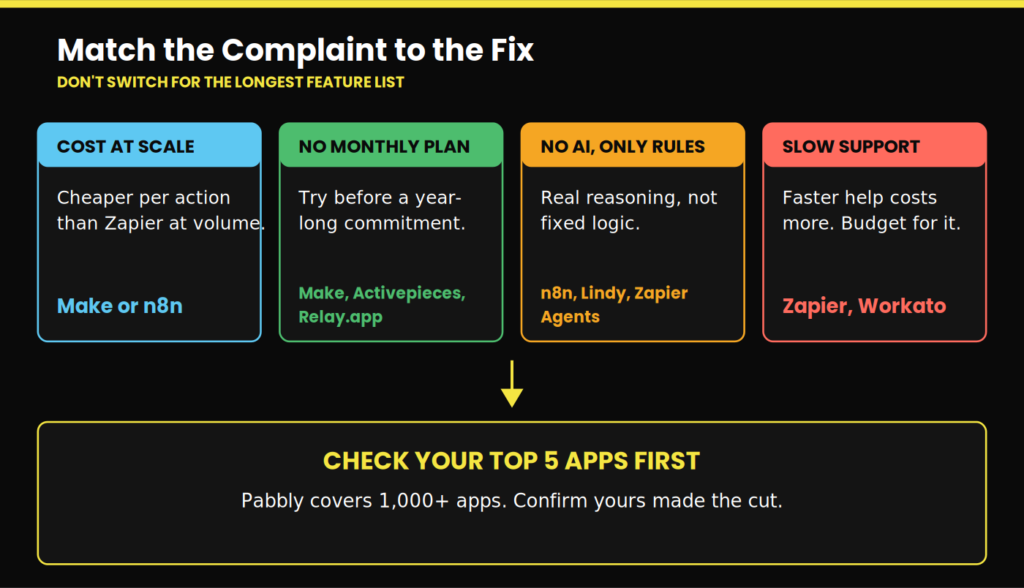
Match the switch to the actual complaint, not to the longest feature list.
- The complaint is cost at scale: stay close to Pabbly’s model with Make or n8n, both charge less per action than Zapier once volume climbs.
- The complaint is no monthly billing: Make, Activepieces, and Relay.app all offer monthly plans, so you are not locked into a year before you know if the tool fits.
- The complaint is no AI: n8n, Lindy, or Zapier’s AI Agents give you actual reasoning inside a workflow, not just a rules engine, the same shift covered in our AI newsletters roundup if you want to track where AI tooling is heading generally.
- The complaint is slow support: budget for it. Faster, more reliable support is one of the things the pricier tools on this list are actually charging for.
Whatever you pick, this decision follows the same logic as any other tool your team runs long term. It should connect to a B2B SaaS content calendar or ops process that gets measured, not just adopted and forgotten. If content operations or marketing automation is the workflow you are trying to fix, our guide on the best workflow automation tools covers the AI-native side of this market in more depth, and our Make alternatives guide is the place to start if Make itself turns out not to be the right fit either.
Want an outside read on what’s actually slowing your content operation down? Book 30 minutes with Rashmita. No pitch deck, no pressure.

Jay is the co-founder of LymLyt and an AI partnership consultant helping B2B SaaS companies grow through content strategy, SEO, and AI integration. He writes about content marketing, what makes B2B content convert, and how SaaS teams can build content systems that drive real pipeline.