5 Reasons Your Site Doesn’t Show Up in ChatGPT
For years, the goal of SEO was simple: rank as high as possible on Google for the keywords your customers searched. If you ranked first, you won. Today, that’s no longer the full picture. The most common version of this gap has a specific shape: your site doesn’t show up in ChatGPT, even when it holds position one on Google for the exact same query.
Millions of people are asking ChatGPT, Claude, Gemini, and Perplexity the same questions they once typed into Google, part of a broader shift we’ve tracked in 7 ways search behavior has changed since AI arrived. Instead of showing ten blue links, these AI tools generate a direct answer using information they consider reliable and relevant. That creates a new challenge for businesses: your website might rank first on Google, attract thousands of visitors every month, and still never show up in ChatGPT at all.
So what changed? The answer lies in the difference between how search engines rank pages and how AI systems build responses. We’ve covered the mechanics of this shift in more depth in what GEO actually means for B2B SaaS; this piece focuses on what it looks like in practice.
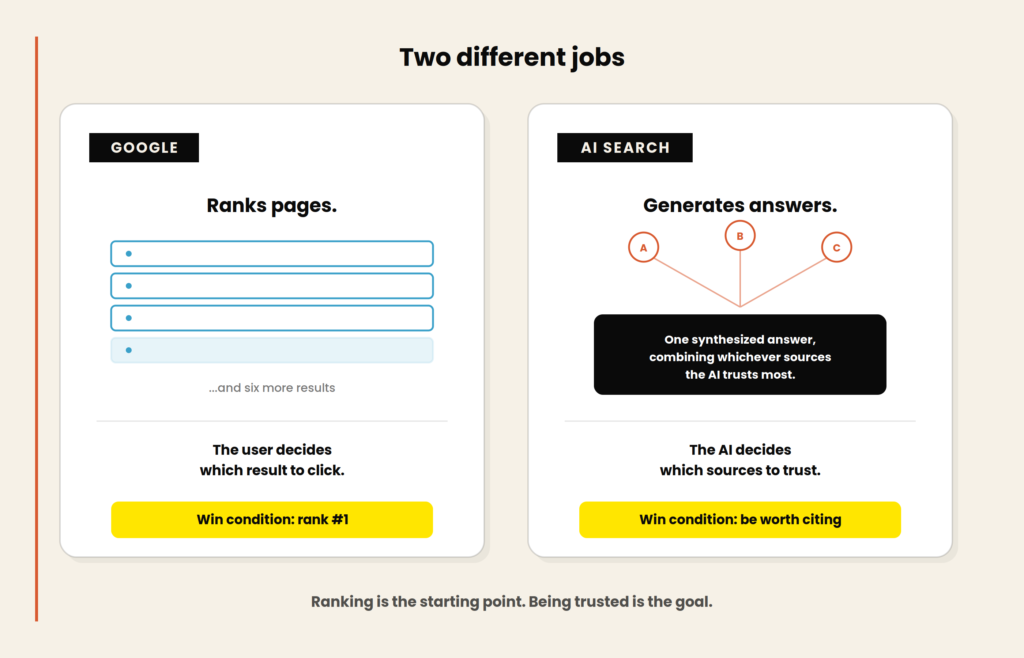
Google ranks pages. AI generates answers.
Google’s job is to decide which page best matches a search query. When you search for “best CRM for startups,” Google evaluates hundreds of ranking factors before showing a list of websites. The final decision still belongs to the user. They choose which result to click.
AI search works differently. Instead of presenting a list of pages, AI attempts to answer the question directly. It may draw information from several sources, combine multiple viewpoints, and summarize the information into one response. That means appearing in an AI answer isn’t simply about ranking first. It’s about becoming one of the sources the AI considers useful enough to reference.
Why ranking first doesn’t mean you’ll show up in ChatGPT
Try this yourself: ask ChatGPT or Perplexity “what CRM should a B2B SaaS startup use” and look at which sources it cites. It’s rarely the exact page that ranks #1 on Google for “best CRM for B2B SaaS.” We saw this firsthand while researching our own CRM tools for B2B SaaS roundup: HubSpot and Salesforce both rank on page one for most CRM comparison queries, but AI answers on the same question pull from a noticeably different mix of sources, often smaller, more specific pages that answer one narrow question well rather than broad category leaders.
This happens because AI systems aren’t trying to reproduce Google’s rankings. They’re trying to produce the most helpful answer possible. That changes what businesses should optimize for.
What AI search appears to reward
Every AI platform works differently, but several patterns are becoming clear. The websites that appear most often in AI answers tend to share five characteristics.
1. They answer specific questions
Many websites are still optimized around keywords. People, however, ask questions. Instead of searching for “CRM software,” users ask “which CRM is best for a SaaS startup,” “what CRM integrates with HubSpot,” or “is HubSpot better than Salesforce for small businesses.” Articles that answer these questions clearly are easier for AI systems to understand and reference. The same principle explains why Reddit threads, LinkedIn posts and YouTube transcripts earn disproportionate citations: they contain specific, first-person answers to exact questions, not keyword-optimised summaries of a topic.
2. They explain concepts clearly
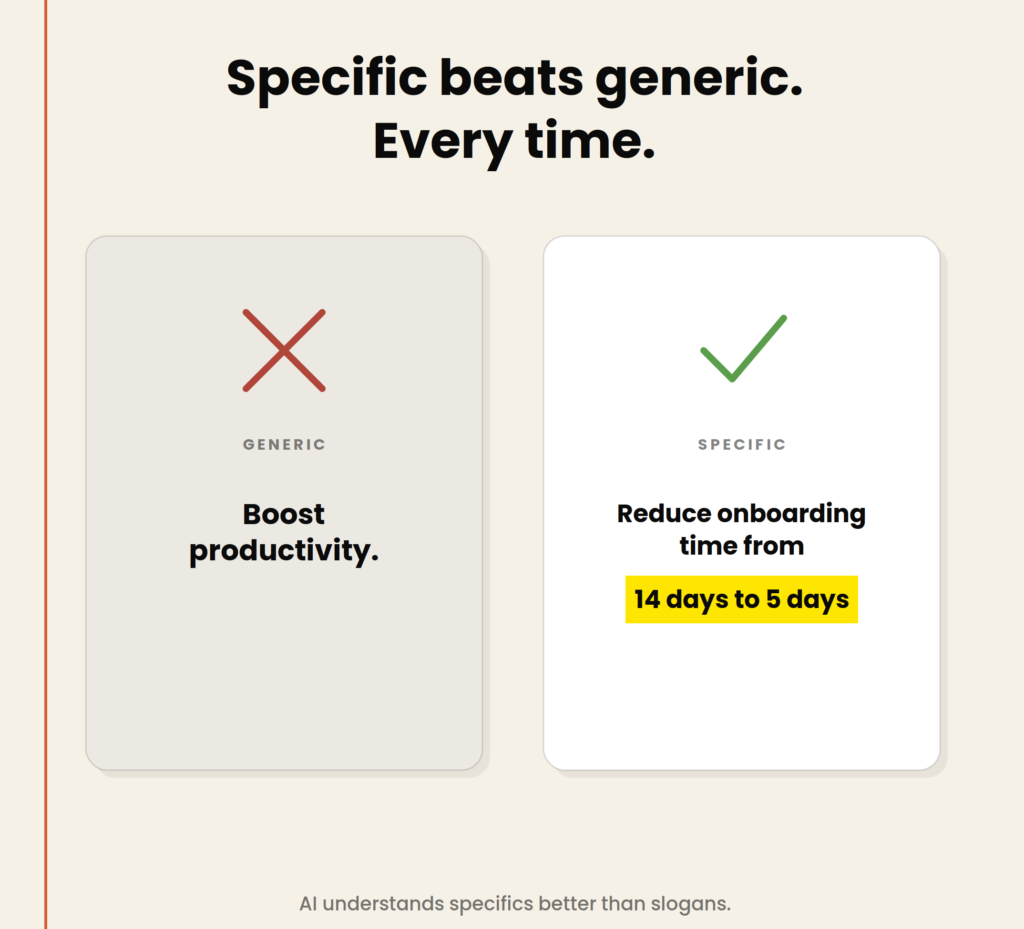
AI can only reference information it understands, and this is the same specificity problem behind why so much AI-assisted content reads as slop that nobody, human or AI, wants to cite. Consider these two introductions.
Generic: “Our platform leverages cutting-edge technology to maximize operational efficiency.” It sounds impressive but says very little.
Specific: “Our software automatically assigns incoming customer enquiries to the sales representative with the highest likelihood of closing the deal.” The second sentence is concrete. It explains exactly what the product does. Specific language is easier for both readers and AI systems to interpret.
3. They publish original information
Thousands of websites explain what SEO is. Very few publish original research about SEO, and that difference matters. Original surveys, customer data, case studies, benchmarks, experiments, and expert opinions backed by evidence are the types of information other websites reference. This is the same argument behind why review platforms earn fewer AI citations than most brands expect: original information on your own domain outperforms a listing you do not control.
4. They demonstrate expertise across an entire topic
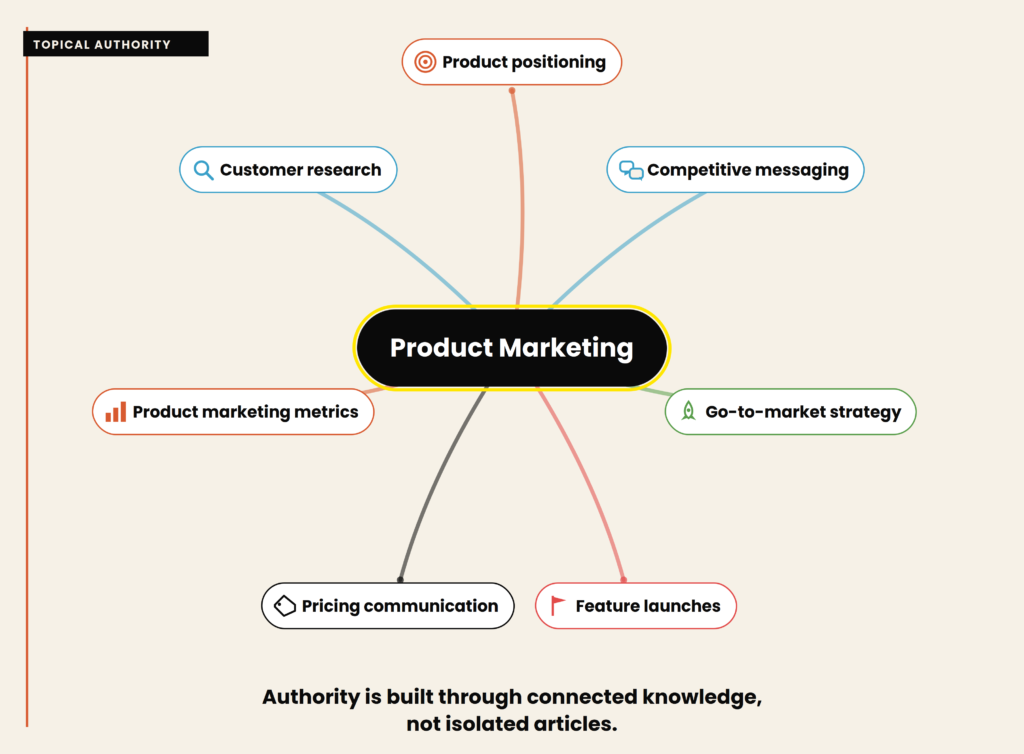
One great article is valuable. Twenty connected articles are far more powerful. Imagine two companies. Company A publishes one article called “What is Product Marketing?” Company B publishes articles covering product positioning, competitive messaging, go-to-market strategy, feature launches, pricing communication, product marketing metrics, and customer research.
Which company looks more authoritative? AI systems increasingly evaluate expertise across an entire topic rather than relying on a single page. This is known as topical authority, and it’s the same logic behind why we organize content into topic clusters instead of standalone keyword pages.
5. They make information easy to extract
People often enjoy reading long-form articles. AI systems benefit from clear structure. Good content includes descriptive headings, bullet points, definitions, examples, tables, and frequently asked questions. Structure improves readability for humans while making it easier for AI systems to identify important information, which is also why a solid content brief should specify structure up front, not leave it to whoever ends up drafting the piece.
What this means for SEO
SEO isn’t disappearing. It’s expanding. Google rankings still matter because many AI platforms also retrieve fresh information from the web. If your content can’t be discovered, it’s less likely to be considered. Our breakdown of SEO versus AI goes deeper on how the two now work together rather than competing.
Ranking is now just the starting point. Businesses should also focus on becoming the most trustworthy and informative source on their area of expertise. The goal is no longer simply to appear in search results. The goal is to become a source that people and AI systems both trust, and to track whether that’s actually happening using AI visibility tracking tools built for exactly this.
A practical checklist for AI visibility
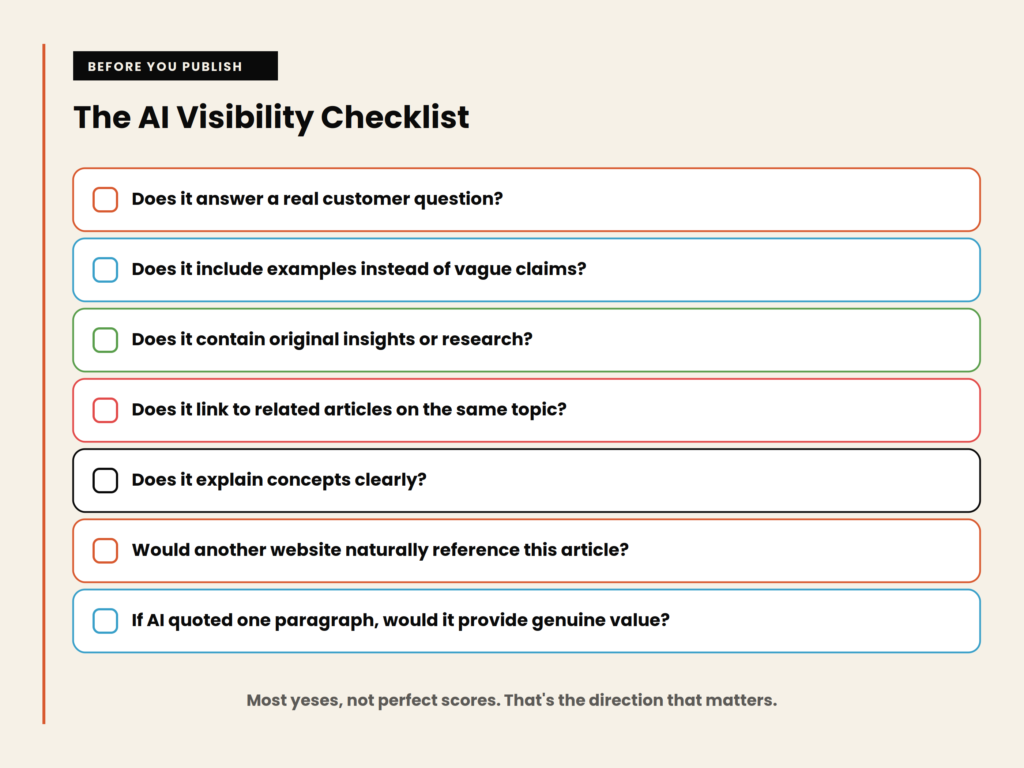
If the answer to most of these questions is yes, you’re moving in the right direction.
Final thoughts
The future of search isn’t about choosing between Google and AI. It’s about creating content that performs well in both. Businesses that continue to chase rankings alone may find their visibility shrinking as more users turn to AI-powered search. Businesses that invest in expertise, clarity, and original thinking will have a much stronger chance of appearing wherever people ask questions, whether those questions begin with “Search” or “Ask AI.” The most useful source usually wins.
If figuring out where your content currently stands feels like a bigger project than one article can fix, our AI visibility for B2B SaaS guide covers the full framework, and our roundup of best AI SEO agencies covers what to look for if you’d rather bring in outside help.
Want a second opinion on whether your content is actually showing up where your buyers are asking questions? Book a free 30-minute call with LymLyt and we’ll walk through what’s actually worth fixing first.
Think B2B is boring?
That's coz you are not subscribed to ours newsletter. We share a 100 bad days (of B2B marketing) made a 100 good stories. A 100 good stories make YOU interesting at parties.
Almost there. Check your inbox and click the confirmation link.

Jay is the co-founder of LymLyt and an AI partnership consultant helping B2B SaaS companies grow through content strategy, SEO, and AI integration. He writes about content marketing, what makes B2B content convert, and how SaaS teams can build content systems that drive real pipeline.