An Anonymous Case Study, Built Step by Step: A Worked Example
We wrote about how to structure an anonymous case study that buyers still trust. This is an anonymous case study example that puts that framework to work, section by section, so the theory has something to stand on.
The company below is a composite. No single client, no real numbers pulled from one account. It is built the way a real anonymous case study gets built: patterned after the shape of problems we see often, written the way we would actually write it.
The setup: what legal usually blocks first
A mid-market project management SaaS company came to us after a re-brand. Their blog had been dormant for over a year. Organic traffic was flat, and every article that did exist was written around features, not the problems buyers were actually searching for.
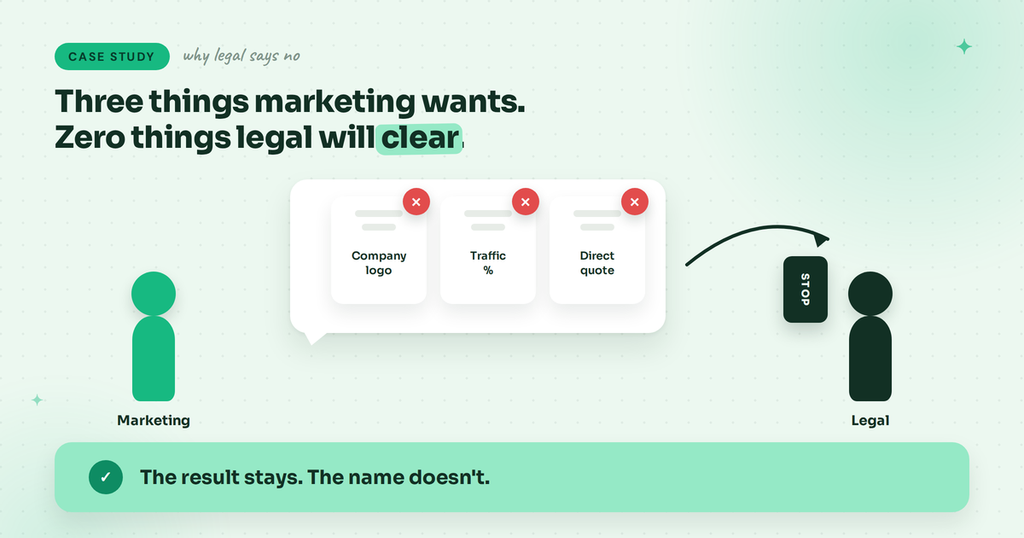
Marketing wanted to publish a full case study naming the client, the exact traffic lift, and a quote from their VP of Marketing. Legal said no to all three. This is one of the most common anonymous case study scenarios: the result is real, but the client is not willing to attach their name to the specifics.
The interview itself followed the structure in how to run a case study interview that gets real answers: asking about the specific moment things changed, not just the end result.
What we kept
Here is what the framework says to hold onto, and what that looked like in practice for this one.
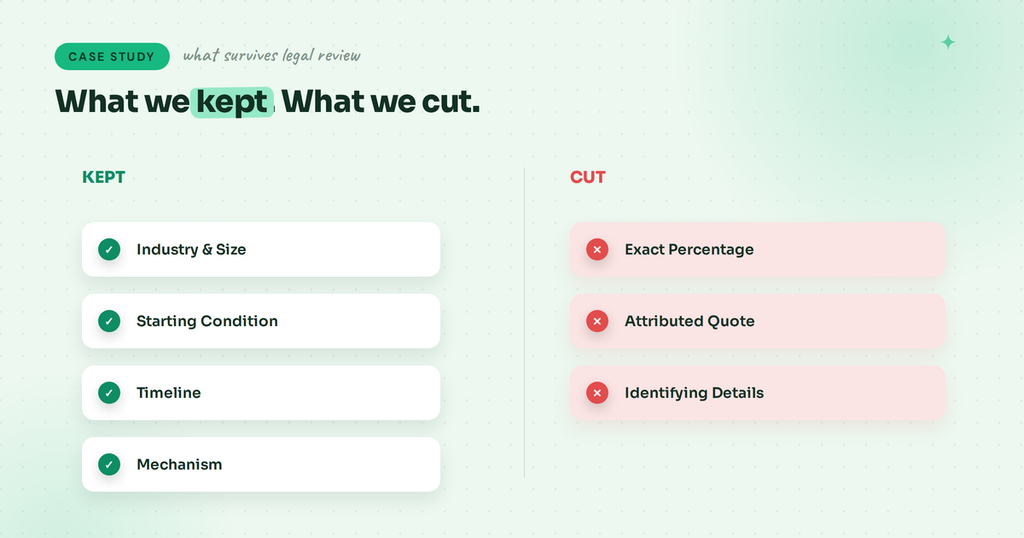
Industry and company size. Mid-market project management software, roughly 80 employees. Specific enough that a reader in a similar spot recognizes themselves. Vague enough that the company cannot be identified from public headcount data.
The starting condition. No blog cadence for over a year. A handful of old feature-announcement posts with no search intent behind them. This detail matters more than a client name ever would, because it tells the reader exactly where their own team might be stuck right now.
The timeline. Twelve weeks from kickoff to the first meaningful jump in organic sessions. Not “fast” or “quickly.” A number a reader can hold their own plan up against.
The mechanism. We rebuilt their content around two topic clusters instead of one-off posts, matched each piece to a specific stage of the buyer’s evaluation process, and fixed internal linking across the existing site before publishing anything new. That is the actual work. A logo on the page would not have added anything to that sentence.
What we cut
The exact percentage. We used a range instead: organic sessions roughly doubled over the twelve weeks. A precise number invites a reader to try to reverse-engineer which company this was. A range does the same convincing work without that risk.
The quote. Legal would not clear an attributed quote. Instead of inventing one or cutting the section entirely, we described what the client told us in our own words: they said the biggest shift was internal, their sales team started sending blog links during calls instead of only the pricing page.
Anything a competitor search could match. No specific integration names, no specific pricing tier, nothing that narrows the list of possible companies down to a handful.
Why this version still convinces
A reader evaluating whether to work with an agency is not checking whether the company name matches something they have heard of. They are checking whether the starting problem matches theirs closely enough to trust the ending.
Company size, starting condition, mechanism, and timeline do that work. A logo does not. Once you separate those two things, writing a genuinely persuasive anonymous case study stops being a workaround and starts being the more honest version of the format.
This only holds up if the metric you keep is one that actually means something to the reader, not just one that sounds big. Our breakdown of SaaS content marketing metrics that actually matter covers how to pick that number before you ever sit down to write.
Using this as a template
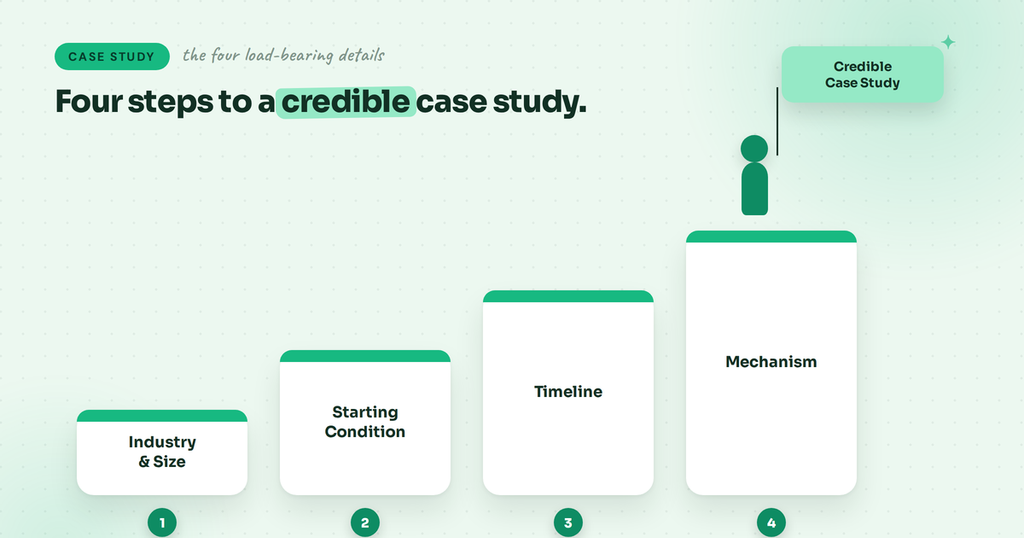
If you are structuring your own anonymous case study, get these four things clear before you write a single sentence of narrative:
- Industry and rough company size
- The specific starting condition, not a general “they struggled with marketing”
- A real timeline
- The actual mechanism, described in enough detail that another marketer could roughly follow the same steps
Everything else, the name, logo, exact number, is negotiable with legal. These four are not. Without them, there is no case study left to tell.
For the full picture beyond this worked example, our complete guide to B2B SaaS case studies covers structure, formats, and when an anonymous version makes more sense than a named one.
Want this built for you instead of built by you?
This framework works whether you write the case study yourself or hand it off.
If you would rather not reverse-engineer what legal will clear, decide what details to keep, and turn a client interview into a story buyers actually trust, that is exactly what our case study writing service does.
Start to finish, including working around client and legal restrictions.

Jay is the co-founder of LymLyt and an AI partnership consultant helping B2B SaaS companies grow through content strategy, SEO, and AI integration. He writes about content marketing, what makes B2B content convert, and how SaaS teams can build content systems that drive real pipeline.