The best Grow and Convert alternatives for B2B SaaS in 2026
Your head of product just got asked for a fourth interview this month. Not for a hire. For a blog post.
That’s the part nobody puts in the case study. Grow and Convert built Pain Point SEO into something close to an industry standard, and it works: rank for the keyword someone types right before they book a demo, and you get a demo.
But the methodology runs on subject matter expert interviews, one per article, sometimes more. Your SMEs are already booked solid running the product. Somewhere around month four, the interviews stop happening and the content calendar stalls with them.
That’s reason one people go looking for a Grow and Convert alternative. Reason two is simpler: retainers start around $9,000 to $10,000 a month, and a lot of Series A and B teams need the same bottom-funnel thinking at a price that doesn’t eat the whole content budget. Reason three, newer: buyers now start research in ChatGPT and Perplexity as often as Google, and not every agency built before 2024 has caught up.
We put together 12 agencies and productized services that cover those three gaps, starting with the one we think does it best.
The 12 agencies at a glance
| Agency | Best for | Price (approx., 2026) |
|---|---|---|
| LymLyt | B2B SaaS teams who want strategy, writing, and publishing without a 12-month contract | From $4,499/mo |
| Your Content Mart | Startups that want a Grow and Convert-style approach at a lower entry price | From $3,500/mo |
| SimpleTiger | Early-stage SaaS wanting SEO, PPC, and web in one boutique team | From $5,000/mo |
| Omniscient Digital | Mid-market SaaS that wants strategy owned end to end, not just execution | From $10,000/mo |
| Animalz | Funded companies that want editorial-grade thought leadership | From $8,000/mo |
| Siege Media | Teams that want content, design, and digital PR working as one program | From $10,000/mo |
| Foundation Inc | Brands whose content is solid but isn’t reaching people outside Google | $10,000–$25,000/mo |
| Directive Consulting | Enterprise SaaS that wants content, paid, and revenue ops under one roof | $15,000–$50,000/mo |
| Powered by Search | Established SaaS companies past the “prove SEO works” stage | Custom, established budgets |
| DerivateX | Teams that specifically want to show up inside ChatGPT and AI Overviews | Custom |
| Ten Speed | High-ACV and enterprise B2B needing ICP-specific content systems | Custom |
| Minuttia | Companies wanting one team across classic search and AI search | Custom |
Pricing shifts fast in this category. Treat every number above as a starting point to confirm on a call, not a locked quote.
Full content build, without the interview tax
These three take the Pain Point SEO philosophy Grow and Convert popularized and remove the biggest friction point: how much of your team’s time it eats.
LymLyt
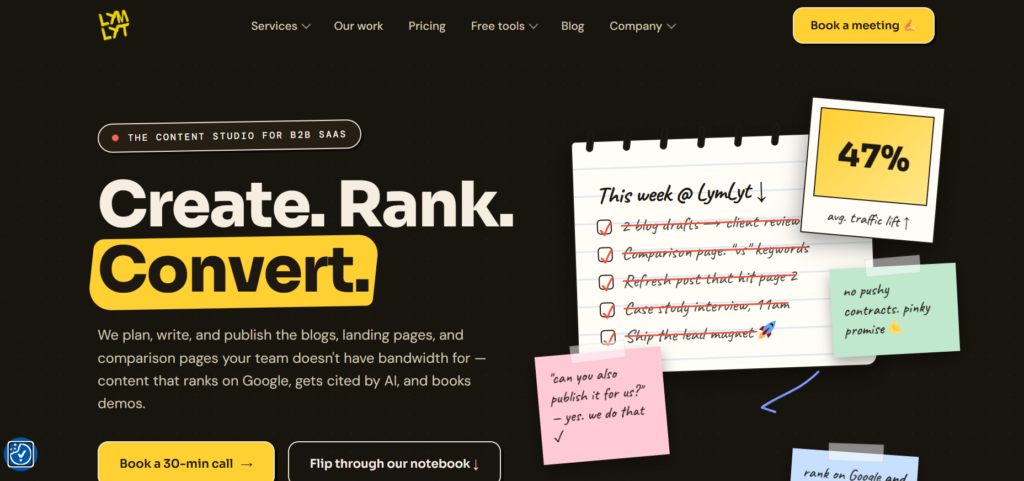
- Best for: B2B SaaS marketing teams who need blogs, SEO content, landing pages, case studies, and AI visibility work handled end to end, with someone who also hits publish.
- What you give it: A goal-setting call, product access or a walkthrough, and your style guide if one exists.
- Time to first result: Content plan after the first call, drafts on a scheduled cadence from there. Clients report an average 47% lift in organic traffic.
- Contract: No lock-in. If it stops making your life easier, you walk away.
LymLyt runs on a simple loop: create, rank, convert. Blog writing, SEO/AI content mapped for both Google and AI answers, landing page copy, case studies, lead-gen resources, and competitor comparison pages, all researched and written by people with a decade-plus in B2B SaaS content rather than handed off to a junior account manager.
The team, led by co-founders Rashmita and Anubhav, has worked with brands including Admiral, Recurly, and Skrapp.io saw its organic traffic quadruple in six months under the engagement.
Two things separate this from the interview-heavy model Grow and Convert built its name on. First, LymLyt scopes work to your actual bandwidth instead of assuming your SMEs have three hours a week free. Second, publishing is part of the service: once a draft is approved, it goes live on your CMS instead of sitting in a Google Doc waiting for someone on your side to format it. AI visibility work (getting cited inside ChatGPT, Claude, Gemini, and Perplexity answers) is a named service line, not an afterthought bolted onto a 2020-era SEO process.
Skip it if: you need a 50-person enterprise content operation with dedicated account directors and quarterly business reviews. LymLyt is built for lean marketing teams, not enterprise procurement processes.
Your Content Mart
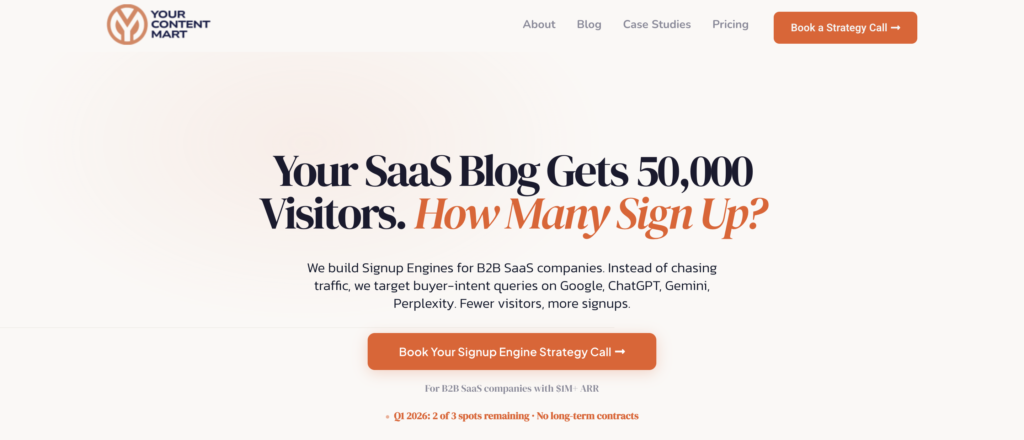
- Best for: Early-stage SaaS companies that want the Signup Engine Framework philosophy at under half of Grow and Convert’s entry price.
- Price: Standard tier from $3,500/mo.
- Free option: No.
Your Content Mart positions itself directly as a lower-cost entry into conversion-focused content, built around what it calls a Signup Engine Framework aimed at trial signups specifically, rather than traffic or leads broadly defined. It’s an honest budget play for teams that like the Pain Point SEO logic but can’t stretch to a five-figure retainer yet.
Skip it if: you’re past $10M ARR and need a partner who can also run digital PR or paid alongside content.
SimpleTiger
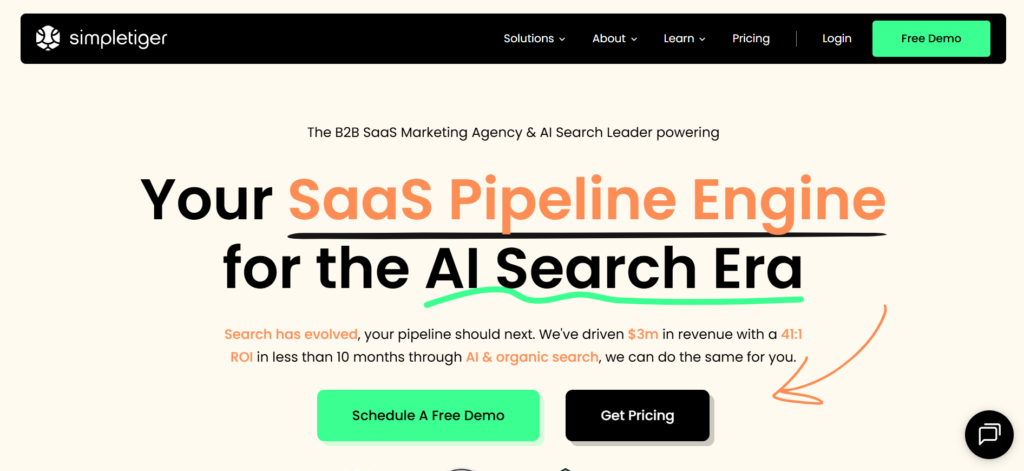
- Best for: SaaS-only teams wanting SEO, PPC, and web work bundled from one boutique shop with two decades of category focus.
- Price: From roughly $5,000/mo, scaling toward $8,500/mo for fuller engagements.
- Free option: No.
Founded in 2006, SimpleTiger has worked exclusively with SaaS and, more recently, AI companies for longer than almost anyone else on this list. It holds a 4.9 out of 5 rating across dozens of Clutch reviews, with clients citing direct access to senior leadership rather than a junior account team. GEO became a formal service line in 2025, layered onto an already mature SEO and content operation.
Skip it if: you need heavy multimedia thought leadership (podcasts, video, research reports). SimpleTiger’s strength is lean execution, not format range.
Full-service organic growth partners
These four run bigger, more strategic programs, with the depth (and price tag) to match.
Omniscient Digital
- Best for: Mid-market B2B SaaS ($5M–$50M ARR) that wants an agency to own strategy end to end, not just execute a content calendar.
- Price: Full-service retainers start around $10,000/mo; comprehensive programs run $12,000–$25,000/mo.
- Clients: SAP, Jasper, Loom, Hotjar, Asana, Smartling.
Omniscient’s OmniscientX research framework blends qualitative and quantitative research to find positioning angles competitors have missed, then builds SEO and content roadmaps tied to pipeline and MRR rather than traffic alone.
Reviews note their attribution work is sophisticated enough to isolate AI-referred traffic from regular organic, which is harder to build than most agencies claim to have done. Jasper’s published results include 810% organic session growth tied to the engagement.
Skip it if: your monthly content budget is under $10,000. This is a mid-market to enterprise price point.
Check out: Omniscient Alternatives.
Animalz
- Best for: Funded B2B SaaS with a technical product and a long sales cycle that wants editorial-grade thought leadership.
- Price: From $8,000/mo, with heavier research-driven programs running $20,000–$30,000/mo.
- Clients: Airtable, Amplitude, Zendesk, Intercom, Wistia.
Animalz built its reputation on quality over volume: deep, well-researched thought leadership rather than a high cadence of shorter posts. That’s a genuine strength for category-defining brands and a genuine weakness if you need output fast.
Reviews consistently flag long timelines and a focus on authority-building over direct conversion optimization, which is closer to the opposite end of the spectrum from Grow and Convert’s bottom-funnel obsession.
Skip it if: you need volume, speed, or a conversion-first content program. Animalz plays a different game entirely.
Check out: Animalz Alternatives
Siege Media
- Best for: Teams that want content, design, and digital PR treated as one workstream instead of three separate line items.
- Price: From $10,000/mo.
- Clients: Zapier, Zoom, Airbnb, Intuit.
Siege Media’s pitch is that every piece of content is built from the brief stage to be worth linking to, so the content program and the link-building program compound together.
Reported results include 290% organic traffic growth for Zapier and a documented $1.9M increase in traffic value for Zoom. The agency now runs proprietary tools (BlueprintIQ and DataFlywheel) to track both traditional rankings and AI Overview appearances.
Skip it if: you want a lean, bottom-funnel-only content program. Siege’s design and digital PR layers add cost that makes less sense for a narrower brief.
Check out: Siege Media Alternatives.
Foundation Inc
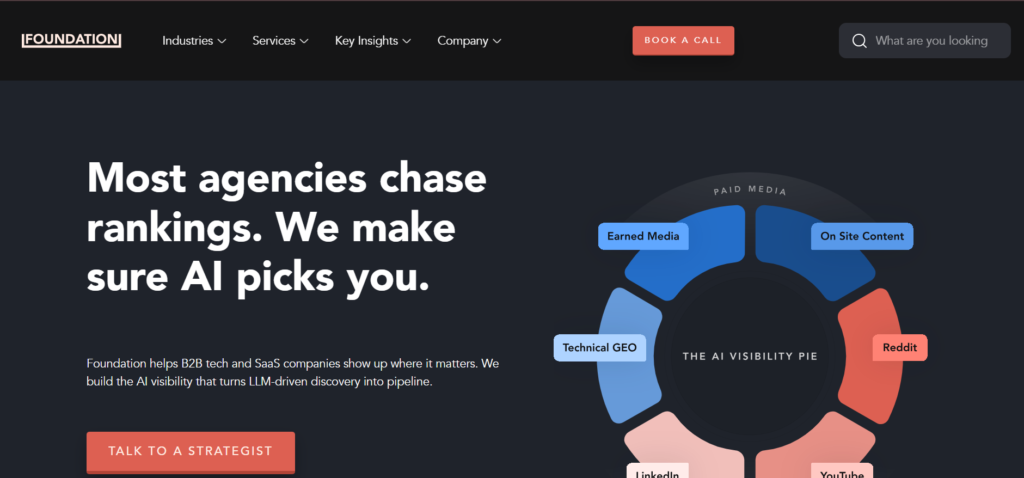
- Best for: Brands whose content is already solid but isn’t reaching buyers outside Google.
- Price: $10,000–$25,000/mo, often with a $25,000+ minimum on distribution-heavy engagements.
Foundation’s whole positioning is “create once, distribute forever”: the same piece of research gets reshaped for Reddit, LinkedIn, newsletters, and LLM visibility instead of being written once and left to rank or die on Google alone.
That distribution-first model is a genuinely different lane from Grow and Convert’s search-first approach, and it’s a real answer to the “nobody sees our content” problem once the writing itself is no longer the bottleneck.
Skip it if: your bottleneck is getting good content made in the first place, not distributing content you already have.
Enterprise and specialist plays
Directive Consulting
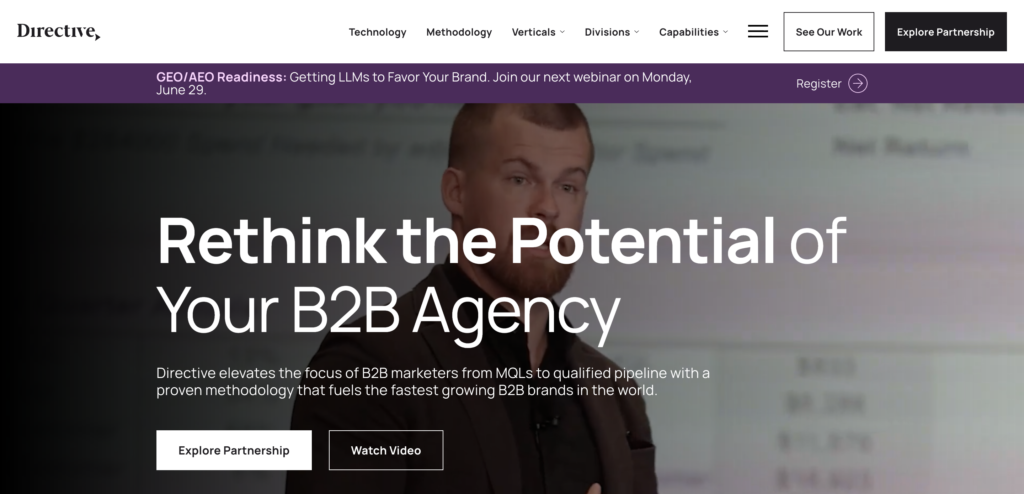
- Best for: Enterprise SaaS that wants content, paid media, SEO, and revenue operations run by one team instead of three vendors.
- Price: $15,000–$50,000/mo depending on scope.
Directive positions itself as the full-service alternative for brands that find a content-only agency too narrow. It handles the technical complexity that shows up at enterprise scale (multi-market sites, complex attribution, large-scale migrations) alongside the content itself.
Skip it if: you only need content and SEO. You’ll pay for paid media and revenue ops capacity you may not use.
Powered by Search
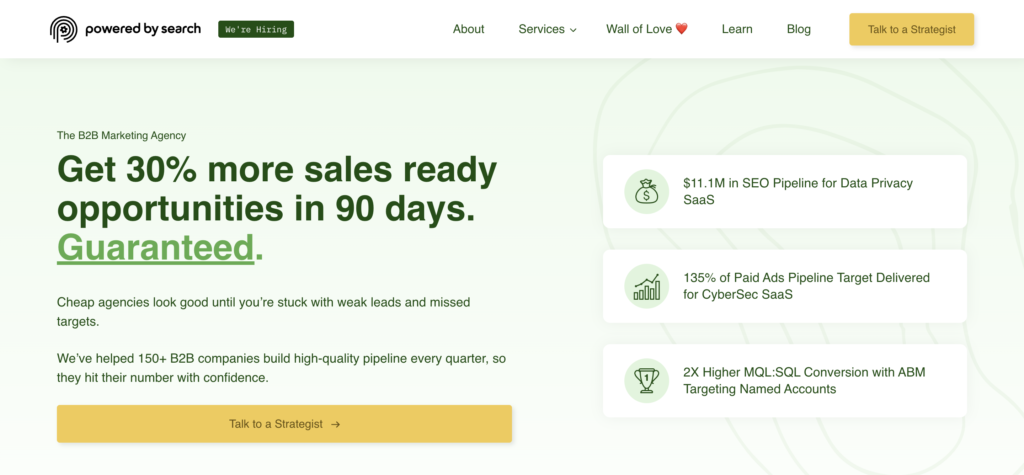
- Best for: Established SaaS companies that have already proven organic works and are scaling an existing program.
- Price: Custom, aimed at companies with established marketing budgets.
Clients cite Powered by Search’s read on the SaaS growth curve specifically: building programs that compound rather than leaning on paid spend to fill the gaps. Less of a fit for a company still trying to prove content works in the first place.
Skip it if: you’re pre-product-market-fit or need someone to build a program from zero. This is a scaling partner, not a starting-line partner.
DerivateX
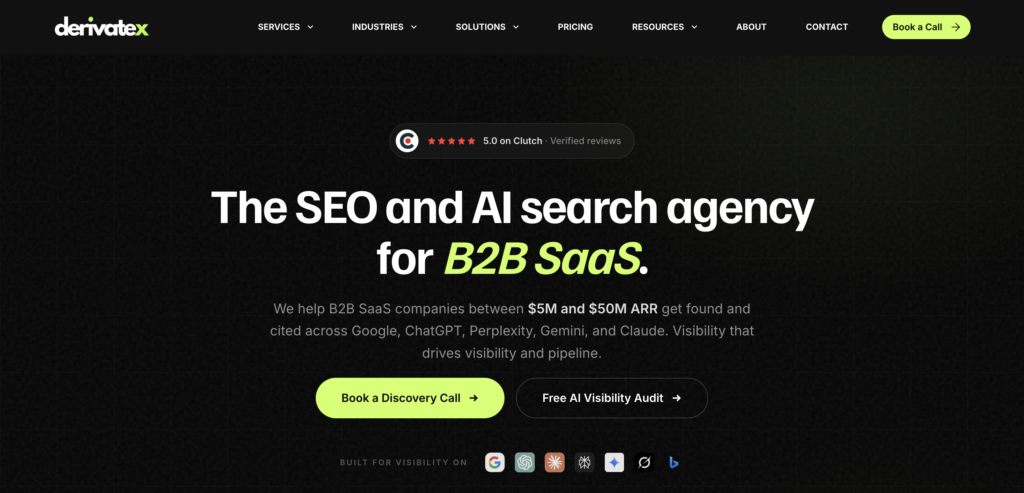
- Best for: Teams whose main reason for leaving Grow and Convert is AI search visibility specifically, not price.
- Price: Custom.
DerivateX leans hardest into GEO of anyone on this list, with case studies like REsimpli becoming the top ChatGPT recommendation for real estate CRM software within 90 days. If your board is asking why competitors show up in AI answers and you don’t, this is the most direct answer on the list.
Skip it if: AI visibility isn’t a stated priority yet. You’d be paying for depth you’re not using.
Ten Speed
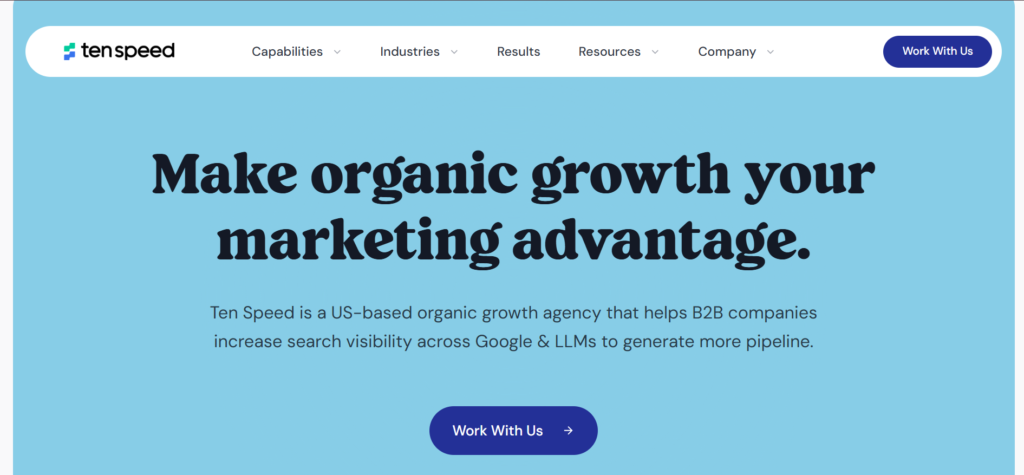
- Best for: High-ACV and enterprise B2B SaaS needing ICP-specific content systems, not one-size-fits-all blog posts.
- Price: Custom.
Ten Speed builds structured content systems (formats, cadences, ICP mapping) rather than a general blog retainer, aimed at companies where the buying committee is large and the sales cycle is long.
Skip it if: you’re an early-stage company without a defined ICP yet. The structure this agency builds around assumes you already know who you’re writing for.
Minuttia
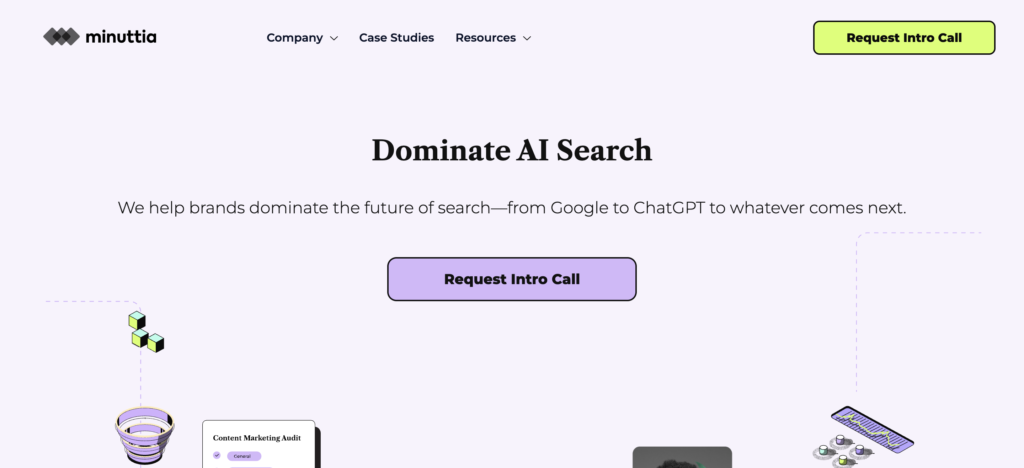
- Best for: Teams that want one partner covering both traditional search optimization and AI search optimization from the start.
- Price: Custom.
Minuttia is one of the newer names to earn a spot on Grow and Convert alternative lists specifically because of how it treats GEO: as a built-in part of the methodology rather than a service added in 2024 to keep up.
Skip it if: you need a long track record and a big client-logo wall. Minuttia is newer than most names on this list.
What Pain Point SEO actually costs you in 2026
Grow and Convert, founded by Benji Hyam and Devesh Khanal back in 2015, built its reputation on one idea: rank for keywords with obvious buying intent, not keywords with the most search volume. A prospect searching “best invoicing software for freelancers” is closer to a credit card than one searching “what is invoicing.” Write for the first kind of searcher and you convert instead of just collecting traffic.
The methodology holds up. The delivery model is where it gets expensive. Interview-led content needs a live SME on a call, every time, and most in-house teams can spare that time for two or three months before the interviews start getting rescheduled into oblivion. Add a premium retainer on top, and the two most common reasons companies start Googling “Grow and Convert alternative” are staring right at you: the SME bandwidth problem, and the budget problem.
There’s a third factor Grow and Convert didn’t have to think about in 2015: whether ChatGPT, Perplexity, and AI Overviews mention your product at all. Pain Point SEO was built for Google rankings. Getting cited inside an AI answer is a related skill, not the same one, and agencies are at wildly different stages of building it in versus bolting it on.
What B2B SaaS marketers should actually look for
- Does the SME time requirement match your team’s reality? Interview-heavy content is only as fast as your busiest expert’s calendar.
- Is the pricing published, or do you need three calls to find out? Published pricing tells you the agency isn’t sizing you up before quoting.
- Does the agency actually publish, or just deliver a Google Doc? “Approved” should mean “live,” not “now go find someone to format it for your CMS.”
- Is AI visibility built in, or added as a line item? GEO bolted onto a 2019 SEO process reads differently than GEO built into the methodology from day one.
- What’s the contract structure? Month to month versus a 12-month lock-in changes how much risk you’re actually taking.
- Does the agency work across formats, or only blog posts? Comparison pages, case studies, and landing pages often convert better than another 1,500-word explainer.
- Who writes the draft? A person with SaaS experience, a junior generalist, or an AI pass with light editing. Ask directly.
- How is success measured? Traffic and rankings are inputs. Leads, demos, and pipeline are the actual scoreboard.
The marketer’s playbook: pick by problem, not by logo
Your SMEs can’t do another interview. LymLyt or Your Content Mart. Both build content programs that don’t assume your product experts have three open hours a week.
Budget doesn’t stretch past $5,000/mo. Your Content Mart or SimpleTiger. Both publish pricing well under Grow and Convert’s floor.
You need strategy owned end to end, not just execution. Omniscient Digital. The OmniscientX research process and revenue-tied roadmapping is built for teams that don’t want to hand over keyword lists and hope.
You want category-defining thought leadership and have the runway to wait for it. Animalz. Slower, but the editorial bar is the highest on this list.
Content and link building need to work as one program. Siege Media. The design and digital PR layer is what separates it from a pure writing shop.
Your content is good but invisible outside Google. Foundation Inc. Distribution is the actual product here, not an add-on.
You’re enterprise and need paid, content, and revenue ops under one roof. Directive Consulting.
AI visibility is the whole reason you’re shopping. DerivateX or Minuttia, in that order if you want the deeper case study library.
Three rules that hold regardless of which name you pick: confirm who actually writes the draft before you sign anything, ask what “publish” means in the contract (a Google Doc and a live page are not the same deliverable), and get the GEO claim tested with a real example before you take it on faith. Every agency on this list now says “AI search” somewhere on its homepage. Not all of them can show you a citation they earned.
How to brief any agency on this list
Whichever name you pick, walk into the first call with:
- Your ICP in one sentence, not a persona deck
- Three competitor URLs you actually lose deals to
- Your best-performing piece of existing content and why you think it works
- One number you’re optimizing for (demos, trials, pipeline) so the engagement gets measured against something real from day one
How to choose, fast
- Tight budget, need content without eating SME time → LymLyt
- Lowest entry price → Your Content Mart
- SaaS-only boutique, mid-size budget → SimpleTiger
- Strategy owned end to end → Omniscient Digital
- Editorial authority, no rush → Animalz
- Content plus link building plus design → Siege Media
- Distribution is the actual gap → Foundation Inc
- Enterprise, need paid and revenue ops too → Directive Consulting
- Already scaling, proven channel → Powered by Search
- AI visibility is the whole ask → DerivateX or Minuttia
- High-ACV enterprise content systems → Ten Speed
The bottom line
Every agency on this list, LymLyt included, saves you the doing. None of them save you the thinking. The strategy still has to be yours: who you’re writing for, what they need to hear before they book a call, and which three competitors you actually lose deals to. Hand that off along with the writing and you get content that reads like nobody at your company was in the room.
That’s the gap we built LymLyt to close: content blindness, not content absence. Most teams don’t have too little content. They have content nobody read closely enough to know if it’s working. If your blog is full but your pipeline isn’t, book a 30-minute call and you’ll leave with a scoped plan either way.

Rashmita is content marketer with 8 years of experience building and growing SaaS brands. Now she tests various AI tools for marketers and shares her feedback on this blog, LinkedIn, Instagram, and YouTube.