7 B2B Newsletter Templates (And When to Use Them)
B2B newsletter templates matter more than most teams think. Newsletters rarely fail because the writing is bad. They fail because the format doesn’t match what the team can actually sustain.
A five-person startup running a weekly interview series burns out by issue six. A data-rich product team writing generic roundups wastes the one asset that would make people open the email: their own numbers.
This guide covers seven B2B newsletter templates. For each one, you’ll get:
- What the format actually looks like
- What it demands from your team, in practice
- Who it’s built for
- Which company stage it fits
- When to skip it entirely
For more format inspiration beyond these seven, our roundup of best AI newsletters is worth a scan just to see how differently each one structures the same weekly update.
Why format matters as much as content
Every template here trades production effort for reader expectation, differently:
- A curated roundup takes real research time, but almost no original writing
- A single big idea takes almost no research, but demands one genuinely good insight every issue
- A data-led digest takes almost no writing skill, but requires a real number to lead with
- An interview takes almost no writing at all, but demands a network worth interviewing
None of these is harder in absolute terms. Each is harder or easier for your team specifically, depending on what you actually have: a strong opinion, a data pipeline, an interesting founder story, or customers willing to talk.
Match the template to what you already have, and the newsletter runs itself. Fight that match, and you’ll be rewriting your content calendar every six weeks wondering why the newsletter feels like a chore.
The 7 B2B newsletter templates
1. The Single Big Idea
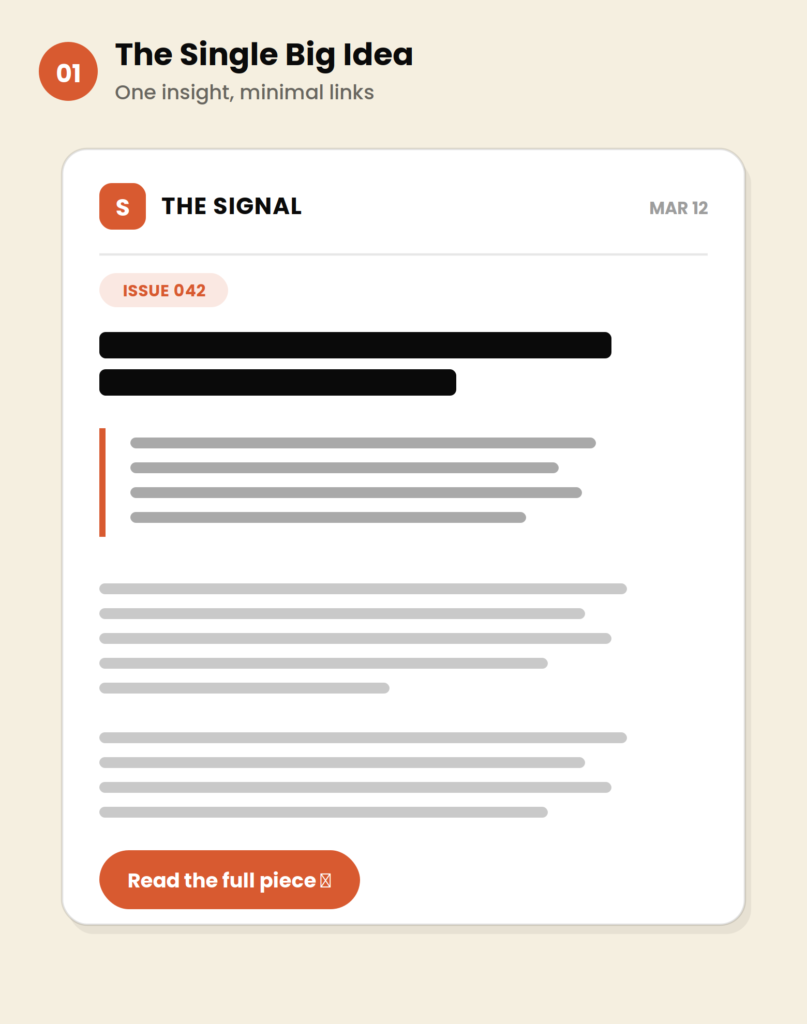
One editorial essay. One clear point of view. Minimal links out. The whole issue exists to make one argument well, the way Lenny’s Newsletter built its following on product and growth essays instead of link roundups.
- The format: Headline, one core argument, a short close. No roundup section competing for attention.
- What it demands: A genuinely strong opinion, expressed clearly, on a predictable cadence. The hardest template on this list to fake.
- Best for: Founders, VPs, or subject-matter experts with real point of view and the bandwidth to write it, or dictate it, every issue.
- Stage fit: Any stage, but most valuable pre-Series B, when the founder’s voice is still the company’s best distribution asset. This only works if the same person is willing to keep writing it themselves; see why founders shouldn’t write their own blog posts for where that logic does and doesn’t apply to a founder-voiced newsletter.
- Skip it if: Nobody on the team has a strong enough opinion to sustain one argument an issue. A thin big idea reads worse than an honest roundup.
2. The Curated Roundup
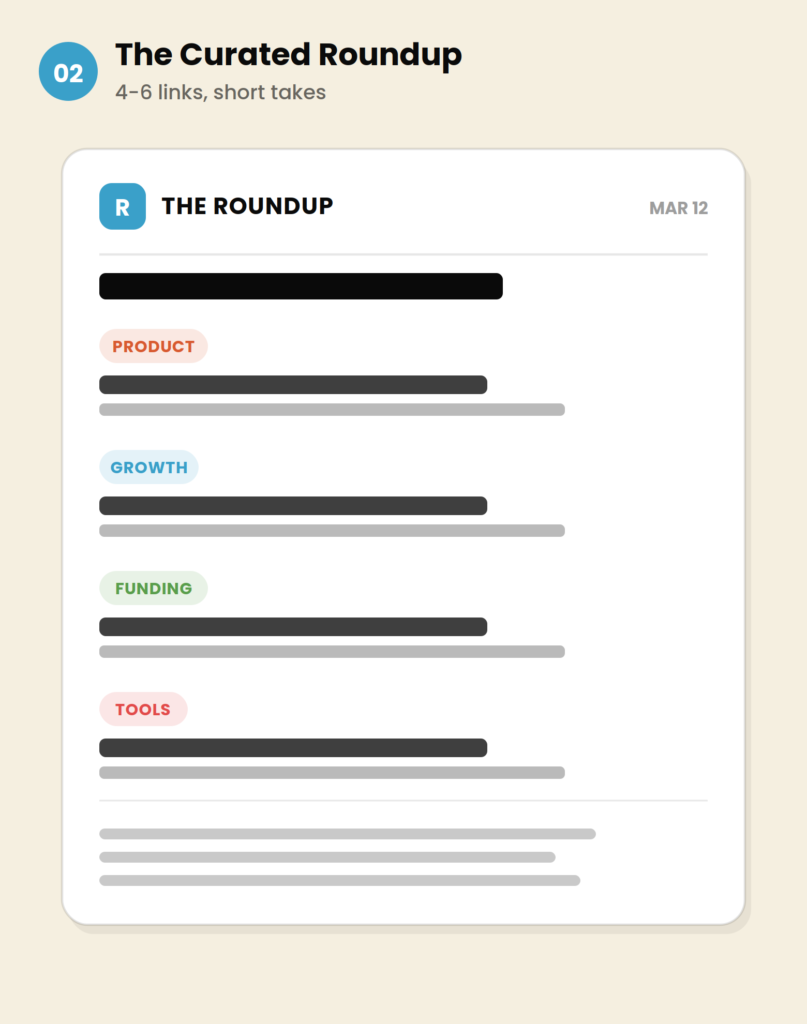
Four to six links, tagged by category, each with a short opinionated take. This is the format behind newsletters like TL;DR: low original-writing burden, high research burden.
- The format: A short intro, then 4-6 tagged link blocks, each with one or two sentences of real commentary.
- What it demands: Consistent curation time, reliable sources to scan, and enough category knowledge that your take beats the link itself.
- Best for: Marketing teams building topical authority before they have original research or a large customer base to draw from.
- Stage fit: Strong early-stage format. It builds a reading habit before you have proprietary data to fill an issue on your own.
- Skip it if: Your take on each link is thinner than the link itself. A roundup with no real opinion is just an RSS feed with extra steps.
3. The Data-Led Digest
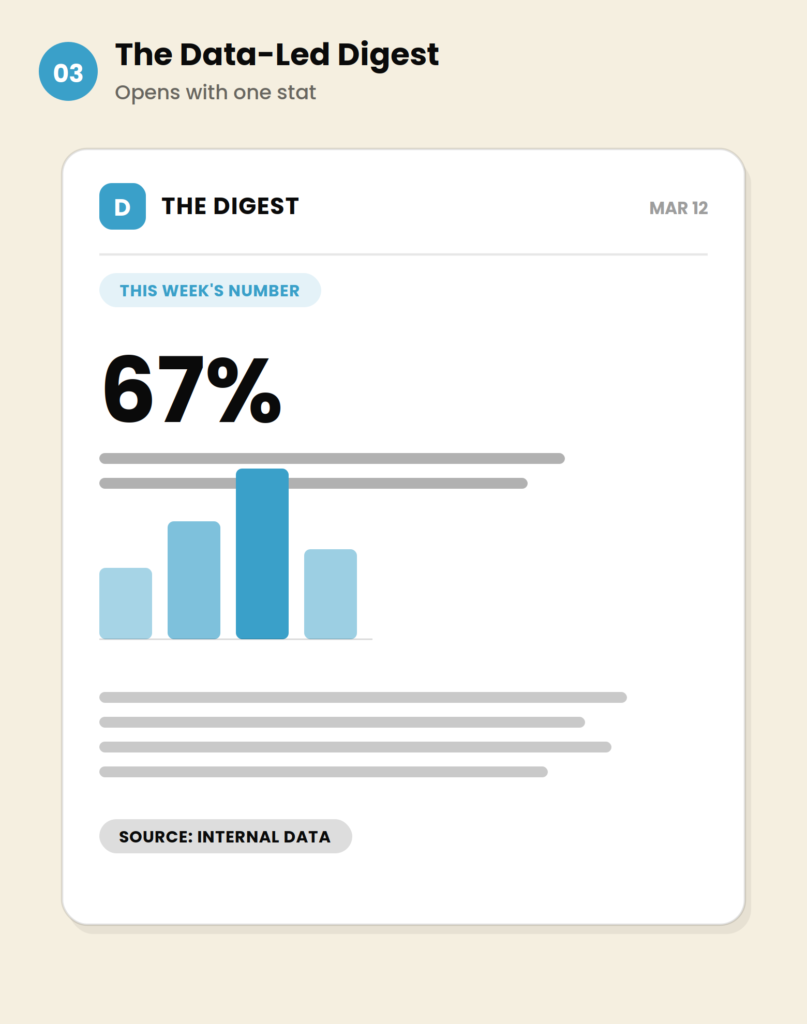
One headline number, contextualized, backed by a simple chart, followed by what it means for the reader. This only works with a real number, product usage, survey results, or aggregated customer data, the same kind of original research AI systems increasingly reward when deciding what to cite.
- The format: One hero stat, a short chart, then two or three paragraphs unpacking what it means.
- What it demands: A genuine, ongoing data source: product analytics, survey infrastructure, or anonymized customer benchmarks you can legally share.
- Best for: SaaS companies with real usage data, an analytics function, or the discipline to run a lightweight recurring survey.
- Stage fit: Post-product-market fit, once you have enough users for the data to mean something statistically. “Based on 12 customers” undermines the whole format.
- Skip it if: You don’t have a real number to lead with. A stat that feels made up destroys trust faster than a plain roundup ever would.
4. The Interview / Q&A
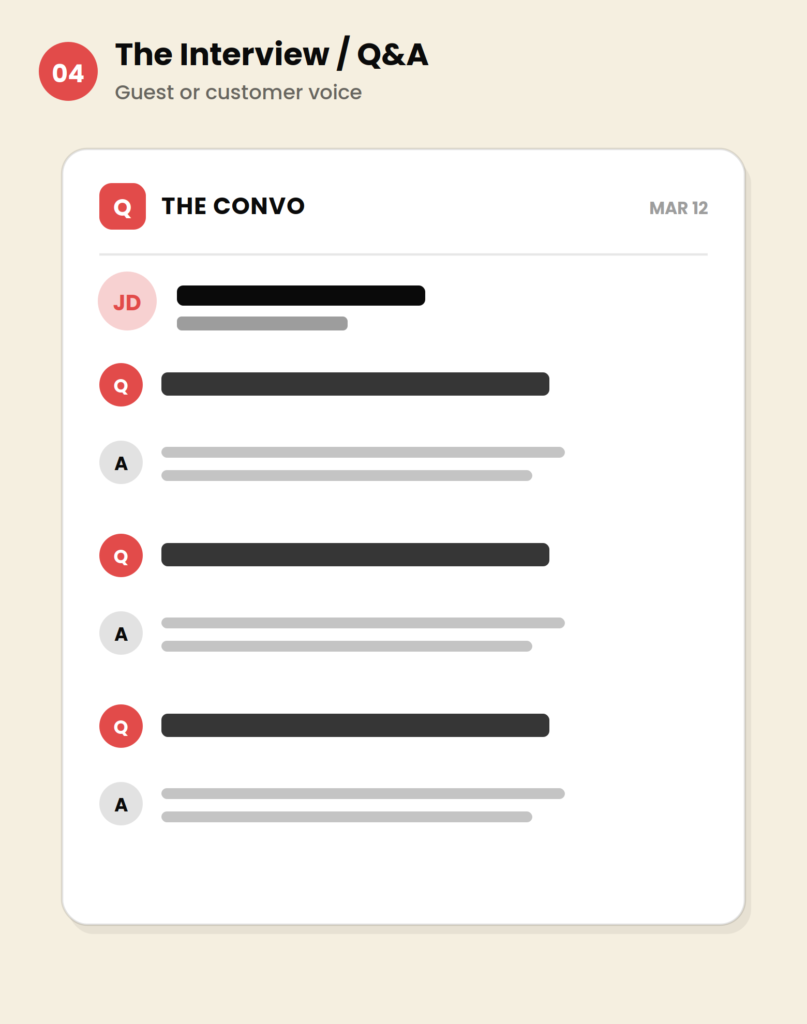
A short intro, then a structured back-and-forth with a guest: a customer, an investor, an internal expert, or an industry peer. The guest supplies the substance. Your job is mostly editing for length and clarity.
- The format: A short guest bio, then 4-6 question-and-answer exchanges, lightly edited.
- What it demands: A network worth interviewing, and someone comfortable running or editing interviews consistently. Scheduling, not writing, becomes the bottleneck.
- Best for: Companies with an interesting customer base, an engaged advisor network, or enough industry standing to get good guests to say yes.
- Stage fit: Works once you have real customers with real results worth featuring, typically post-seed. A Q&A with your own team every issue gets thin fast.
- Skip it if: You can’t reliably book a good guest every issue. One canceled interview with no backup plan is how this format’s cadence quietly dies.
5. The Build-in-Public Update
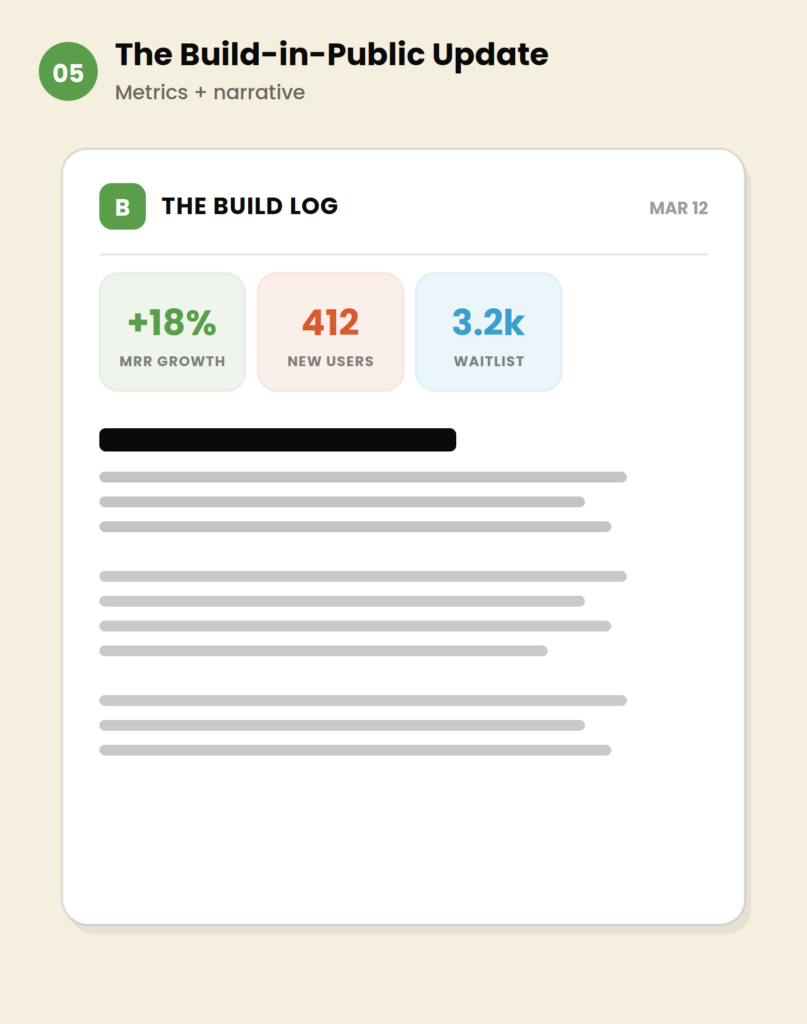
A few real metrics up top, growth, revenue, users, followed by the narrative behind them: what worked, what didn’t, what’s next. This is the format behind most founder-led “building in public” newsletters, and it turns subscribers into fans in a way polished corporate updates never do.
- The format: 2-3 metric callouts, then a short narrative explaining the story behind the numbers.
- What it demands: A founder willing to share real numbers, including the bad ones, and enough self-awareness to write the narrative honestly.
- Best for: Early-stage founders building an audience alongside their product, where the company’s story is part of the marketing.
- Stage fit: Strongest pre-Series A. Once a company has a PR function and board optics to manage, most teams stop sharing numbers this openly, and the resourcing to sustain this shifts too; our breakdown of content marketing cost for B2B SaaS covers what that shift typically looks like.
- Skip it if: Leadership isn’t genuinely willing to share bad metrics alongside good ones. A build-in-public update that only shows wins reads as marketing, not building in public.
6. The Framework Listicle
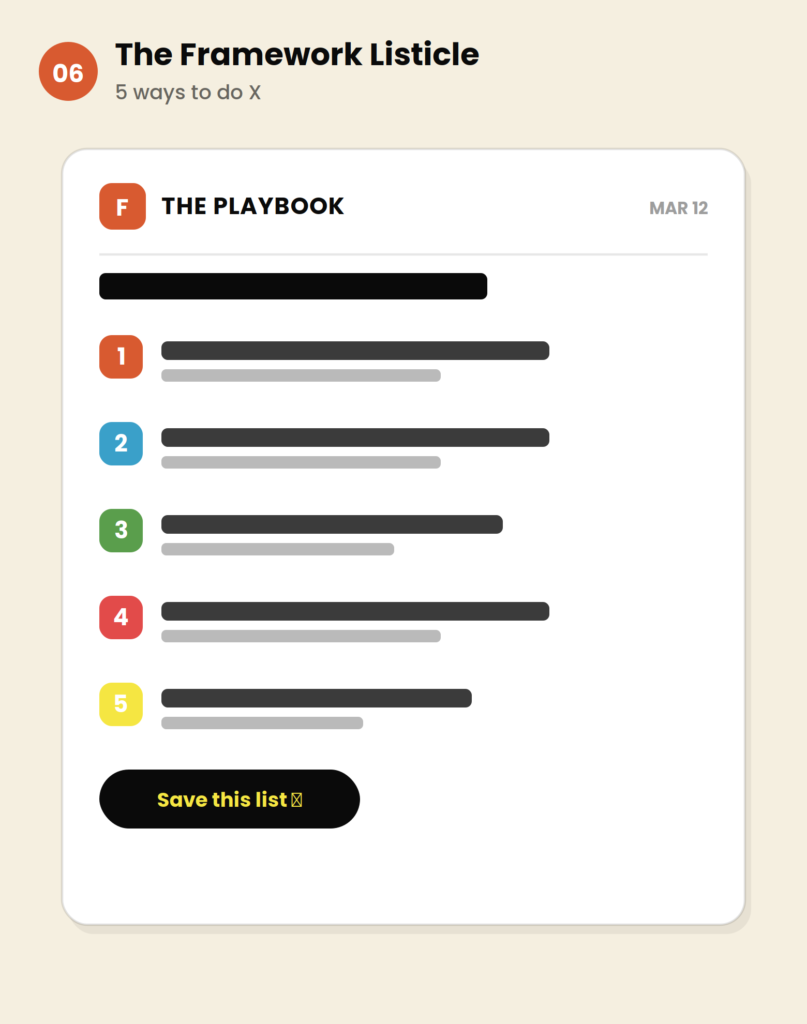
Five numbered, scannable points built around one theme: five mistakes, five tactics, five questions to ask. It’s the most forgiving format here to write, and the easiest for a reader to skim in thirty seconds.
- The format: A one-line theme, then five numbered points, each with a headline and one supporting sentence.
- What it demands: A team that can turn tactical knowledge into a tight, numbered structure without padding it out to hit five points.
- Best for: Teams with real operational expertise, agencies, ops-heavy SaaS companies, or anyone who fields the same practical questions repeatedly.
- Stage fit: Any stage. It’s also a reliable fallback for weeks when a Big Idea essay or a guest interview isn’t coming together in time.
- Skip it if: You’re forcing five points where three genuine ones would do. A padded listicle is more obvious to readers than most teams think.
7. The Product Changelog
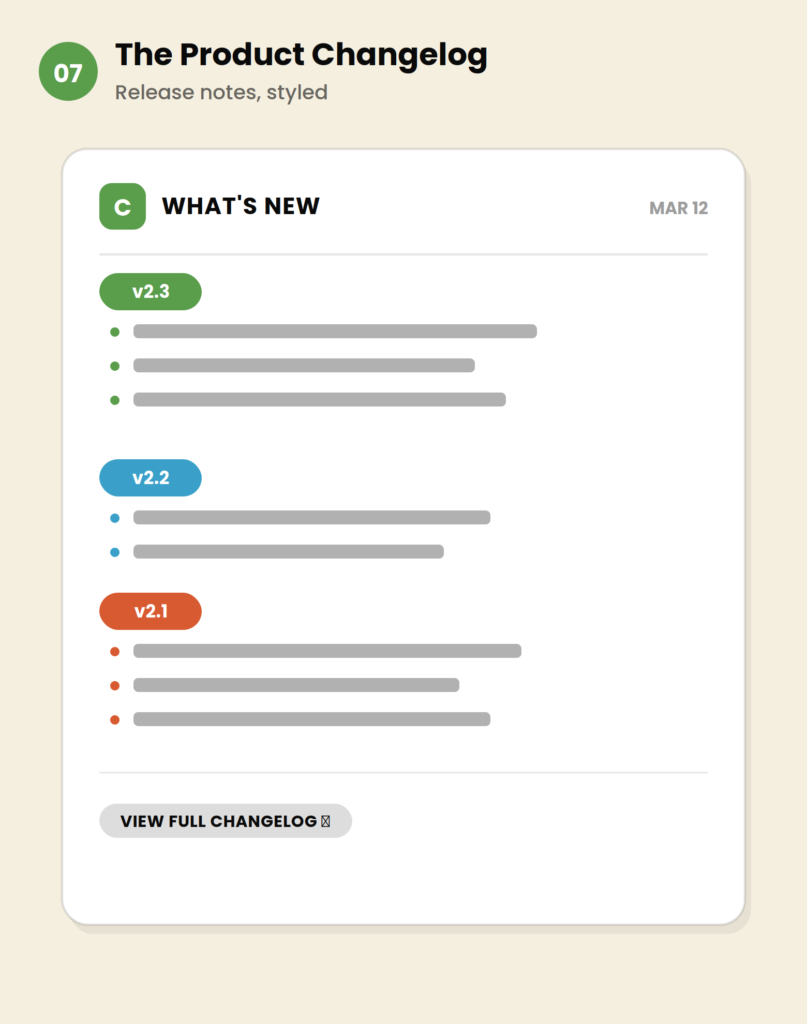
Version-tagged release notes, styled for readability: what shipped, grouped by release, fluff stripped out. It’s a changelog page sent proactively instead of waiting for someone to go check it.
- The format: Version tags (v2.3, v2.2…) each followed by 2-3 plain-language bullets on what changed.
- What it demands: A shipping cadence worth reporting on, and someone who can translate engineering language into customer-facing value, issue after issue.
- Best for: Product-led SaaS companies shipping often enough that customers genuinely benefit from a regular digest instead of hunting through release notes.
- Stage fit: Post-launch, ideally once you have an existing customer base who cares what shipped, not a prospect list that doesn’t know the product well enough yet.
- Skip it if: Your shipping cadence is slow or inconsistent. Three updates in six months reads as proof of stagnation, not progress.
Which template should you actually start with
Start with what you already have, not what looks impressive in someone else’s screenshot.
- A founder with a strong take on the market? Start with the Single Big Idea. It needs the least infrastructure and the most conviction.
- Good research instincts, no strong POV yet? Start with the Curated Roundup. It builds an audience while that point of view develops.
- Real usage data or a fast shipping cadence? The Data-Led Digest or Product Changelog only work once that infrastructure already exists, so don’t force either before it does.
- A strong customer base or network? The Interview format trades on relationships you already have, and costs almost nothing to produce beyond scheduling time.
- Nobody available to own it full-time? Decide whether that’s a freelancer, an agency, an in-house hire, or a fractional content marketer before picking a format that assumes more bandwidth than you have.
Most newsletters that last longer than a year eventually blend two formats: a Curated Roundup with one Big Idea section up top, or a Framework Listicle that closes with a Changelog snippet. Start with one template you can sustain for ten issues before you blend anything.
The template is only half the job
A great format, sent to the wrong list, on an inconsistent schedule, through a platform that buries it in spam folders, still fails. The strategy layer underneath these templates, list growth, cadence, and deliverability, is covered in our B2B newsletter guide.
Still deciding what to send it through? Our roundups on free email marketing tools and social media scheduling tools cover the sending and distribution layer, and if writing itself is the bottleneck, best AI writing tools for B2B SaaS covers what can help draft an issue faster.
Once it’s running, treat it like any other content asset. SaaS content marketing metrics that actually matter explains how to tell whether the newsletter is contributing to pipeline, not just accumulating opens, and a solid content brief process keeps quality consistent once more than one person is writing issues.
Want a second opinion on which format fits your team before you commit to a weekly cadence? Book a call with us and we’ll help you figure out what you can actually sustain.

Jay is the co-founder of LymLyt and an AI partnership consultant helping B2B SaaS companies grow through content strategy, SEO, and AI integration. He writes about content marketing, what makes B2B content convert, and how SaaS teams can build content systems that drive real pipeline.